BBG Thrilled to Celebrate Staysha Quentrill’s New York Times Feature on Midwifery in West Virginia
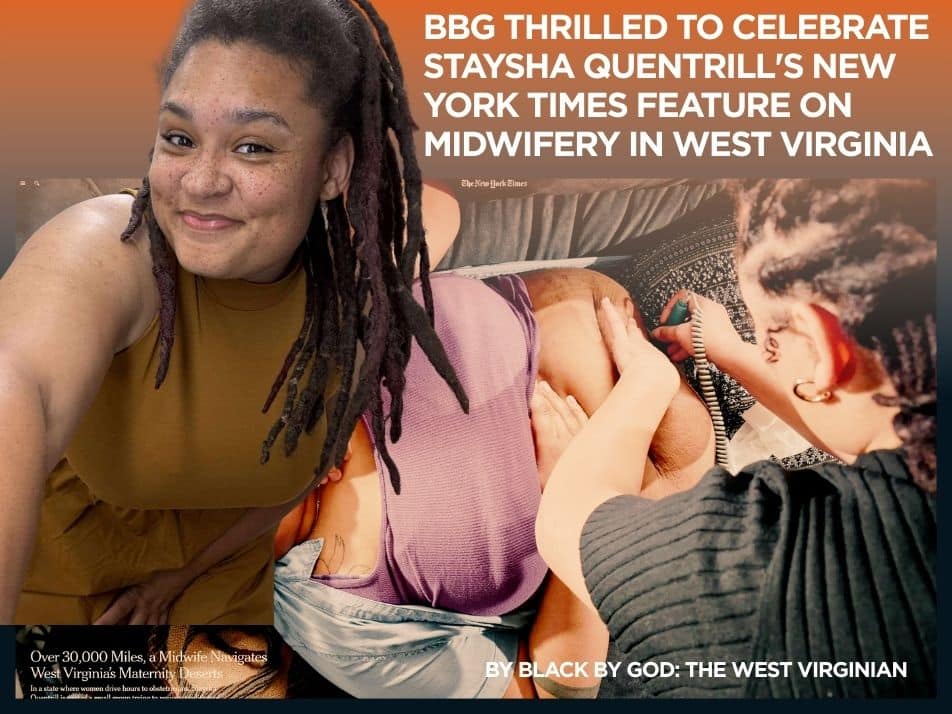
We’re thrilled to celebrate one of our own making national headlines. Staysha Quentrill, West Virginia midwife and advocate for community-based birth care, is featured in The New York Times article “Over 30,000 Miles, a Midwife Navigates West Virginia’s Maternity Deserts”.
The piece chronicles Staysha’s work as one of the few certified professional midwives attending home births across West Virginia. In this state, more than 60% of counties have no obstetric care, and women routinely drive hours for prenatal appointments.
READ Greenbrier Valley Medical Center reorganizes, will no longer deliver babies By Stephen Baldwin, RealWV
Operating in what the article describes as a “legal gray area” (West Virginia doesn’t license midwives who aren’t nurses), Staysha has logged over 30,000 miles in the past year, attending hundreds of births and reviving the region’s historic tradition of Black community midwifery.
“You’re responsible for two lives,” Staysha told the Times, describing the high-stakes nature of her work. She’s resuscitated babies born not breathing and managed emergency complications—all while navigating a system that offers no legal recognition for her nationally certified credentials.
A Legacy Reclaimed
Staysha’s approach is rooted in history. As she explained to the Times: “I knew I wanted to focus specifically on home birth and being in the community. Especially when it comes to Black midwifery, this is our birthright.”
That birthright was systematically dismantled. The article traces how West Virginia’s early 20th-century licensing laws, coupled with exclusionary practices by figures like Mary Breckinridge (who “refused to hire or educate Black midwives, and denounced those still practicing in Appalachia”), effectively eliminated community-based Black midwifery from the region.
Historical Context: Black Midwives in West Virginia
According to Midwifery in West Virginia by Ancella R. Bickley (West Virginia Archives and History, Volume 49, 1990), Black midwives played crucial roles in healthcare access across the state. Mary Jane Trust Lawson, a midwife in Kanawha County, “reputedly became the first black woman to nurse a patient in Charleston General Hospital when a white doctor demanded that the hospital suspend its racial policies so that she might attend his patient.”
Staysha’s work continues a lineage that includes pioneers like Lawson and Pia Long, who was West Virginia’s only Black doula when she supported my own birth journey in 1999. Pia, a proud West Virginian, continues her birth work today through Elephant Circle.
“I was the only Black apprentice midwife working toward my CPM certification in West Virginia a decade ago,” Pia shares. “It makes my heart swell that Staysha was able to achieve her CPM certification and carry the torch.”
Now, as the state faces a maternal care crisis—with babies born on highways and women sleeping on strangers’ couches near hospitals as their due dates approach—Staysha and other midwives are providing critical access to care.
Client Carmen Squires sought out Staysha because “it felt more comfortable to have a midwife who looks like me.” The Times notes that 30% of Black women report mistreatment during pregnancy and childbirth. Squires found Staysha’s care distinct from traditional obstetric appointments that “often felt rushed”—with Ms. Quentrill, visits “felt more like a visit between friends.”
In 2022, I profiled Staysha’s journey for WHYY’s The Pulsein “For Black Expecting Mothers, Black Doulas and Midwives Offer Expertise and Protection” with photographer and co-producer Kyle Vass, documenting Staysha’s work becoming a certified professional midwife.
That piece highlighted the life-saving moment when Staysha recognized Carmen Squires—the same client featured in the Times article—going pale during delivery, a complication the white healthcare providers in the room missed. “When we’re looking at medical training or nursing training, it’s not done on all different types of skin,” Staysha explained. “The base level is usually white skin, and things look very much different on white skin. That’s rashes, that’s bruises, that’s lesions, that’s all types of stuff and being pale is one of those things.”
Carmen delivered a healthy baby girl—Olivia Cannon, born on Juneteenth 2021. She was one of the last babies Staysha needed to help deliver to become a fully licensed Certified Professional Midwife.
Despite operating without state recognition, Staysha isn’t backing down. She worked on legislation this year that passed unanimously in the West Virginia Senate but was removed from the House agenda without explanation.
Staysha plans to reintroduce licensure legislation “every single year until it passes.” In the meantime, she continues showing up when mothers call.
“It’s necessary,” she told the Times, “and we’re going to continue to do it.”
Staysha told BBG that we need people to become midwives in West. Virginia.
“It’s a big ask—because of the lack of licensure.”
Why This Matters
Staysha’s story isn’t just about one midwife’s determination—it’s about Appalachia’s erased history of Black birth workers and the present-day crisis forcing women to give birth on highways or drive three hours for basic care. It’s about systemic healthcare failures and the community members filling the gaps.
Black By God will continue centering these stories as essential journalism—but we need your help. We struggle to keep news flowing in a state starved for coverage. Help us midwife, doula, and deliver these stories. Please support Black By God so we can keep documenting our communities’ resilience and demanding better.
Congratulations, Staysha. West Virginia sees you. We see you.
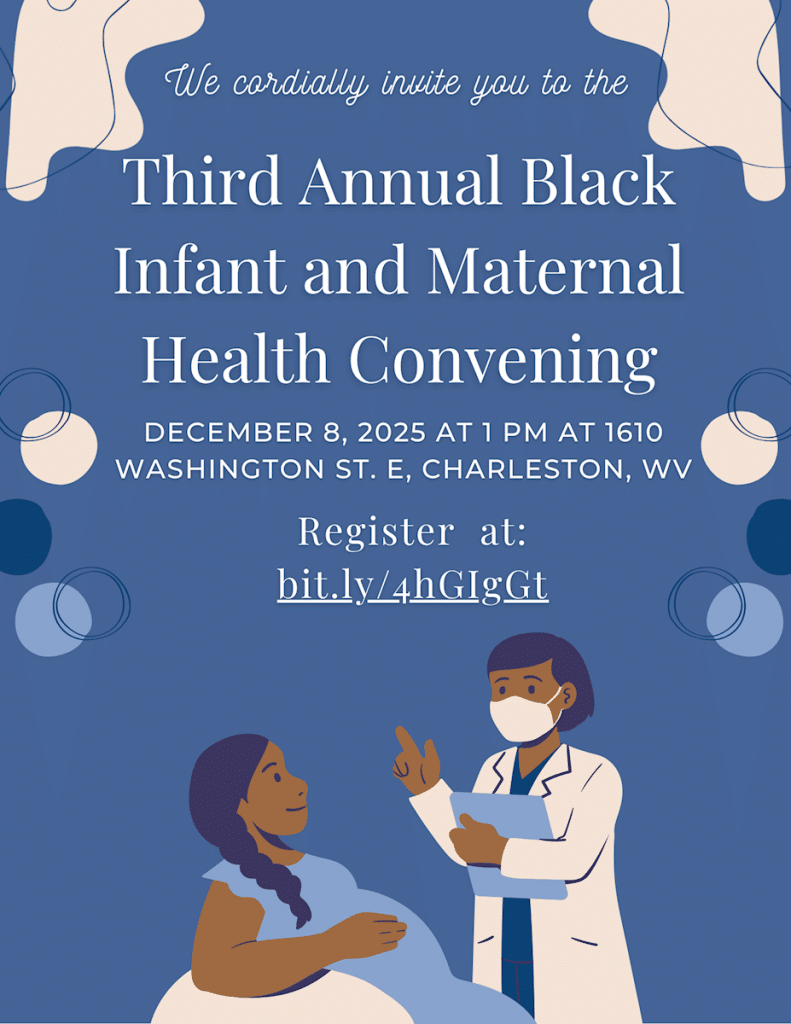
Third Annual Black Infant and Maternal Health Convening Set for December 8
The fight for maternal health equity continues at the Capitol with the Third Annual Black Infant and Maternal Health Convening scheduled for December 8, 2025, from 1:00 PM to 4:30 PM EST. The event will focus on education, advocacy, and direct action to improve outcomes for Black mothers, birthing people, and infants across West Virginia.
Organizers are collecting diapers (all sizes) and baby wipes to distribute to families and community organizations in need across southern West Virginia.
BBG’s Ongoing Coverage of Black Maternal Health
- “The Significant Insignificance of Black Maternal Health in WV” — examining how Black maternal mortality remains invisible in state health conversations
- “BBG Writer Wins $3K for Project Manna: Connecting Black Farmers & Mothers Across Appalachia” — exploring the intersection of food sovereignty and maternal wellness
- “Black Infant and Maternal Mortality Needs to Be Addressed in West Virginia” — demanding policy action on preventable deaths
- “Does What I Eat Matter? Exploring Ghanaian Food Culture and Pregnancy: Bridging Appalachia and Africa”— connecting cultural foodways to prenatal health across the diaspora
If you appreciate BBG's work, please support us with a contribution of whatever you can afford.
Support our stories