
WV House advances bill that would criminalize giving undocumented people a ride home
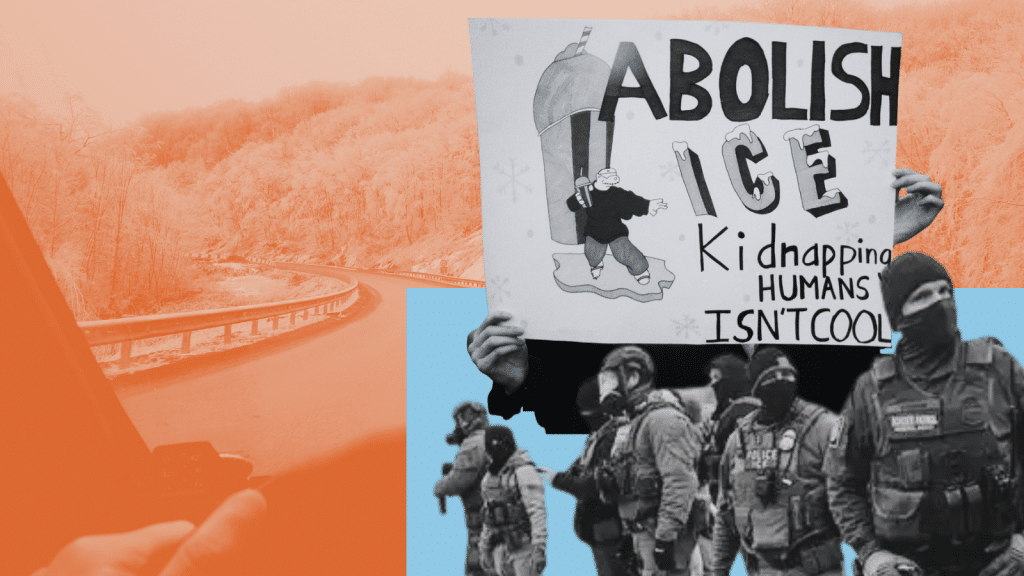
On Wednesday, state lawmakers advanced a bill that would increase criminal penalties for people who engage in human trafficking. However, HB 4433 would also make it a crime for those outside of immediate family to “transport” an undocumented person. That term could apply to a broad range of everyday activities, including giving someone a ride to the grocery store, school, work or court.
HB 4433 is nearly identical to a bill from last year that BBG Folk Reporters wrote about. That bill passed the House, but it never made it out of Senate Committees. The definitions provided in this version of the bill are phrased in a way that would harm citizens and immigrants alike.
HB 4433 defines “human smuggling” as “knowingly transporting, transferring, receiving, isolating, enticing, or harboring an illegal alien to avoid enforcement of the laws of this state, another state, or the United States.” If the bill becomes law, the penalty for “smuggling” an adult would be punishable by up to 10 years in state prison. For minors, that sentence would increase to 15 years.
It’s unclear who counts as an “illegal alien,” under the most current version of HB 4433. Does that include people protected under Deferred Action for Childhood Arrivals, the immigration policy that provides temporary protections to undocumented individuals brought to the U.S. as children?
We’ll bring the best from BBG right to your inbox. You can easily unsubscribe at any time.
Sign Up for our Newsletters!
The bill defines the term “illegal alien” as “any individual who has entered the United States without authorization and is subject to removal if apprehended.” The term also applies to “an individual who was lawfully admitted into the United States but has since violated the terms of admission, or otherwise is without legal status, and is a deportable alien as provided in the United States Code.”
If DACA protections are removed, HB 4433 could make it a crime to give a DACA recipient a ride to school.
“This bill is designed to amend the statutes on human trafficking and add a new crime of smuggling,” said the bill’s lead sponsor, Del. Bill Ridenour, R-Jefferson. “And it sharpens the definitions, increases the penalties, and introduces new requirements.”
HB 4433 would increase penalties for several crimes related to human trafficking. The maximum sentence for using adults in forced labor and debt bondage would increase from 5 years to 15. The bill would also create fixed sentences for compelling someone to engage in paid sexual activity: exactly 25 years for adults and 50 years for minors.
Del. Evan Hansen, D-Monongalia, asked how the bill would impact acts of kindness, particularly those from church volunteers. He said Christians often take inspiration from Bible verses like Proverbs 14:31, which reads, “Whoever oppresses the poor shows contempt for their Maker, but whoever is kind to the needy honors God.”
“And they provide services to people to transport them to school or to grocery stores or provide humanitarian aid. And sometimes these people can be undocumented immigrants. How would this bill impact church members who provide those types of services?” Hansen asked.
They would be under this bill the same as every other citizen,” Ridenour responded.
After several clarifying questions, Hansen’s tone became more direct.
“I take that to mean that, if a member of a congregation does transport an undocumented person to a grocery store or something like that, that they would be engaged in human smuggling and subject to the criminal penalties in this bill?” Hansen asked.
“Any individual who’s conducting a type of activity is conducting that activity,” Ridenour said. “It doesn’t matter what their religious persuasion is, that they’re citizens of the state or they’re citizens of the country.”
Last year, Hansen was the only House delegate who voted against Ridenour’s anti-smuggling bill passing the House. This year, nearly 270 people issued public comments opposing HB 4433 – in just two days.
“We already have situations where undocumented people are being kidnapped by unidentified masked people without due process and often under violent conditions,” said one commenter, Lesley West. “HB4433 will create more fear and community distrust, both amongst the undocumented and the documented residents of our state … HB4433 will criminalize people who are simply acting in the time-honored West Virginia way of helping our neighbours.”
Despite being a bill centered around increasing justice for victims of human trafficking, HB 4433 limits the kind of restitution undocumented adults can receive if they are victims of forced labor, debt bondage or sexual slavery. This was something many commenters cited as a reason why they oppose HB 4433.
“Get rid of this bill. This bill protects the criminals who illegally traffic vulnerable people,” said one commenter, Emma Casale. “The victims of trafficking deserve all the victim support possible, including the right to sue for restitution, regardless of citizenship status.”
If HB 4433 becomes law, the only allowable restitution for undocumented victims of human trafficking would be “reasonably related medical expenses” and/or transportation expenses to send the undocumented person back to another country. Allowable restitution would likely not cover other expenses, like court costs or money for lost income.
The original version of HB 4433 also limited restitution for children, but the House Judiciary Committee amended the bill to change that.
The current version of HB 4433 also creates exemptions for several groups outside of someone’s immediate family. Attorneys and their staff and people providing medical or mental health services to an undocumented person – such as EMS workers – cannot be charged with human smuggling for transporting someone.
HB 4433 will likely be up for a House Floor vote next Monday.
If you appreciate BBG's work, please support us with a contribution of whatever you can afford.
Support our stories
Related Articles
Varian Cunningham: Carrying WVSU’s Homecoming Traditions Into the Next Generation
More than just a single football game, Homecoming is the sound of the step show, the energy of the tailgate, and the familiar faces returning to Institute year-after-year.

‘Keep Coming Back’ – Coach Bryan Poore on the People Who Make WVSU Homecoming
The longtime West Virginia State University basketball coach reflects on early-arriving motor homes, the step show, former players, Earl Lloyd and the relationships that keep Yellow Jackets coming home.

Coming Back to the Yard: Why WVSU Homecoming is Bigger Than Football
Trey Jones says Homecoming lives in the memories, rituals and people who keep Yellow Jackets returning to State.