
This Smile Is for You: CROWN Corner
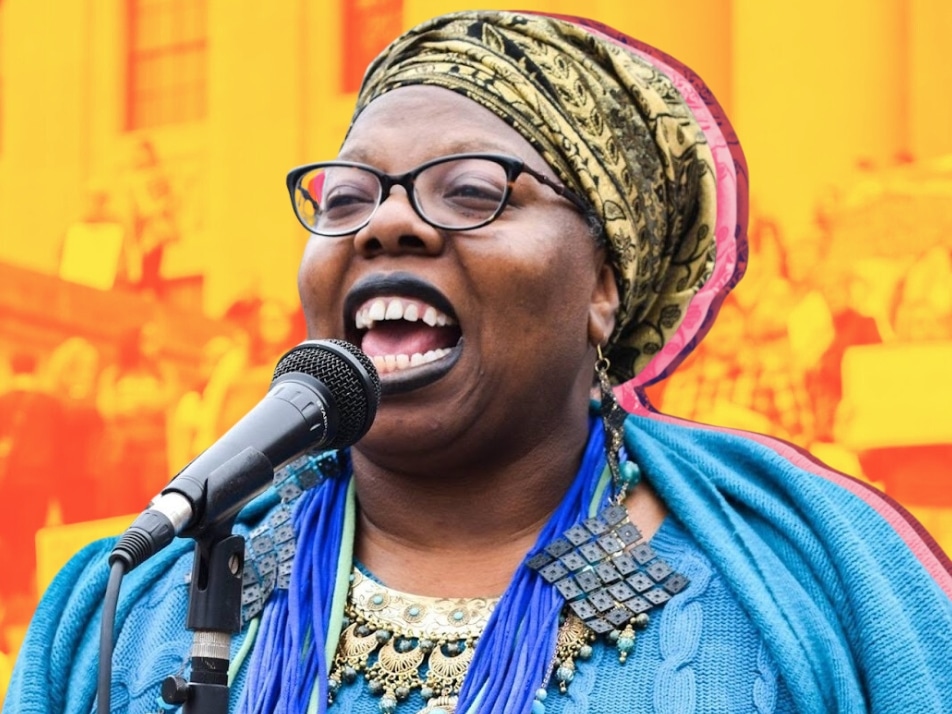
By Katonya Hart
“Oppression doesn’t always move fast. Sometimes it stretches across generations. If you only study today, you’ll never understand how yesterday was designed to control tomorrow.”
— Malcolm X
I remember a head full of beads hanging from tiny braids, each braid sealed at the end with a tiny roll of kitchen foil so the beads wouldn’t slip off. The foil shined silver against the dark of my hair. When I was a little girl, doing my hair was a ceremony.
It took time. I would sit between my mother’s knees, sometimes on a pillow, sometimes on my own knees, so that she could reach the tender kitchen at the back of my neck. Most days, my hair was styled in neat cornrows—straight lines, curved parts, different designs that showed her patience and skill. Rare was the occasion I got beads.
Beads cost. They were popular. And they cost.
But when I had them? I felt beautiful.
A thousand tiny braids, bent with beads and barrettes, bright patterns lined up just right—black, white, red; blue, white, blue. My mother’s hands moved steady, adding a little oil, parting, braiding, rolling foil, sliding beads into place. It could take hours. When she finished, she leaned back and let out a deep breath. I turned just in time to see a slight smile of satisfaction cross her face before she straightened up.
“Go ahead now,” she’d say. “And don’t you lose not one of them beads.”
I ran to the bathroom mirror. It was fabulous.
I swung my head from side to side just enough to hear them click together. That sound—soft plastic tapping—was music. My hair was short back then. It didn’t hang or swing much on its own. But with beads? It moved. It had rhythm. It had presence.
This was an Easter hairstyle on a regular school day.
Nobody could tell me nothin’. PERIOD.
My older brother wore a blowout afro, shaped just right by the barber, his face framed in a perfect circle. My younger brother kept his hair close, athletic, military-style, like my granddaddy. Uncle would bless his head with the clippers, and it would be done in minutes.
And then there was me in the middle—the girl.
Hair was different for me. It was time. It was cost. It was care. It was art.
My grandmother didn’t braid my hair, but she’d brush it at night while we got ready to rebraid it. Sometimes she paid the lady down the street to press it with a hot comb before special Sunday services. I was an Usher—not Junior Usher, but Usher. I had the crisp black-and-white uniform, gloves, and a badge to prove it. When my hair was pressed bone straight, little curls flipped at the ends, laid carefully so no one could see where my ear had been burned.
Hair was pride. Hair was presentation. Hair was protection.
My mother worked hard. Even after long days, she would take down my braids, wash my hair, and stay up late on a Friday night to cornrow them again. Or Saturday, if Sunday meant pressing it straight. Dax and Blue Magic would come out, and she’d work until it was done.
I don’t remember why that particular week she decided to fill my head with beads. But I remember the feeling. I was so proud. So beautiful. So seen.
And I remember how quickly that feeling was interrupted.
A note was sent home.
The gym teacher made me take out every last bead. Not gently. Not kindly. Snatching them loose. Saying they were distracting. Saying they weren’t appropriate for school. I remember the sting on my scalp. The shame was creeping in where pride had lived just hours before.
Not after that did I wear beads to school again.
Not after I learned that something so joyful, so cultural, so deeply rooted in love and tradition, could be treated like a problem.
That’s why the CROWN Act matters.
The CROWN Act—Creating a Respectful and Open World for Natural Hair—ensures that no child is punished, shamed, or sent home because of their natural hair or protective styles like braids, locs, twists, or beads. It recognizes that our hair is not a distraction. It is not unprofessional. It is not inappropriate.
Oppression doesn’t always move fast. Sometimes it hides in dress codes. In school policies. In “professional standards.” In small humiliations that teach children to shrink themselves.
But we can interrupt it.
We can make sure no little girl ever has to sit in a gymnasium while someone snatches her joy out bead by bead.
This smile is for her.
For more information or to join the fight to pass the CROWN Act in West Virginia, contact Katonya Hart.
If you appreciate BBG's work, please support us with a contribution of whatever you can afford.
Support our stories
Related Articles
This week in Affrilachian history: Sept. 27 through Oct. 3
Discover key milestones in Affrilachian history: educator Fannie Cobb Carter’s birth and the founding of integrated Storer College in Harpers Ferry.
This week in Affrilachian history: Sept. 13 through Sept. 19
Discover key mid-September milestones in Affrilachian history: pioneer lawyer J. R. Clifford, jazz legend Chu Berry, and scholar Henry Louis Gates Jr.
Eastern KY artists celebrate America’s 250, Black history with ‘pursuit of liberty’ quilt
The Southeast Kentucky African American Museum unveils its ‘Pursuit of Liberty’ community quilt project in Hazard, honoring Black history and Appalachian roots.