
Faith group partnering with local farmers on land return initiative

By Rev. Brad Davis
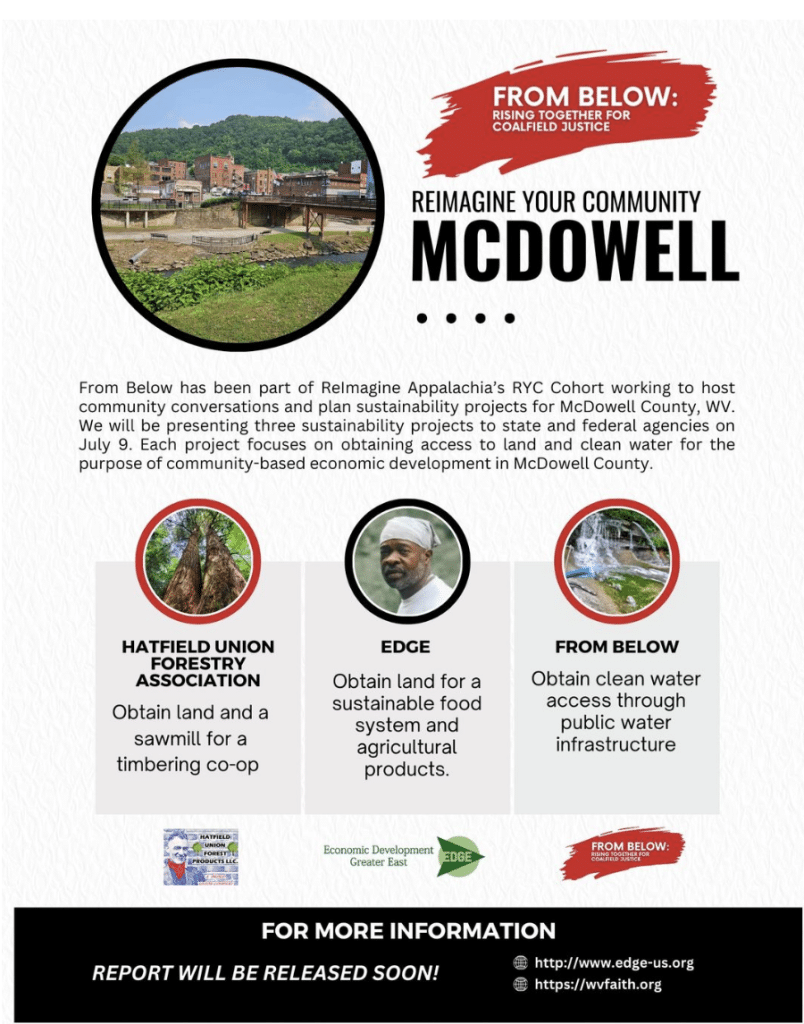
As Central Appalachia continues its transition away from a coal-based extraction economy, several obstacles continue to slow that process – not the least of which is land access.
With nearly two-thirds of all privately owned land in McDowell County, WV, held by ten out-of-state companies, the long, exploitative cycle of absentee land ownership continues to stunt any hopes of local economic self-determination.
However, a new land access initiative championed by the local faith community in partnership with Economic Development Greater East (EDGE) is looking to change that.
The newly-formed Central Appalachian Faith Collaborative is a group comprised of multiple faith-based organizations representing several different expressions of Christianity from around Southern West Virginia and Eastern Kentucky, including the Mennonite Central Committee, Together for Hope in Appalachia, and the West Virginia Faith Collective. Drawing on the Biblical theme of Jubilee, a once-every-fifty-year cycle of reparations that included the return of lost property, it is making a theological case to land companies for the return of local land to local communities for local economic development.
“In this time of economic transition, the return of local land to local people and communities would allow for projects that would harness the power of this land to create sustainable, thriving communities,” the group says. “Bringing forth a communal resurrection through the power of local initiative. In short, it would lead to economic freedom and empowerment – a reset of the socioeconomic order in the southern coalfields.”
One such project with the potential to enable such a reset is the creation of a sustainable food network through EDGE’s innovative mountain farming. This network would give access to fresh, nutritious food for a county that currently is classified as a food desert, with one in three residents being food insecure.
On its 361-acre demonstration farm located in the southern McDowell County community of Berwind, EDGE is currently training community members using an entrepreneurship-based model in food production around viable products that are high value and should be scaled in production to increase food sovereignty locally and ideally across the US. Trainees are working to create small businesses in goat meat production, poultry and egg production, fruit trees, berry production, honey production, and nurseries.
“We are proud of our region and committed to strengthening our farming community,” says EDGE’s Jason Tartt. “For food producers, we support your work and want to make sure you can financially continue to do it with dignity because the agricultural system does not have a handle on supporting small farmers, Black farmers, beginning farmers, or people who do things on a small scale.”
But land access is necessary for the vision of an independent food network comprised of local farmers bringing food security to local communities to become a reality. The Central Appalachian Faith Collaborative views this as a justice issue. It is inviting the top landowners in the county to enter into discussions with EDGE concerning the ceding of portions of land back to the community as a means of reparations and reconciliation.
“We believe that food insecurity is an existential threat to our community,” explains the CAFC, echoing the sentiment of a resolution recently passed by the West Virginia Conference of the United Methodist Church to financially support the creation of a sustainable food network in McDowell County. “As people of faith, we have made food justice an urgent priority and support practices that ensure access to healthy nourishment, particularly within communities such as ours that have suffered environmental degradation and lack the resources to produce or purchase their food. Our faith informs us that a sustainable agricultural system is a prerequisite for meeting the nutritional needs of any community. Currently, such a system is non-existent in the place we call home.”
For this group, this initiative is about salvation on a communal level through economic empowerment.
“Salvation means to bring healing and wholeness to the entirety of creation,” it says. “The return of portions of land currently owned by these companies would open the door for such healing. It would create the circumstances for our region to experience wholeness and restoration through locally-controlled economic development, empowering our people to dictate our destiny.”
Rev. Brad Davis is a United Methodist clergyperson serving in McDowell County. He also is a co-chair of the WV Faith Collective and a founding member of From Below, the WVFC’s coalfield justice wing.
If you appreciate BBG's work, please support us with a contribution of whatever you can afford.
Support our stories
Related Articles
WV farmers question Trump’s decision to import beef
Local beef producers doubt the move will lower prices and believe it undercuts American farms.
Black Farmers in West Virginia Nearly Disappeared. This Is How Some Are Bringing the Land Back
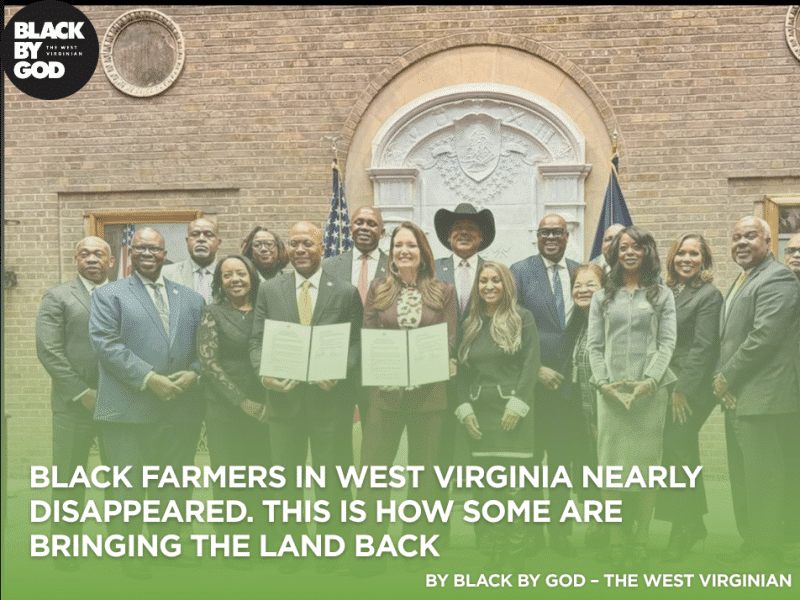
From 504 Black-owned farms a century ago to just 31 today: Black By God examines how Black West Virginians are reclaiming farmland, legacy, and food systems.
Farm to Families: McDowell County looks to its agricultural community to fight food insecurity
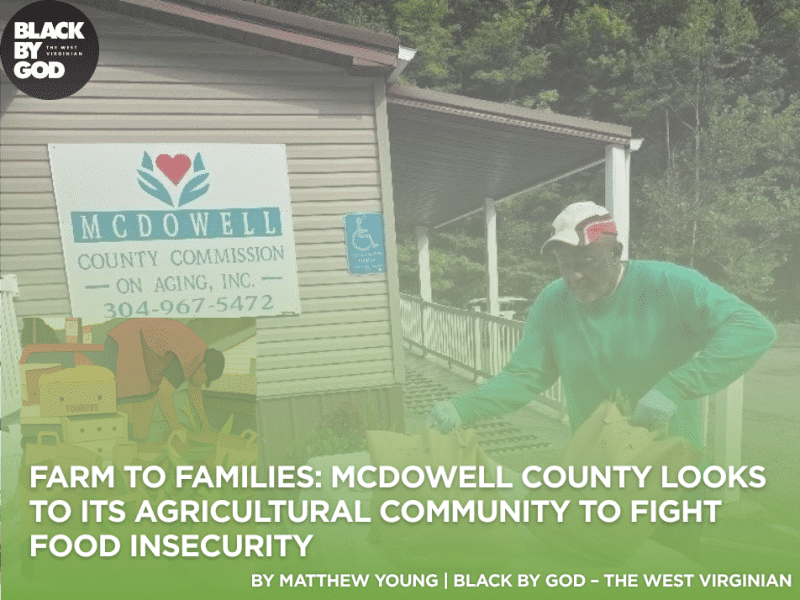
McDowell County’s Farm to Families program provides 50 vulnerable households with $40/week in locally grown produce, tackling food deserts and economic equity.