Artificial Intelligence Helping West Virginia’s Roads
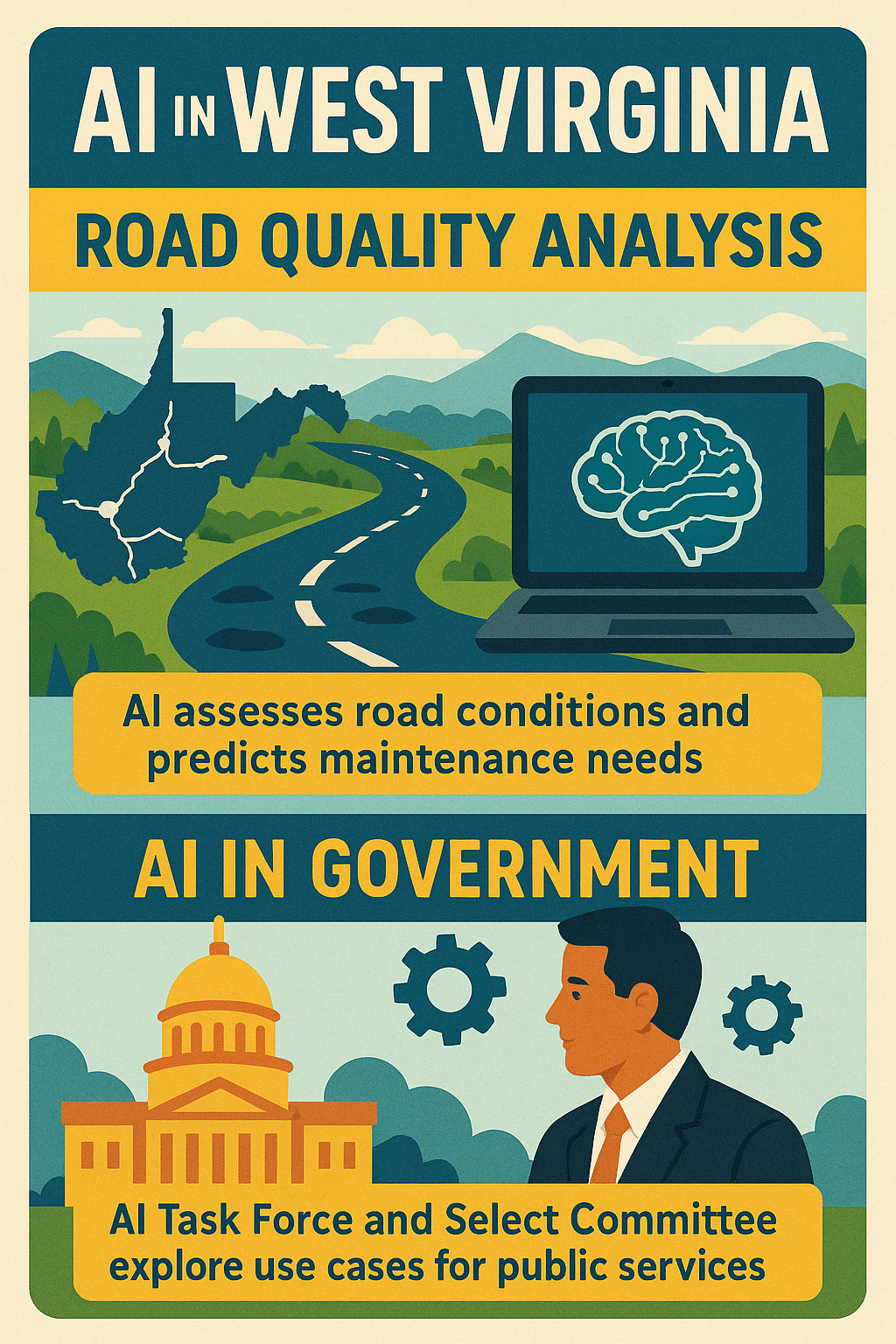
West Virginia is stepping into the future with artificial intelligence, and it’s starting with something as everyday as our roads. The Road Optimization and Assessment Data (ROAD) pilot program, passed in 2023, is using AI to analyze road quality and predict when maintenance is needed. It’s a smart move to keep our infrastructure running smoothly, especially in a state where winding rural routes are the backbone of so many communities. I came across this while digging into how tech is changing things around here, and it’s exciting to see AI tackling real-world problems right in our backyard, and helping the potholes..
But it’s not just about roads. The state is also getting serious about AI in government, setting up an AI Task Force in the Office of Technology and an AI Select Committee in the House of Delegates in 2024. They’re working on figuring out how AI can help with all kinds of public services, with big recommendations due by July 2025. They’re tossing around ideas like a “use-case” inventory, a list of ways AI could help, or even a “learning laboratory” where we test it out with some rules loosened up to see what works. It’s a big deal for a place like West Virginia, where getting services to far-flung towns can be a challenge.
Now, this isn’t just tech for tech’s sake. These efforts could change how we deliver services, especially in rural spots like McDowell County or in the Northern Panhandle. Imagine faster fixes for potholes or smarter ways to manage resources, AI could make that happen. It’s nice to see West Virginia making a conscious effort to keep up with the times. But it’s not all smooth sailing. There’s a flip side: we’ve got to figure out how to train people to use this stuff and make sure it’s not stepping over ethical lines. Who’s watching the AI to keep it fair? That’s the kind of question I keep thinking about, but if you’re reading this, you’re at least making yourself knowledgeable. Which has been something West Virginia as a whole has struggled with.
Take the ROAD program. It’s already showing how AI can save time and money by spotting road issues before they turn into big headaches. For a state with tight budgets and rough terrain, that’s huge. And it’s not hard to see this spreading. Maybe AI could help with flood predictions or school bus routes next. But it’s also on us to make sure the people running it know what they’re doing and that rural voices aren’t left out of the conversation.
West Virginia’s AI push is a chance to lead on something practical and forward-thinking. It’s about making life better in places like Fairmont or Beckley, where a fixed road or a smarter government service can mean a lot. I’m keeping an eye on those 2025 recommendations, and later this summer, we might see even more ways AI is reshaping the State. For now, it’s cool to think that the same tech powering self-driving cars somewhere else is helping keep our roads drivable right here at home.
Aiden Satterfield is a cybersecurity graduate and athlete from Walsh University, and a native West Virginian.
For more information or to engage with BBG Tech contact: info@blackbygod.org. Let’s continue to inspire, inform, and foster an environment where diversity and innovation thrive in the tech industry.
If you appreciate BBG's work, please support us with a contribution of whatever you can afford.
Support our stories
Author

Related Articles
Blockchain, crypto, and the new DUNA law: lawmakers and nonprofits gather for digital innovation summit
Despite low broadband ranks, West Virginia lawmakers passed the DUNA Act and debated stablecoin bills. Learn how blockchain legislation aims to spur economic growth.