They’ll Cut Off Your Project: USDA Chops $300 Million Farm Program, Halting Work in West Virginia
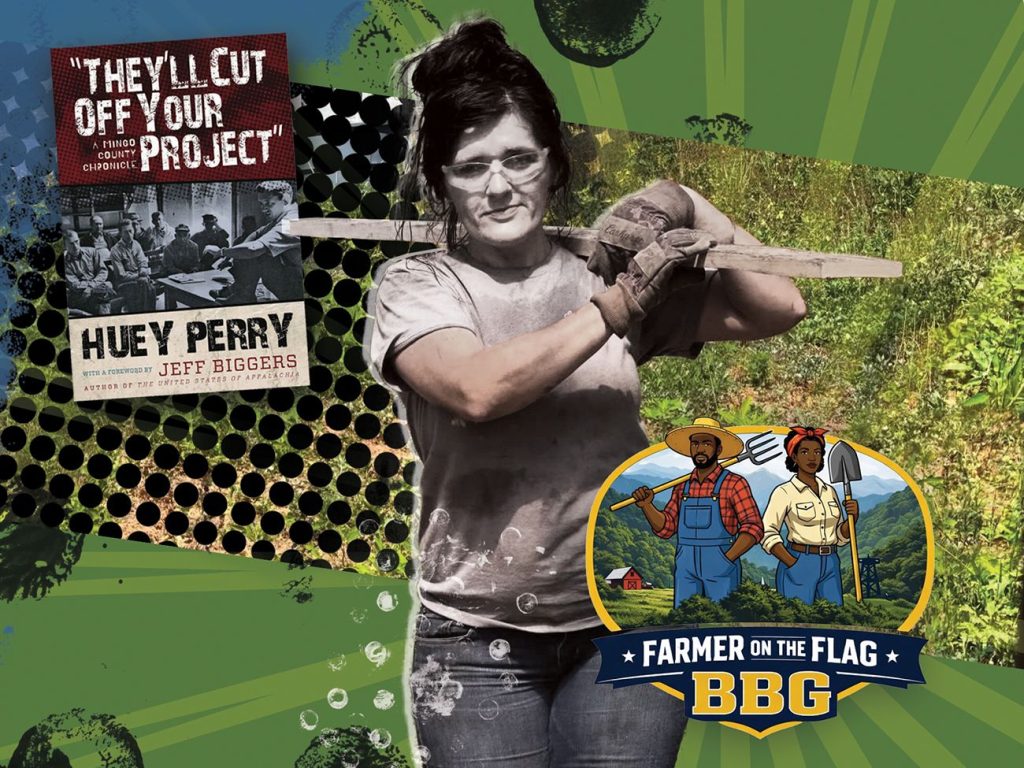
Jessica Caskey, an EDGE producer, had begun building a farm business—an effort now put on hold as funding was cut.
By Crystal Good
Black By God: The West Virginian was among the sub-awardees connected to work supported by the federal program referenced in this story. The termination of the program has affected that work, which was in its early stages and intended to support agriculture coverage. Please follow Farmer On The Flag and sign up for our AgriCULTURE newsletter.
We’ll bring the best from BBG right to your inbox. You can easily unsubscribe at any time.
Sign Up for our Newsletters!
“If they don’t like you, they’ll cut off your project.”
The phrase comes from the title of Huey Perry’s book about his work in a federally funded War on Poverty program in Mingo County, where community-led efforts to build economic self-sufficiency—including food systems, cooperative stores, and local control over resources—were met with resistance, including an FBI investigation, once they began to shift power.
This week, West Virginians are once again confronting the abrupt loss of federal support for locally led economic development.
On March 23, the U.S. Department of Agriculture notified 49 of 50 grantees that it was terminating the $300 million Increasing Land, Capital, and Market Access initiative, effective March 26. The program, created to address long-standing barriers to land access and agricultural capital, funded nearly 50 projects nationwide.
Advocates say the program was one of the few federal efforts directly addressing structural inequities in agriculture. Federal officials, however, argued it “involved discriminatory preferences based on Diversity, Equity, and Inclusion (DEI) and wasteful spending that did little to further lawful agricultural land purchases.”
Last week’s directive halted ongoing projects just as the growing season began, leaving farmers and partners to reassess their plans. Work that had been in motion—staff hired, partnerships formed, projects designed—is now paused or coming to an end. Organizations have been instructed to submit final invoices for work completed prior to the termination date, leaving planned work unresolved.
Among the terminated grantees are West Virginia University’s Working Lands of Central Appalachia, which supported Nourish WV’s staff and a coalition of 11 organizations working to expand land, market, and capital access across the state. According to the project’s 2024 announcement, the $8.5 million initiative was designed to support agricultural workforce training, expand farm-to-institution markets, and develop food-as-medicine programming. It aimed to assist underserved veterans, people with limited resources, and beginning and socially disadvantaged farmers.
“Stopped in their tracks.”
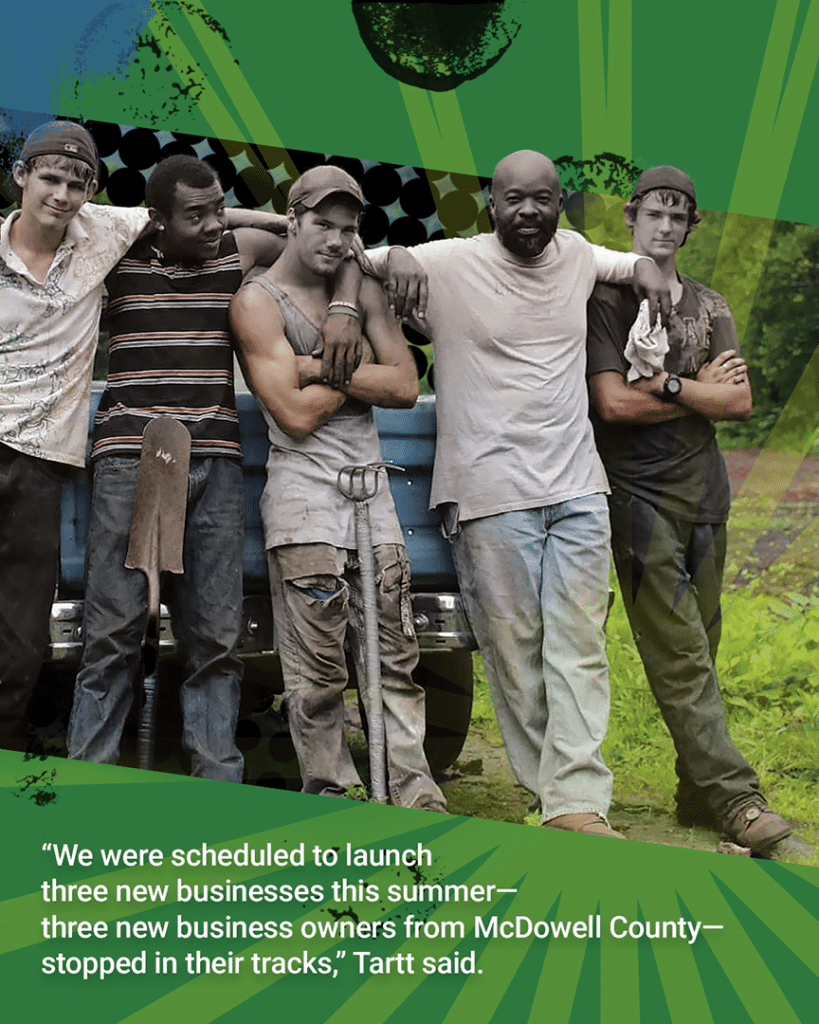
The largest impacts from this cut is in West Virginia is in McDowell County—one of the state’s most economically distressed regions and among the most persistently distressed in the nation.
There, farmer Jason Tartt Sr. had been working to create new pathways into agriculture through the EDGE Demonstration Farm.
His project lost roughly $1.1 million tied to Nourish West Virginia. The work focused on training new farmers, expanding local food production, and creating jobs in a region where stable employment is scarce.
“We were scheduled to launch three new businesses this summer—three new business owners from McDowell County—stopped in their tracks,” Tartt said.
In McDowell County, the land has long defined both survival and opportunity; the loss of funding is not just about a program. It shapes who gets access to land, to food, and to a way of making a living out of some of the hardest health and economic conditions in America.
“The program is working, the community is responding, but we keep getting the rug swiped from under our feet. This is the second time this has happened in less than two years to these producers trying to build a future,” Tartt said.
The language may be different, but the outcome is familiar.
If they don’t like you, they’ll cut off your project.
A fragile pipeline for new farmers
Across the country, the farming population is aging. The average U.S. farmer is nearing 60, raising concerns about who will take over as current producers retire.
Programs aimed at bringing new farmers into agriculture have taken on added urgency—particularly in southern West Virginia, where economic pressures are more pronounced.
The Increasing Land, Capital, and Market Access initiative was designed to address one of the most persistent barriers: access to land.
Created through the American Rescue Plan and expanded under the Inflation Reduction Act, the program launched in 2022. By June 2023, roughly $300 million had been awarded to 50 projects nationwide.
These were not proposals waiting to begin—they were active efforts.
Dr. Megan Govindan said the program was built to address structural gaps.
“Since its inception, the program provided farmers with resources and expertise to address barriers, strengthen land, capital, and market access, and support data-driven decision making,” Govindan said.
The timing of the termination has compounded its impact. The decision came at the start of planting season, when farmers are making final decisions about land use, equipment, and production.
Plans tied to land acquisition, equipment purchases, and expansion are now being delayed—or abandoned. Programs intended to help new farmers get started, or allow existing ones to grow, have been cut off before they could fully take hold.
If they don’t like you, they’ll cut off your project.
Land-Grant Without Reach
Agricultural infrastructure in West Virginia has long been limited, and the systems meant to support farmers have been uneven or underdeveloped. That includes not only technical assistance and market systems, but also information. Few media outlets consistently cover land access, small-scale producers, or the policies that determine who can farm and who cannot. As a result, decisions of this scale can unfold with little sustained attention—even as they reshape the future of agriculture in the state.
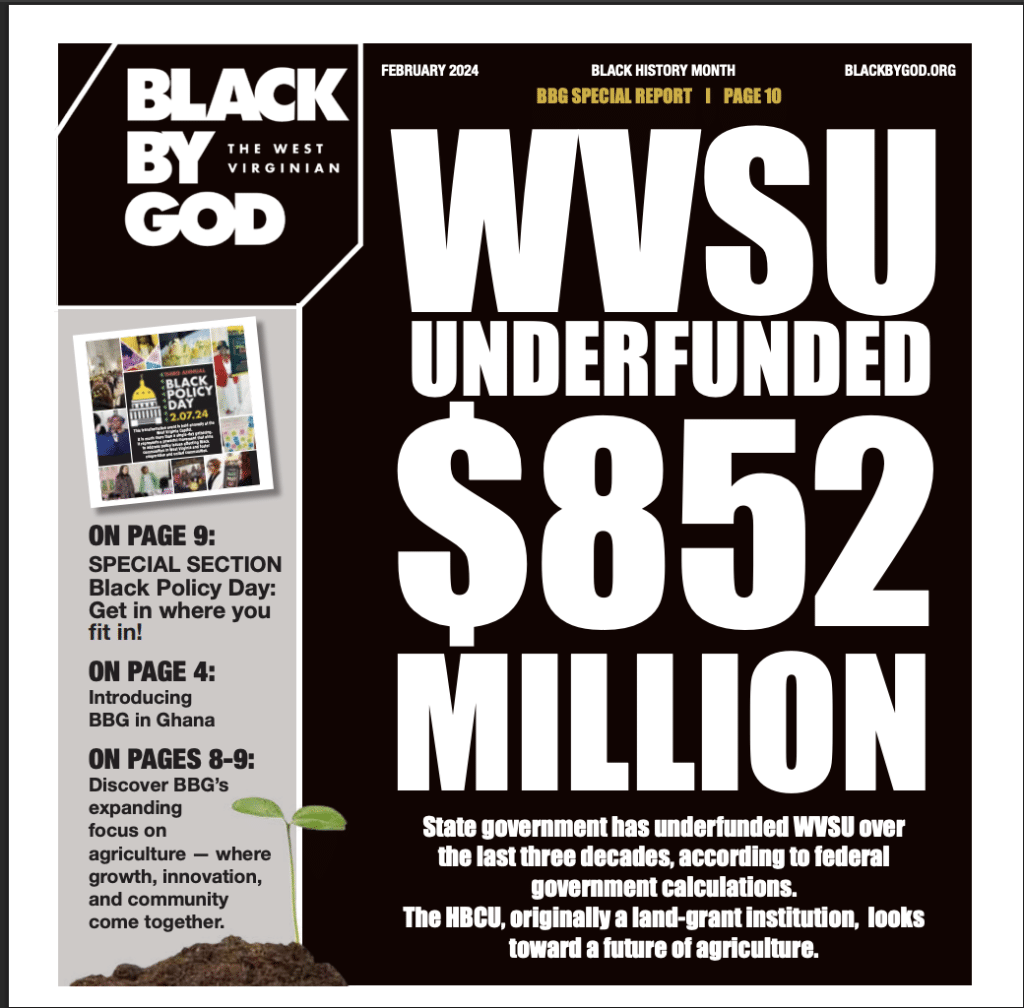
That fragility is not accidental. It is tied to decades of disinvestment in the very institutions designed to support agriculture. West Virginia State University, the state’s 1890 land-grant institution and a Historically Black university, has been underfunded by an estimated $852 million over the past three decades, limiting its ability to fulfill its mission.
Land-grant universities were created to serve the public through research, education, and extension. In practice, that means training farmers, developing new agricultural knowledge, and placing extension agents in communities to provide direct, on-the-ground support. Those agents are often the first call when a crop fails, when a farmer needs to navigate a federal program, or when someone is trying to start a farm with little capital and no roadmap.
West Virginia has two land-grant institutions: West Virginia University, the state’s 1862 land-grant, and West Virginia State University, its 1890 land-grant, established to serve Black students and communities excluded from white institutions. WVU maintains a fully developed agriculture system, including extension services across the state. WVSU, by contrast, lost its agriculture program in the mid-20th century and has spent decades without the resources to rebuild a comparable extension presence—despite its land-grant designation and mandate.
Recent efforts to establish a new agriculture school at WVSU signal a shift. But what was lost over decades of underfunding is not just infrastructure—it is people.
A generation of extension agents who would have been embedded in communities—walking the land with farmers, diagnosing soil and crop issues, helping producers access grants and loans, building relationships over time—never fully materialized. That absence is not theoretical. It shows up in missed opportunities, in farms that never get started, and in producers who leave agriculture because the support system isn’t there.
Without that presence, the path to farming becomes steeper, and in some cases, out of reach, particularly for beginning farmers and those in historically underserved communities.
The gaps extend beyond education and technical assistance. Processing facilities, distribution networks, and market access remain limited. At the same time, the lack of consistent agricultural reporting means these structural challenges often receive little sustained public attention—even as they shape who can farm and who cannot.
The questions raised by the program’s termination are not new, but they remain unresolved: who gets access to land, who receives support to begin with, and what happens when those pathways disappear.
If they don’t like you, they’ll cut off your project.
As reported by TheGrio, John Boyd, president of the National Black Farmers Association, put it more directly: “They don’t want Black people to participate in these programs.”

Boyd has long warned that Black farmers continue to face barriers tied to decades of documented discrimination—barriers that have led to land loss, limited access to credit, and a shrinking share of farmland ownership nationwide.
Federal officials said the program included Diversity, Equity, and Inclusion provisions they considered inappropriate for federal funding. But the initiative itself was designed to expand access to land, capital, and markets for producers who have historically been excluded from those systems.
In a state where the population is largely white and economic distress is widespread, this isn’t abstract. These cuts are landing on poor and working-class communities—many of them white—who have long struggled to access federal support. The cancellation removes one of the few pathways that was beginning to reach them.
In West Virginia, these decisions shape who gets to farm, who gets to earn, and who has access to health.
For many, the message is the same: If they don’t like you, they’ll cut off your project.
For farmers, advocates, and community members looking to respond, resources are available through the National Young Farmers Coalition, the National Sustainable Agriculture Coalition, and the USDA Farm Service Agency.
If you appreciate BBG's work, please support us with a contribution of whatever you can afford.
Support our stories
Author