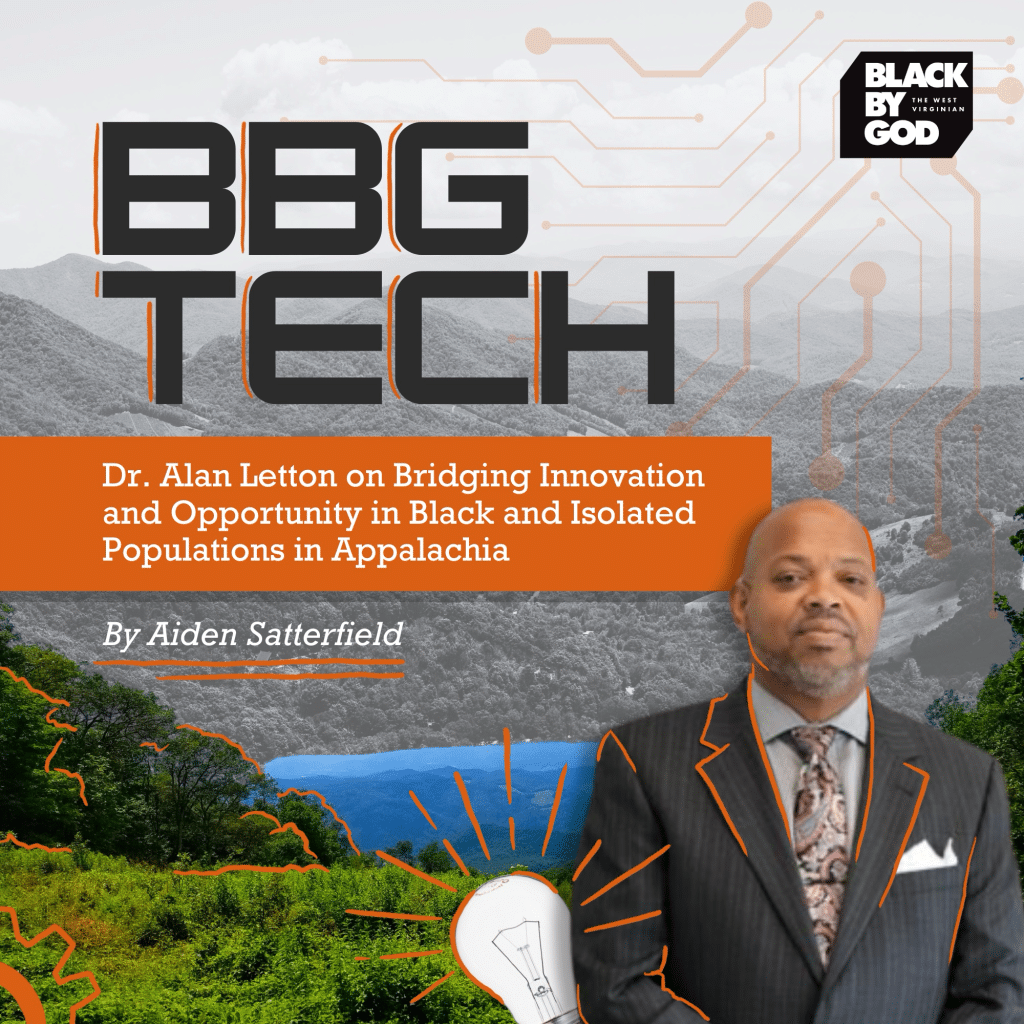
BBG Tech Exclusive: Dr. Alan Letton on Bridging Innovation and Opportunity in Black and Isolated Populations in Appalachia
Dr. Alan Letton’s journey—from the bustling streets of Chicago to the Massachusetts Institute of Technology, to earning his PhD in Chemical Engineering at the University of Cincinnati, and finally to the quiet, rolling hills of West Virginia—is more than just a story of personal success; it’s a testament to the power of community, education, and belief in the potential of Black Appalachia. As the Director of the Center for Economic & Community Development in Black Appalachia & Isolated Communities at Marshall University, Dr. Letton is on a mission to transform underserved and isolated communities through technology, education, and strategic innovation.
I was lucky enough to get about 45 minutes out of his busy day and pick his brain about a few topics related to the Black Appalachia science and technical scene. I was given so valuable information that I could’ve written a book!
Here is what I learned.
Legacy of Influence and Innovation
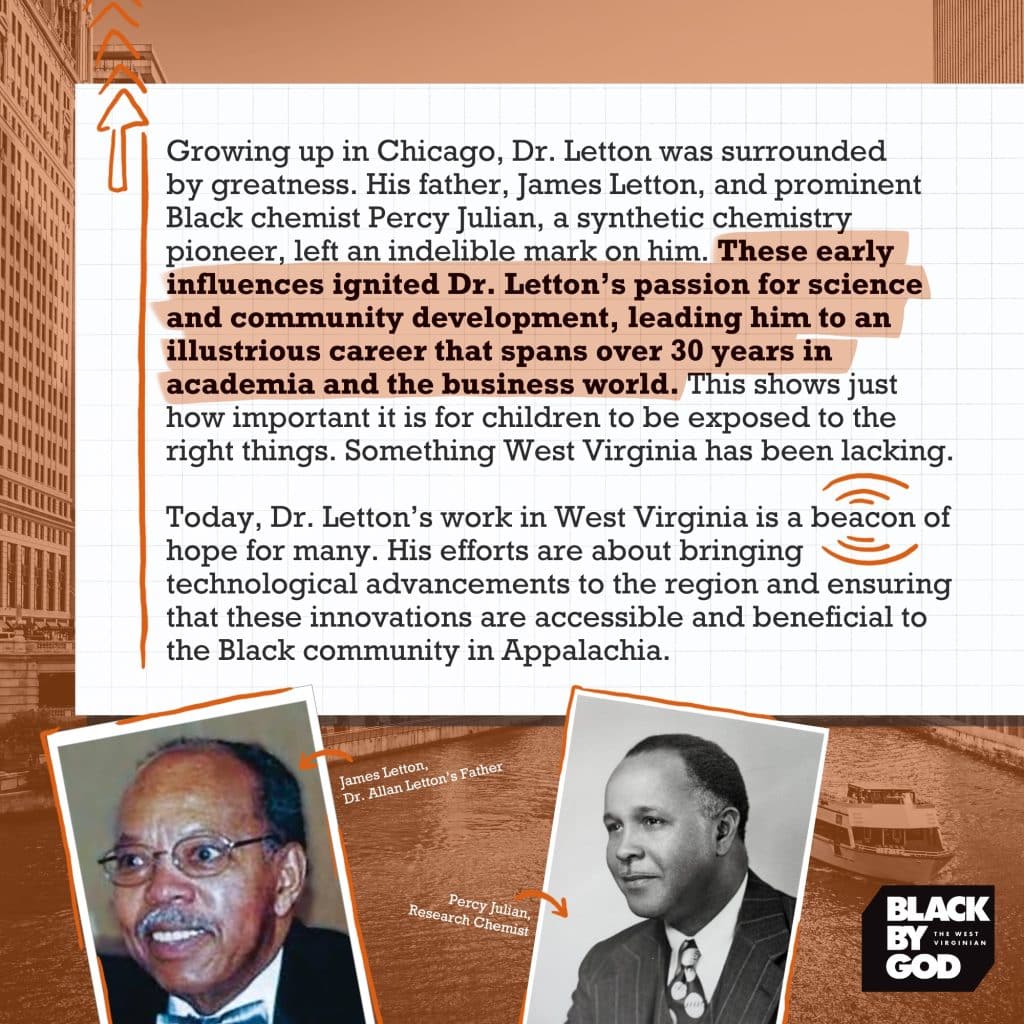
Growing up in Chicago, Dr. Letton was surrounded by greatness. His father, James Letton, and prominent Black chemist Percy Julian, a synthetic chemistry pioneer, left an indelible mark on him. These early influences ignited Dr. Letton’s passion for science and community development, leading him to an illustrious career that spans over 30 years in academia and the business world. This shows just how important it is for children to be exposed to the right things. Something West Virginia has been lacking.
Today, Dr. Letton’s work in West Virginia is a beacon of hope for many. His efforts are about bringing technological advancements to the region and ensuring that these innovations are accessible and beneficial to the Black community in Appalachia.
Challenges and Opportunities in Black Appalachia
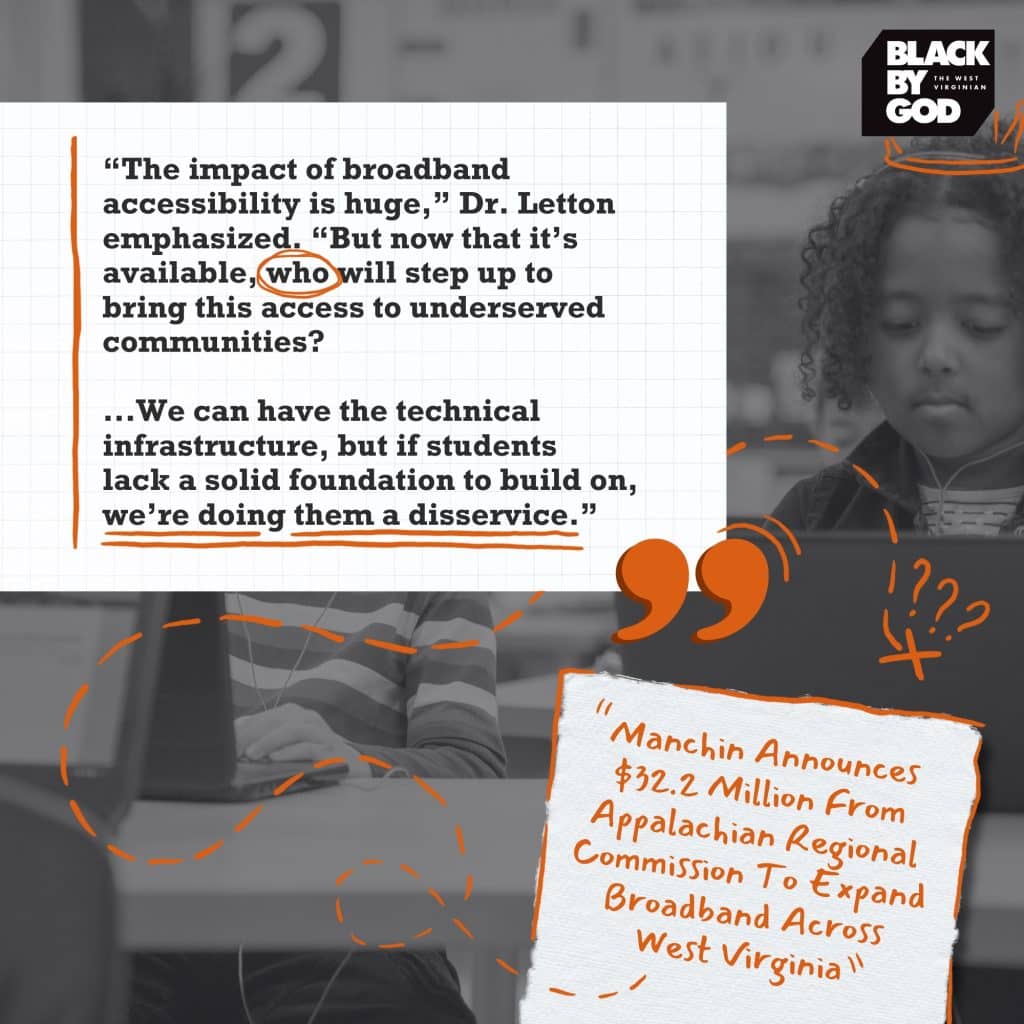
In our interview, Dr. Letton discussed Black tech entrepreneurs’ unique challenges in rural areas, particularly in West Virginia. A primary obstacle is the lack of reliable broadband access, a significant barrier to technology adoption and growth.
“The impact of broadband accessibility is huge,” Dr. Letton emphasized. “But now that it’s available, who will step up to bring this access to underserved communities?”
He also highlighted that, although funding exists—such as federal grants—the real challenge lies in aligning local school systems with these technological opportunities. “Math and science skills are essential,” he noted. “We can have the technical infrastructure, but if students lack a solid foundation to build on, we’re doing them a disservice.”
The disparity in K-12 education quality, especially in rural areas, limits students’ ability to pursue STEM careers, which are vital for technology-driven economic development.
A Vision for the Future: The Statewide Black Business Conference
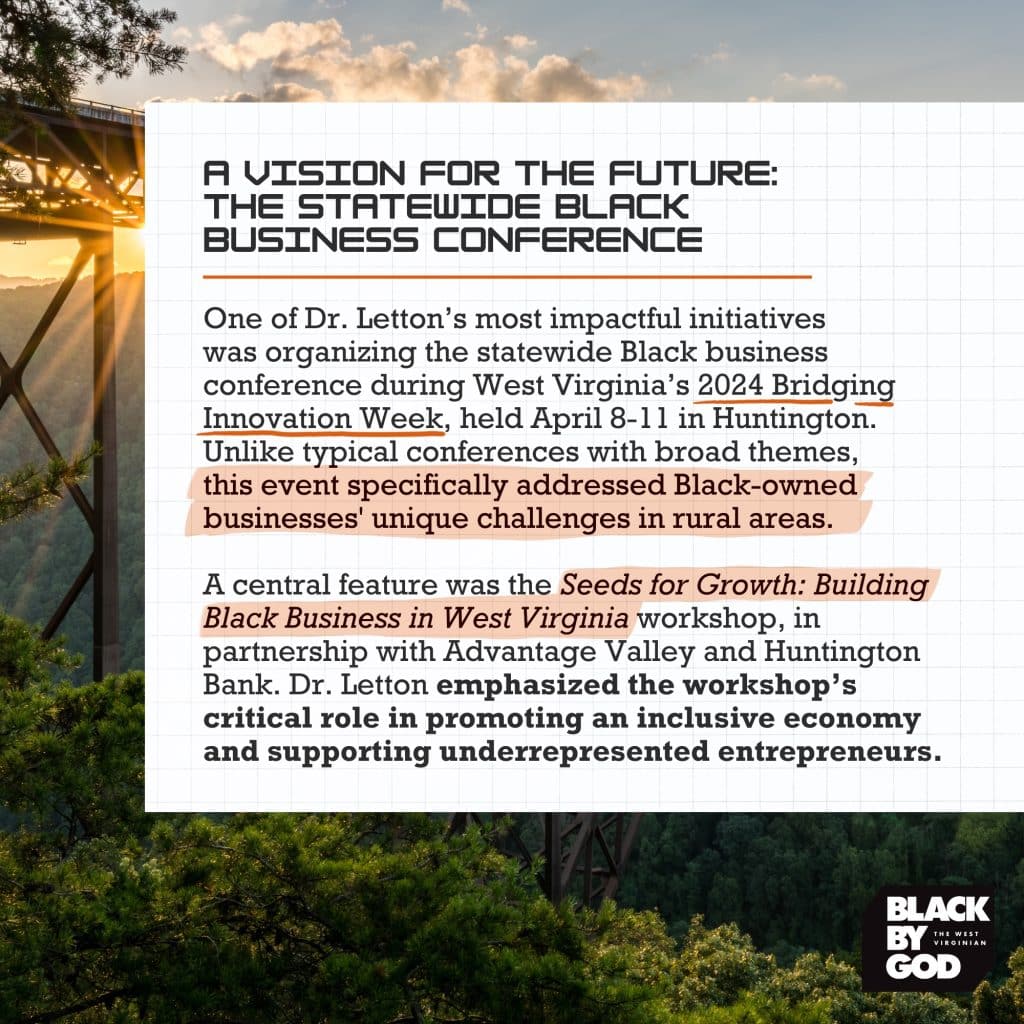
One of Dr. Letton’s most impactful initiatives was organizing the statewide Black business conference during West Virginia’s 2024 Bridging Innovation Week, held April 8-11 in Huntington. Unlike typical conferences with broad themes, this event specifically addressed Black-owned businesses’ unique challenges in rural areas. The conference brought together a variety of events, competitions, and networking opportunities to support entrepreneurship across the state.
A central feature was the Seeds for Growth: Building Black Business in West Virginia workshop, hosted by the Center for Economic & Community Development in Black Appalachia and Isolated Communities at Marshall University, in partnership with Advantage Valley and Huntington Bank. Dr. Letton emphasized the workshop’s critical role in promoting an inclusive economy and supporting underrepresented entrepreneurs.
Reflecting on past efforts, Dr. Letton noted that strategies often relied on “throwing spaghetti at the wall” to see what might work. In contrast, this conference took a targeted approach by focusing on three “micro-economies”—women’s health and beauty, culinary businesses, and the political environment—as key areas for growth. By examining these sectors, Dr. Letton sought to uncover practical strategies to help Black-owned businesses thrive. Held at the Huntington Convention Center, the conference established a foundation for ongoing dialogue and concrete actions to support Black entrepreneurs in rural West Virginia.
Looking to the future, Dr. Letton is also focused on engaging younger generations in tech initiatives. He recognizes the importance of youth involvement in the future of technology in rural and isolated communities. His work continues through programs and partnerships designed to cultivate this next generation of innovators, ensuring that his impact endures well into the future.
Policy and Community Development
. Letton also strongly advocates for policy changes that can support tech development in underserved communities. He argues that K-12 education reform is critical, particularly in how schools prepare students for STEM careers.
“The old system of getting the courses to graduate doesn’t look at getting you ready for what career course you may go on,” he noted.
He believes that exposing students to real-world problems early on, perhaps through partnerships with local hospitals or firms, could help them find their niche and set them on a path to success.
Dr. Letton emphasizes the importance of credit unions and their absence in many Black communities. With these institutions, Black-owned businesses can take advantage of opportunities that could spur economic growth. He sees universities playing a crucial role in partnering with communities to secure grants and federal funding, thereby eliminating financial barriers for local businesses.
A Call to Action
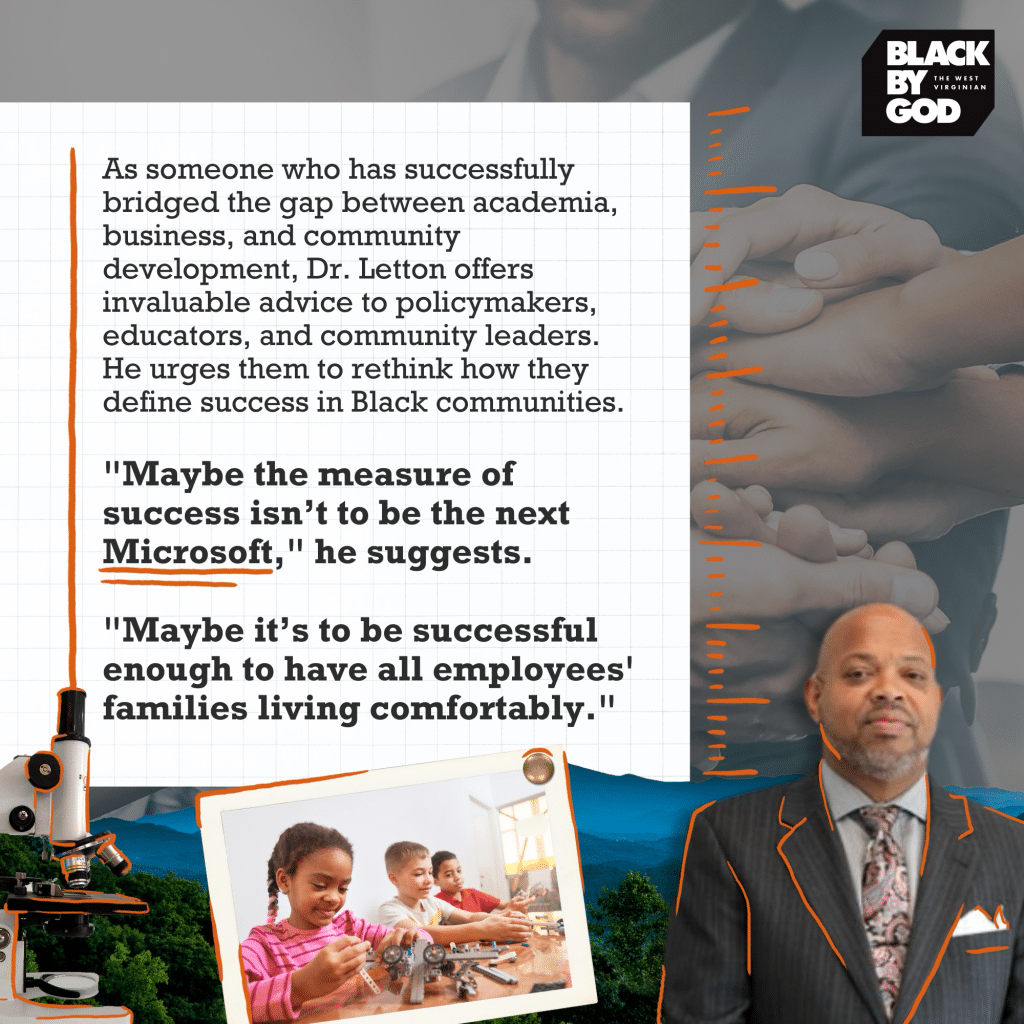
As someone who has successfully bridged the gap between academia, business, and community development, Dr. Letton offers invaluable advice to policymakers, educators, and community leaders. He urges them to rethink how they define success in Black communities.
“Maybe the measure of success isn’t to be the next Microsoft,” he suggests.
“Maybe it’s to be successful enough to have all employees’ families living comfortably.”
Dr. Letton’s work is more than just a career—it’s a calling. His vision for a more tech-savvy and economically resilient Black Appalachia is not just about bridging the digital divide. It’s about creating a future where every community, no matter how isolated, has the tools and opportunities to thrive.
Read more on BBG: African American Economic Development at Marshall University
If you appreciate BBG's work, please support us with a contribution of whatever you can afford.
Support our stories
Author