
Breaking the Chains of Poverty
My journey from struggle to skilled trades with West Virginia Women Work
By Kiaira Payne
I am a 31-year-old Black neurodivergent West Virginia native from the North Central part of the state. It was a struggle for many years to find my role in society, having been raised in abject poverty in a small coal town. Despite my circumstances, I was afforded the privilege of attempting a college education, ignorant of the reality that I was essentially prolonging my “stay” in poverty by accumulating crippling student debt, as so many of us do. Surrounded by those none the wiser, I stuck to the plan, which I later found out was not a plan but patriarchy. I worked all the jobs labeled for “women like me”—fast food, CNA, home health, customer service, and more.
Help us create a directory of Black businesses and entrepreneurs in West Virginia.
Let’s work together to put Black businesses on the map!
Share your
favorite business
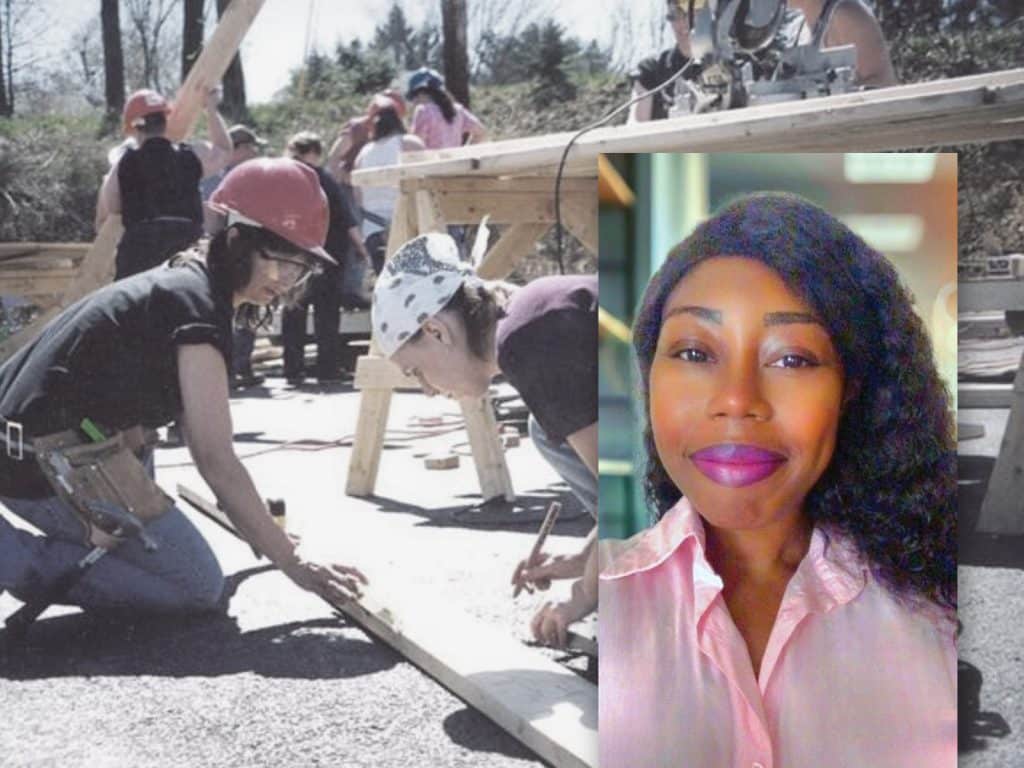
Almost two years ago, I became aware of a nonprofit called West Virginia Women Work (WVWW). For the first time in my life, I saw people like me working in jobs that I didn’t know were an option. Women in skilled trades? Black women in skilled trades? What are skilled trades? They get paid how much? These types of questions and possible realities flooded my mind.
I applied and was immediately scheduled for a Zoom meeting with the Program Coordinator, Lakiesha Hines. I was excited to explore an opportunity for the first time with someone who I shared at least one thing in common with— she was a beautiful, strong Black woman. More than that, she was in a position of power. To my surprise, another party joined the meeting. It was Executive Director Carol Phillips. We shouldn’t judge a book by its cover, but her name and demographics catapulted me back to every other interview I’d had at every other job. I found myself again suffocating behind the mask.
We’ll bring the best from BBG right to your inbox. You can easily unsubscribe at any time.
Sign Up for our Newsletters!
You know the mask that a lot of us wear to keep ourselves safe in social and corporate settings with non-Black employers. Code-switching of a sort, but deeply magnified by all the nuances of being poor and hungry, neurodivergent, and nervous. I was prepared for typical interview questions such as “How did you hear about us? Why should we welcome you aboard? What’s your experience?” However, surprisingly, she decided not to insult me with such lazy banter. Changing the complete trajectory of my life, it started when she first asked, “What is poverty?” Her second question was “What keeps people in poverty?”
Wow. Things had shifted. We had a conversation instead of an interview. The feelings of relief, confidence, and excitement returned. People are great at discussing what they know, and I know poverty like West Virginians know backroads. But so does she. And so does Kiesha. And so does every staff member of West Virginia Women Work. I’ve been with WVWW for almost a year now, learning, teaching, traveling, changing, and saving lives. Part of my answer to Carol’s question was, and in many cases still is, “Some of us don’t know any better.” You don’t know what you don’t know. Common sense is only common to you.
I am sharing some of my journey with this amazing nonprofit, hoping to inform and encourage others in our community to take advantage of the opportunities provided by West Virginia Women Work. The next Step Up For Women Construction Pre-apprenticeship Training starts on Sept. 3, 2024. This program offers free training in carpentry, electrical, plumbing, masonry, and more during the spring and fall. Participants earn several certifications recognized by the Department of Labor, such as OSHA 10-hour Construction, WV Plumber in Training, WV HVAC Tech, forklift operator, and First Aid/CPR/AED.
West Virginia Women Work provides participants with mileage reimbursement, a stipend for work boots and clothing, tools, and other support services. Additionally, they offer resume building and interview preparation for job placement at the conclusion of the 12-week training. Applicants must be 18+ and have a reliable way to get to and from class.
My journey with West Virginia Women Work has not only transformed my life but has also ignited a passion within me to elevate our communities by promoting self-sufficiency, community enrichment, and empowerment. Meeting people where they are and supporting them to reach new heights has become my mission. This organization has given me the tools to break the chains of poverty and has shown me the power of skilled trades. I am now part of a movement that is changing lives, one woman at a time.
To apply: westvirginiawomenwork.org/sufwc-application.
If you appreciate BBG's work, please support us with a contribution of whatever you can afford.
Support our stories


