
WV Senate committee considers slew of anti-LGBTQ+ bills, advances two
The Senate Judiciary Committee advanced bills targeting transgender West Virginians and drag performances. It also pulled a bill that would have forbidden state entities from engaging in any discussion of sexual orientation and gender identity.
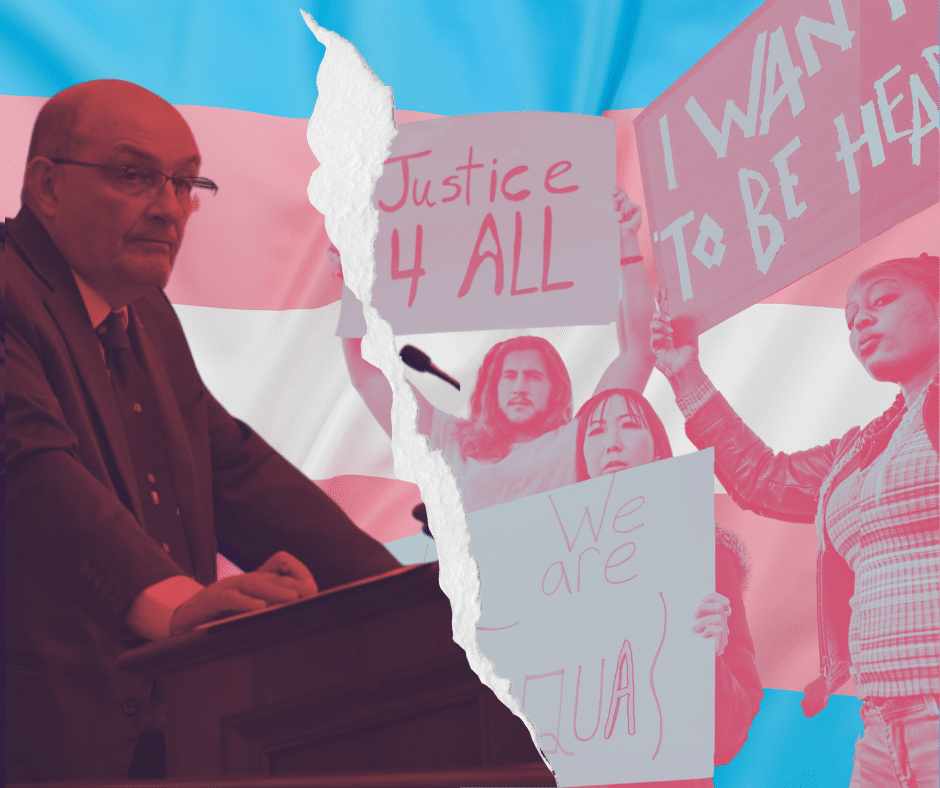
CHARLESTON- The Senate Judiciary Committee met last Friday and considered several bills that would target the LGBTQ+ community in West Virginia. SB 590 would make “adult cabaret performances” illegal on public property and in places where they could be viewed by a minor. It seems likely that SB 590 could be used to criminalize drag performers. Drag is a form of entertainment, where performers use exaggerated costumes and mannerisms to portray a gender identity different from their own.
The bill defines “adult cabaret performances” as “topless dancers, go-go dancers, exotic dancers, strippers, [or] male or female impersonators who provide entertainment that appeals to the prurient interest.” Any person violating the proposed law would face a misdemeanor on the first offense and a felony on the second offense. Felony penalties include one to five years in prison and/or up to a $25,000 fine.
Much of the discussion around this bill revolved around its vagueness. SB 590 does not define what a “go-go dancer” is or what would qualify as a “male or female impersonator.” The bill also does not provide an objective definition of what “prurient interests” are.
“I think some of these, this seems to me like a code section that’s intent on saying, ‘Gotcha.’ And you could certainly have somebody charged with a number of these things unless it’s clearly defined,” said Senator Joey Garcia, D-Marion.
We’ll bring the best from BBG right to your inbox. You can easily unsubscribe at any time.
Sign Up for our Newsletters!
No senators spoke in support of SB 590, but the bill was advanced to the full Senate. It will need to pass the Senate and the House of Delegates and receive Governor Patrick Morrisey’s signature to become law.
Senators also considered Originating Bill 1 (ORG. 1) introduced to the floor Monday as SB 1083. The bill would add “undressing” in the locker room of the opposite sex to the definition of indecent exposure. It would also require people convicted of indecent exposure to register as a sex offender, clarify certain aspects of indecent exposure and increase penalties in certain circumstances. The bill also prohibits undressing in the locker room of the opposite gender.
Last year, Morrisey signed a bill into law that ended legal recognition of transgender people and restricted their access to single-sex spaces, such as bathrooms, changing rooms and domestic violence shelters. ORG. 1 is likely to criminalize transgender people changing in locker rooms that align with their gender identity.
During Friday’s committee meeting, Senator Ryan Weld, R-Brooke, expressed concern that the bill could criminalize a coach removing a jacket in the locker room. He also said the language as presented was likely illegal, as it used the phrase “undressing,” while indecent exposure is usually defined by exposing one’s sex organs or anus.
“It’s void for vagueness,” Weld said. “You can’t create another statute or another offense within an offense that has separate and distinct elements to be proven.”
Weld attempted to amend the bill by removing “undressing” and bringing the definitions of this new section in line with the rest of the indecent exposure statute. His amendment was defeated.
SB 1083 was advanced to the full Senate and will need to pass the Senate, House, and receive Morrisey’s signature to become law.
The Judiciary Committee also briefly considered SB 775, which would prohibit “state government entities,” including public universities, state-run healthcare facilities, social services and any entity that receives state funds from “promoting or facilitating” sexual orientation or gender transitioning.
“Promoting and facilitating” is defined in the bill as including “discussion, training, curriculum, counseling, medical procedure, referral, policy implementation, and financial support.”
This could prohibit public universities from offering courses on LGBTQ+ health, or courses that discuss LGBTQ+ themes.
SB 775 was pulled from the agenda after Weld questioned the constitutionality of the speech restrictions in the bill.
It is unclear how prohibitions on including sexual orientation and gender identity in discussion and curriculum could impact externally accredited higher education programs, such as nursing or social work. It is also unclear how this could impact medical treatment for LGBTQ+ West Virginians, considering a significant number of hospitals are under the WVU Medicine umbrella.
In its current form, the bill has no exceptions.
It is unlikely that SB 775 will become law unless rules are suspended as Crossover Day—the day when bills need to be passed out of their chamber of origin—is Wednesday.
All three bills discussed Friday are coming in the context of repeated attacks on LGBTQ+ rights in West Virginia and across the United States. Last year, Morrisey signed bills into law ending legal recognition of transgender people, forbidding instruction on sexual orientation in public schools and ending DEI programs in the state. The Senate also passed a bill overturning local fairness ordinances, but it was never taken up in the house. Fairness ordinances are local ordinances prohibiting discrimination against LGBTQ+ individuals.
Back in 2023, the legislature enacted a near total ban on gender affirming care for minors. Across the United States, 27 states have passed bans on gender affirming care, impacting more than a third of transgender youth. 19 states have passed laws restricting LGBTQ+ topics in classrooms, and at least 22 states have passed DEI bans. Kansas recently made news for invalidating the IDs of transgender Kansans overnight.
At the federal level, President Donald Trump has signed a slew of anti-LGBTQ+ executive orders restricting gender markers for transgender Americans, banning transgender people from serving in the military, limiting gender-affirming care, restricting LGBTQ+ topics in the classroom and prohibiting transgender girls from playing on sports teams that align with their gender identity.
The Heritage Foundation’s Project 2025 calls to prohibit transgender people from serving in the military and for the elimination of policies that prohibit discrimination on the basis of sexual orientation and gender identity. This wave of anti-LGBTQ legislation has had a negative impact on LGBTQ+ people across the country. Per a 2024 Trevor Project survey, ninety percent of LGBTQ+ young people said their well-being was negatively impacted by politics. Per that same survey, 39 percent of all LGBTQ+ young people and 46 percent of transgender and nonbinary young people seriously considered attempting suicide.
If you appreciate BBG's work, please support us with a contribution of whatever you can afford.
Support our stories
Author

Related Articles
“Make West Virginia Healthy Again” Act would fight obesity, malnutrition, diabetes, and more.
HB 4982 has already passed the House and gone to Governor Patrick Morrisey’s desk. It would give the existing Office of Healthy Lifestyles greater authority, create the Healthy Lifestyle Fund and require Medicaid recipients to have access to additional programs.
WV Senate committee advances bill to reinstate death penalty
Senate Bill 1037 would reinstate the death penalty as a possible punishment for people convicted of first-degree murder with aggravating circumstances.