
Morrisey’s Mountain State Comeback and battle against ‘the woke mind virus’ in WV
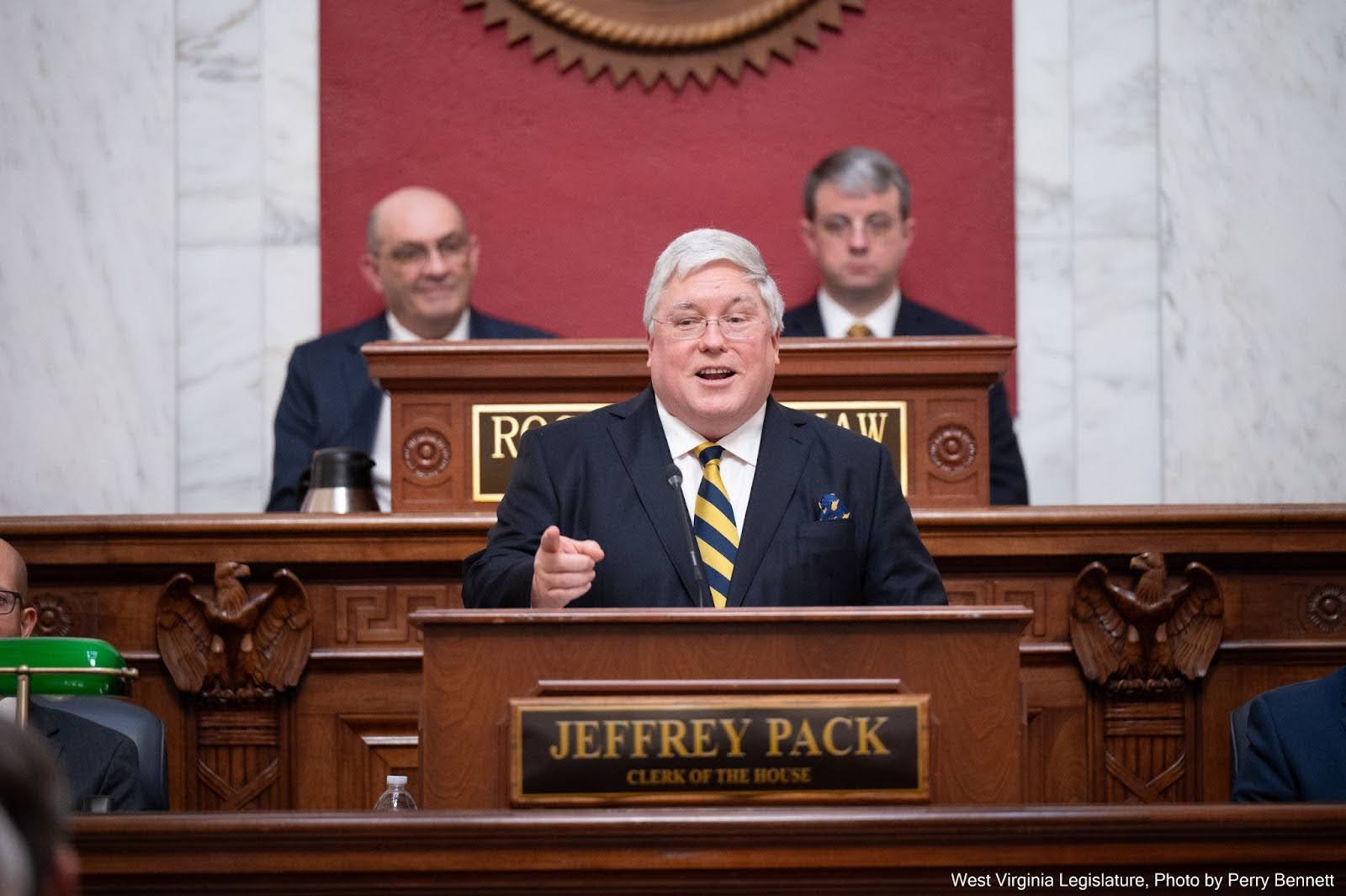
Gov. Patrick Morrisey kicked off his first State of the State address by sharing his backstory—and a feel-good homage to the grit, determination and hard work that he says embody the Mountaineer spirit. He recounted paying his way through college, becoming the first in his family to graduate and “soldiering on” after nearly going bankrupt as a young adult.
“Now, that doesn’t make me special. It doesn’t,” Morrisey said. “That’s just the story of most West Virginians, the kind of work they put in every single day.”
Over roughly an hour, Morrisey outlined his vision for a “Mountain State Comeback,” a golden era of resurgence for the state’s economy. He also vowed to continue restricting Diversity, Equity and Inclusion Initiatives and teased legislation to require that transgender people use bathrooms based on biological sex at birth.
To achieve his economic goals, Morrisey’s main priorities include growing the data industry, slashing “red tape,” cutting taxes and making it easier to extract coal and natural gas.
“We persevered through the war on coal and dealt a major blow to Biden’s radical Green New Deal,” Morrisey said. “When I served as your attorney general, I built the coalition that stopped the radical liberals in D.C., which threatened our West Virginia way of life.”
Morrisey also announced plans to create the West Virginia Power Tech Center through a collaboration with state higher education institutions. He said the center will help West Virginia become the most aggressive supplier of energy to the growing technology industry.
Further lowering the state’s income tax is a substantial part of Morrisey’s plan to make West Virginia the most “dynamic” and “friendly” state for data, cryptocurrency and superintelligence. Although Morrisey acknowledged the budget he inherited would put the state $400 million in the red for Fiscal Year 2026, he said the answer to fiscal constraints isn’t to raise taxes—it’s to cut spending and grow the economy.
Spending cuts could hurt programs that help some of the state’s most vulnerable citizens, including Medicaid, according to reporting from Mountain State Spotlight. Morrisey recently directed all state agencies to review spending to save taxpayer dollars.
“We are going to uncover all of the waste and abuse that hides in the dark corners of state government, and we will root it out,” Morrisey said. “If you like what President Trump is doing in D.C., you’re going to love what we’re doing right here in West Virginia.”
Morrisey acknowledged that a true Mountain State comeback would have to address the state’s problems. Although he mentioned that West Virginia ranks last in public health and 49th in educational attainment, he didn’t address other key issues. The state’s foster care crisis, crowded prisons and child care shortage weren’t discussed at all.
To address West Virginia’s public health crisis, Morrisey said he hopes lawmakers will remove the state’s certificate of need requirement. This legal document is currently required to develop or acquire a new healthcare facility in West Virginia. Research shows certificate of need programs can reduce the cost of delivering healthcare if they are effectively structured.
To help West Virginia’s struggling schools, Morrisey wants lawmakers to change the school aid formula and allow schools to ban cell phones in the classroom. But he spent more time discussing his satisfaction with the Hope Scholarship, which allows public funds to be used on vouchers for private schools and alternative education options. Research from the West Virginia Center on Budget Policy found that the HOPE Scholarship has driven enrollment declines and funding losses in schools across the state.
Education in West Virginia will surely be impacted by Morrisey’s executive order eliminating Diversity, Equity and Inclusion programs in state government and any entity receiving state resources.
“We’re going to root out DEI and eradicate the woke virus from infecting our schools,” Morrisey said. “Here in West Virginia, we’re going to follow the Equal Protection Clause of the Constitution. Every person is equal in the eyes of God, and starting now, they’ll be equal under the law as well. We are not ever going to provide unlawful special privileges to special classes of people.”
Diversity, Equity and Inclusion (DEI) programs help groups that have historically faced obstacles to equal opportunities in the workplace. They benefit people of color, women, disabled people, veterans and LGBTQ+ folks. In addition to rooting out DEI, Morrisey seems likely to support legislation that will actively restrict the rights of transgender people.
“We’re trying to define sex-based terms, such as ‘woman,’ ‘man,’ ‘girl,’ ‘mother,’ and allow for facilities such as locker rooms, bathrooms and rape crisis centers to be based on biological sex,” Morrisey said. “West Virginia will lead with common sense.”
After outlining his priorities, Morrisey wanted to close on a hopeful note. Just a few days ago, Morrisey said, millions of Americans had seen a truly inspiring Super Bowl ad. As the commercial showed clips of people moving into their dream homes, “Take Me Home, Country Roads” played in the background.
In a few years time—perhaps at a West Virginia University football game—Morrisey said it’s his goal for thousands of students to sing that song—and not just because they’re taking pride in a Mountaineer victory.
“They’ll sing with pride knowing that their job, their family and their future will be right here in West Virginia. Ladies and gentlemen, the Mountain State Comeback is here, and it starts right now.”
Within moments, John Denver’s version of the song began blasting throughout the entire House chamber. Readying themselves to promote—or resist— Morrisey’s agenda, nearly everyone in the room belted into song.
If you appreciate BBG's work, please support us with a contribution of whatever you can afford.
Support our stories
Related Articles
It’s the last day of WV’s Legislative Session. Here’s what bills are dead and what’s still in play.
Here’s a roundup of key measures that could still become law—and ones that are (probably) dead as we approach sine die.
“Make West Virginia Healthy Again” Act would fight obesity, malnutrition, diabetes, and more.
HB 4982 has already passed the House and gone to Governor Patrick Morrisey’s desk. It would give the existing Office of Healthy Lifestyles greater authority, create the Healthy Lifestyle Fund and require Medicaid recipients to have access to additional programs.