
WV Senate approves bills to change election law, considers more
The West Virginia Senate passed several election-related bills Tuesday, March 4, clarifying current law and prohibiting municipalities from adopting ranked-choice voting.
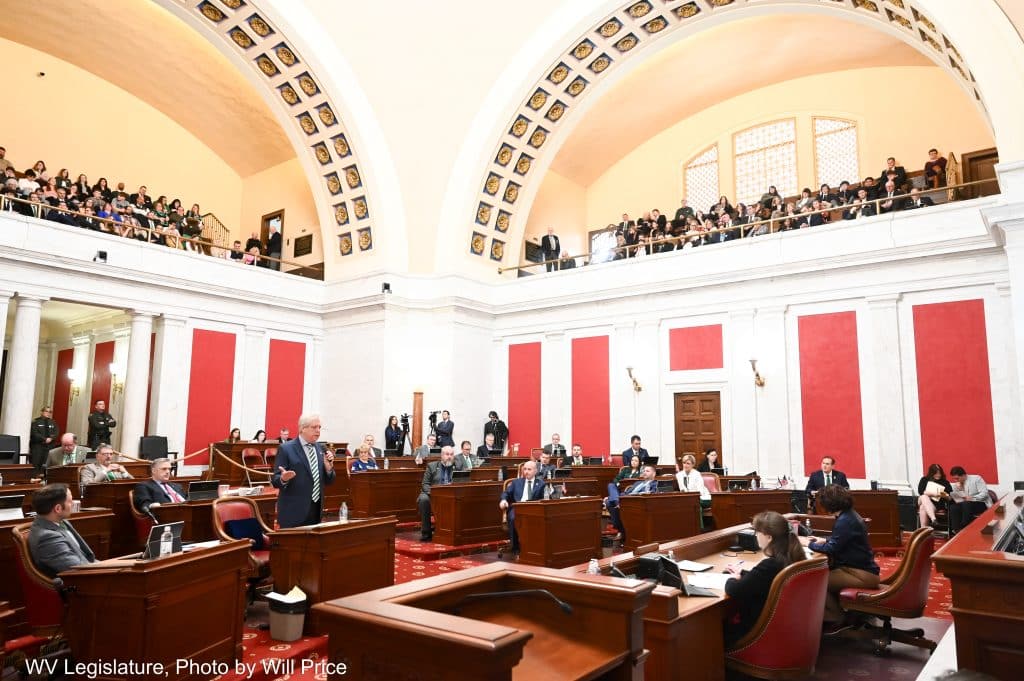
CHARLESTON – Several Senate bills have been passed, with more waiting in committee, that seek to change or clarify state election laws. Three such bills passed with broad support Tuesday, March 4.
Senate Bill 490 would prohibit ranked-choice voting in the state of West Virginia. Ranked-choice voting allows voters to “rank” their preferred candidates, rather than voting for just one person. Voters can pick their first choice, second choice, third choice and so on.
If no candidate receives more than fifty percent of the vote, the candidate that received the least votes is “eliminated,” and voters’ second choices are tabulated. Then, their third choices–you get the idea. This process continues until one candidate receives an outright majority, ensuring broader public support for the eventual winner. Even if someone’s first choice for office loses, their vote can contribute to their second, third or fourth choice winning.
Sen. Mike Oliverio, R-Monongalia, defended efforts to prohibit ranked-choice voting, comparing the process to a West Virginia University and University of Pittsburgh football game. He described the outcome of ranked-choice voting as referees determining that the loser of the game is actually the winner.
We’ll bring the best from BBG right to your inbox. You can easily unsubscribe at any time.
Sign Up for our Newsletters!
Sen. Joey Garcia pushed back on the analogy, clarifying that ranked-choice voting settles contested races between three or more candidates, where no single candidate receives more than 50 percent of the vote. While not endorsing ranked-choice voting himself, Garcia said municipalities that wished to experiment with the voting system should have the opportunity.
Sixteen states have adopted ranked-choice voting legislation to some degree, including Alaska, Maine and Utah. Ten others, including Kentucky, Florida and Montana, have prohibited the practice.
Some have argued that ranked-choice voting can decrease polarization and weed out extremist candidates.
The Senate passed SB 490 with the two Democrats, Sen. Joey Garcia and Sen. Mike Woelfel, voting against the measure.
In other Senate news…
Senate Bill 488 and Senate Bill 486 passed on Tuesday with broad support, too.
SB 488 clarifies electioneering laws, allowing for the use of cellphones within a polling location to record “potential violations of law.”
SB 486 clarifies state law, regarding disenfranchising the mentally incompetent and felons. A court order is required to deem a voter mentally incompetent before suspending their right to vote, and felons lose their right to vote at the time of their conviction.
Earlier in the week, the Senate unanimously approved Senate Bill 50, requiring municipalities to hold their elections at the same time as statewide elections. Current state law says municipal elections are to occur on the second Tuesday of June. If signed into law, SB 50 would give municipalities until July 1, 2032, to move election day to the primary or general election dates.
Several other bills are sitting in committee, including a bill requiring judicial races to become partisan and a constitutional amendment requiring U.S. citizenship to vote in West Virginia–something already required under federal and state law.
If you appreciate BBG's work, please support us with a contribution of whatever you can afford.
Support our stories
Author

Related Articles


WV Senate committee advances bill removing curriculum, vaccine and standardized test requirements for private schools
SB 216 would allow private schools to teach students virtually anything — or nothing at all. It would remove requirements related to instructional hours, curriculum objectives, standardized tests and vaccines.

WV senate advances bill to criminalize sending people abortion pills
Senate Bill 173 would impose mandatory prison sentences of between three and 10 years on non-medical professionals who prescribe or send abortion medication to West Virginia residents through online services.