A New Museum in West Virginia Is Preserving a Hidden Chapter of Black American History
By Traci Phillips | Black By God: The West Virginian
In the heart of Beckley, West Virginia — a region often flattened into coal-town stereotypes and overlooked in national conversations about race — a long-silenced chapter of Black American history is being restored with pride and purpose. Inside what is now Stratton Elementary, the former Stratton High School has been reborn as the Stratton High Tribute Museum, a cultural space preserving the power, memory, and brilliance of Black Appalachia.
The opening is more than a local celebration.
It is a national reminder that rural Black history exists, endures, and deserves a place in America’s collective memory.
A Story That Shaped Generations — but Rarely Made the History Books
For decades, Stratton High served as the educational and cultural anchor for Black families in Raleigh County. At a time when resources were scarce and opportunity was often denied, Stratton offered dignity, discipline, and a belief that every student could rise.
It was a school built not just on academics, but on community:
- Teachers who stayed after hours to tutor children whose parents worked long shifts
- Alumni who went on to become educators, veterans, organizers, and civic leaders
- Traditions and teamwork that held families together during some of the state’s most difficult years
Yet despite its impact, Stratton — like many historically Black schools across rural America — rarely appears in mainstream retellings of U.S. history.
The new museum changes that.
A Ribbon-Cutting That Reconnected Past and Present
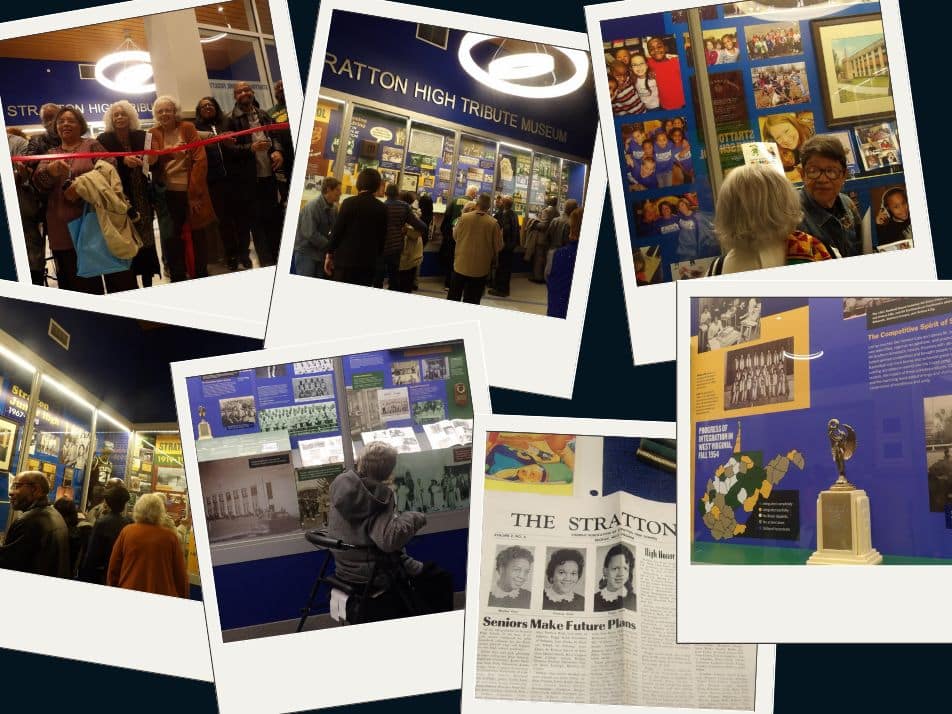
The tribute museum officially opened with a ceremony led by Superintendent Serena Starcher, who offered a brief history of Stratton High and an overview of the new tribute space. Alumni, many proudly wearing Stratton apparel — including shirts marking the Class of 1960 — stood shoulder to shoulder as they sang the school’s alma mater in unison, filling the space with voices that once echoed through the original building.
Moments later, Stratton alumni cut the red ribbon, unveiling decades of preserved memorabilia and honoring those who paved the way.
Community advocate Kabrea James described the moment best:
“Experiencing the ribbon-cutting in real time is a feeling I’ll always carry with me. Our elders triumphed through more than we can ever imagine and it is heart-warming to see their stories finally be showcased in this way. Stratton is West Virginia history.”
— Kabrea James
Inside the Museum: A Living Archive of Black Appalachian Life
The Stratton High Tribute Museum stands as both a memorial and a living classroom. Inside the illuminated display hall, visitors find:
- Treasured photographs of students, teachers, athletes, and community moments
- A replica of The Strattonian, the school newspaper
- Yearbooks, uniforms, trophies, and band memorabilia
- Panels chronicling the school’s academic and athletic legacy, including a visual display marking 2,789 graduates
- Migration stories, documenting where Stratton alumni carried their skills and influence
- Historical timelines explaining the era of segregated education in West Virginia
- Spaces designed for youth engagement, oral history collection, and community storytelling
Elders were seen standing quietly, pointing at photographs, and sharing memories with younger generations — living proof that the museum is not just preserving history, but activating it.
A Museum with National Significance
Across the country, historically Black schools have been closed, demolished, or erased from public memory. Many exist only through reunions and photographs tucked into family albums. Stratton High’s transformation into a museum challenges that trend — and expands America’s understanding of where Black history lives.
This museum reminds the nation that:
- Black Appalachians shaped rural education
- Black migration influenced entire regions
- Black communities built institutions even when denied equal support
- Black history is not urban-only — it is rural, Southern, and Appalachian, too
The narrative preserved here fills a critical void in the broader story of Black American life.
A Future Rooted in Legacy
Already, the museum is becoming a gathering place where generations meet — where alumni bring their grandchildren, where students discover pride in their heritage, and where visitors can understand the depth and richness of Black West Virginian culture.
In the months ahead, Stratton is expected to host:
- School field trips
- Cultural tourism events
- Black history programming
- Reunion celebrations
- Oral history workshops
- Community storytelling sessions
Each event ensures the legacy is not only preserved, but actively lived.
More Than a Building: A Restoration of Belonging
The reopening of the Stratton High Tribute Museum is a declaration:
Black history belongs everywhere — including the mountains.
It honors the educators who poured their lives into their students, the families who fought for equal access, and the young people who carried Stratton’s teachings far beyond state lines.
West Virginia may be home to the museum, but the story it tells belongs to the entire nation.
This is not just a preserved building.
It is a preserved truth.
A truth finally being told.
If you appreciate BBG's work, please support us with a contribution of whatever you can afford.
Support our stories