Black Newspapers in West VirginiaFrom the Archives: Sharing Pages from The 1891 McDowell Progress
🗞️ February 28, 2025
By Crystal Good, Publisher, Black By God
One of the things that keeps me going as a small independent publisher—what helps me see the future of Black By God and recognize what we are building—is about the archive and legacy. Looking back at the history of the Black press in West Virginia reminds me that we are not alone in this work.
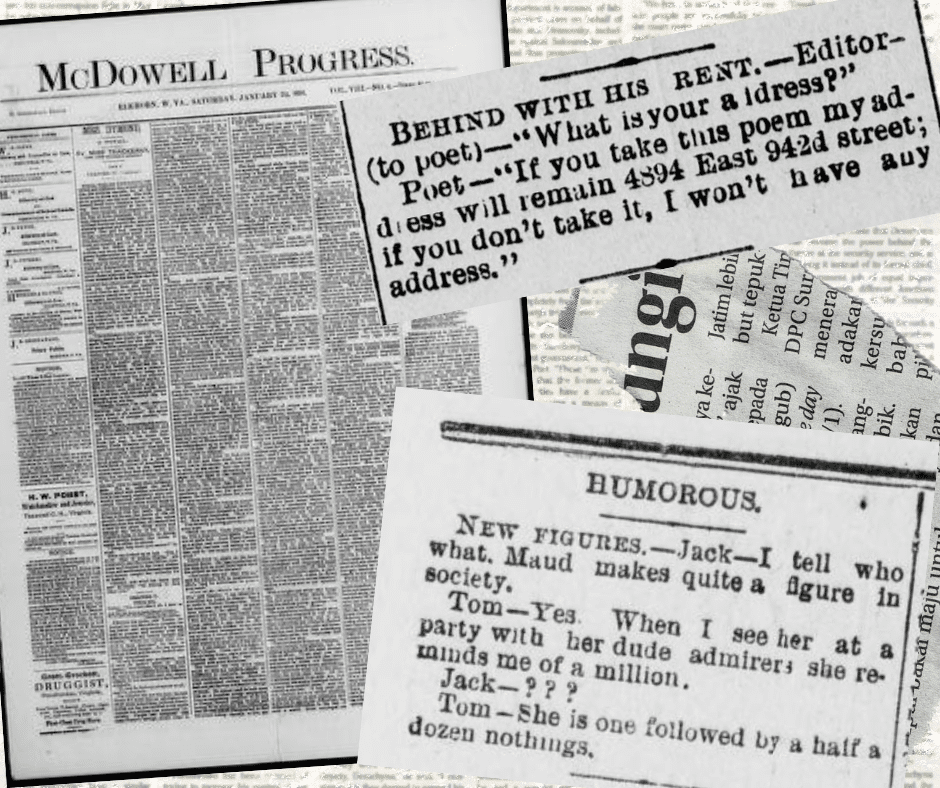
If in 1891, a Black newspaper could be full of advertisements, professional listings, humor, novel excerpts, details about new subscribers, and bold demands for people to keep their houses and streets clean—then what can BBG not do in their footsteps?
We (BBG) struggle to court advertisers. Thanks to Traci@BlackByGod.org, we are making great strides. (📌 MEDIA KIT available)
But imagine a Black West Virginia in 1891. In southern West Virginia, in the coalfields. Imagine elegant men and women, educated and determined, carving out lives, businesses, and communities. Black people have always been in these mountains.
West Virginia’s Black newspapers were more than just publications; they were lifelines. They connected Black communities, documented our stories, and demanded justice when the mainstream press ignored us.
Some History of the Black Press in West Virginia
The McDowell Progress (1886-1890s, McDowell County, WV)
One of the earliest newspapers in McDowell County, The McDowell Progress began publication in 1886 during a period of rapid industrial expansion in southern West Virginia. Founded by J. Frank Johnson, a county clerk, and John R. Greenawalt, an experienced editor from Virginia, the newspaper was a four-page weekly publication that chronicled local and regional news.
At a time when the coal industry was drawing Black workers to McDowell County in large numbers, The McDowell Progress provided crucial information about economic opportunities, railroad schedules, and community events. Regular columns such as “General News” and “Local Doings” kept readers informed about daily life. It also included serialized novels and humor pieces, making it an essential part of the community.
The newspaper did not heavily engage in political editorializing, but it reflected the major transformations happening in McDowell County. As railroads expanded and the coalfields flourished, The McDowell Progress moved with the times—literally. In 1889, it relocated to Elkhorn, then the endpoint of the Norfolk & Western Railroad. By 1890, the paper moved again to Welch, the newly established county seat. It was eventually renamed The McDowell Recorder and continued publishing into the early 20th century.
Like many newspapers of its time, The McDowell Progress relied on advertisements and subscriptions for funding. A yearly subscription cost $1.00, and businesses took advantage of its reach to advertise services, professional listings, and commercial goods. This was a time when Black professionals, business owners, and civic leaders were making their mark in West Virginia, and newspapers like The McDowell Progress helped document their presence.
A Legacy in Print: Black Newspapers That Shaped West Virginia
The McDowell Times (1900s, McDowell County, WV)
By the early 20th century, The McDowell Times emerged as a dedicated Black newspaper serving the growing Black population in McDowell County, particularly coal miners, business owners, and families. It provided a platform for job opportunities, community news, and advocacy for Black workers.
The Advocate (1919-1950s, Charleston, WV)
Charleston’s The Advocate covered politics, civil rights, and economic opportunities for Black West Virginians. It was a paper of progress, pushing against racial injustice and uplifting Black leadership.
The Beacon Journal (1940s-1950s, Huntington, WV)
In Huntington, The Beacon Journal ensured that Black voices were heard in a time when segregation and discrimination were written into law.
The West Virginia Enterprise (1885-1890s, Wheeling, WV)
Published by J.R. Clifford, West Virginia’s first Black lawyer, The West Virginia Enterprise was a powerful force in advocating for equal rights, Black education, and political participation. Clifford famously fought for the rights of Black students in Martin v. Board of Education of Morgan County (1898), a landmark case challenging school segregation.
The Charleston Informer (1920s-1930s, Charleston, WV)
A newspaper that actively covered Black culture, economic advancement, and the social movements of the early 20th century. The Charleston Informer provided a strong voice against racial discrimination and promoted business opportunities for Black West Virginians.
The Wheeling Advocate (Late 1800s, Wheeling, WV)
One of the earliest Black newspapers in West Virginia, The Wheeling Advocate served the free Black community in the Northern Panhandle, advocating for civic engagement and economic growth.
These newspapers were proof that we were here, that we were thriving, and that we would not be erased.
A Legacy Worth Building
What we do at Black By God is not new—it is part of a long tradition. The Black press has always been a space where we could define ourselves, tell our own stories, and build the futures we imagined.
I look at these archives and see the advertisements, the announcements of Black professionals, the serialized novels, the everyday joys and struggles of our people. And I ask myself: If they could do it then, what can’t we do now?
On this day, February 28th, we share four pages from the McDowell Progress files, hoping they spark something for our readers. A reminder that we have always been here—and always will be.
— Crystal Good, Publisher, Black By God

If you appreciate BBG's work, please support us with a contribution of whatever you can afford.
Support our stories
Author

Related Articles

BBG People Moving the Mountains: Dr. Doolarie (Dee) Singh-Knights
The Face of Agritourism Growth & Rural Innovation in West Virginia