Bridging Continents: Tackling HIV and Health Crises from Appalachia to Africa
Making the Shot: A Cross-Cultural Conversation about Collaboration from Africa to Appalachia
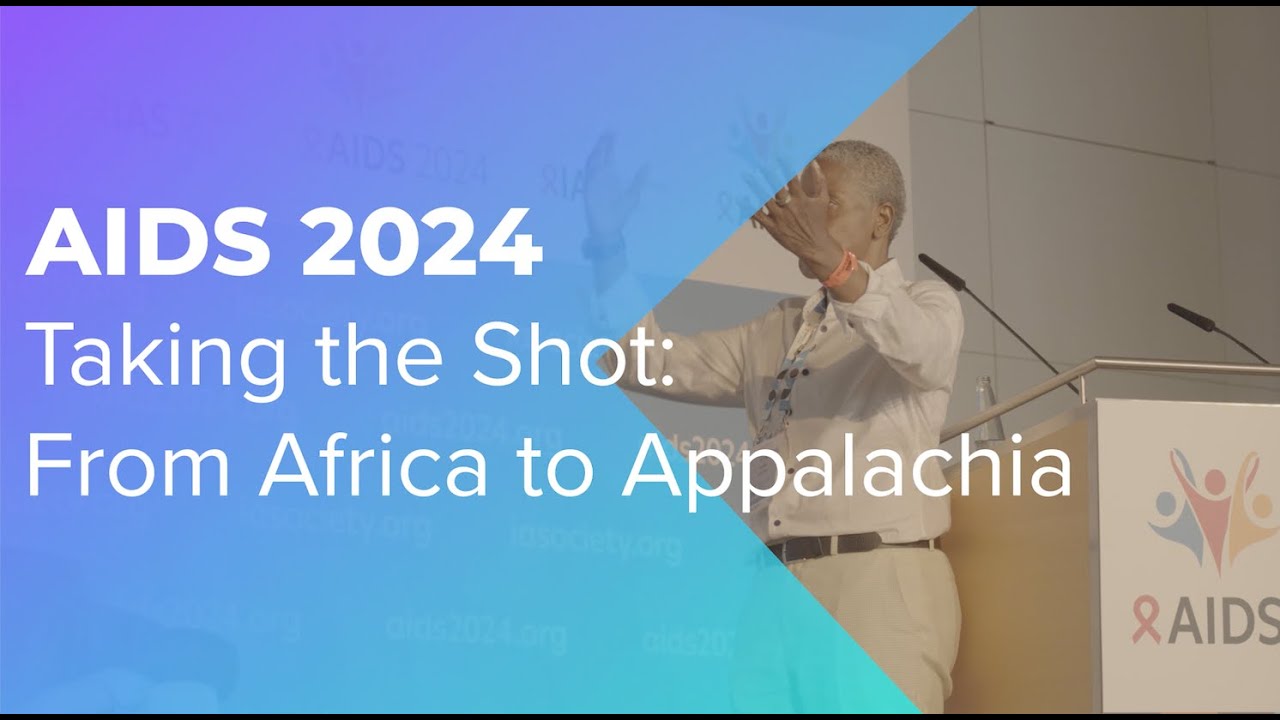
At the AIDS 2024 Conference in Munich, the Community Education Group hosted a pivotal session titled “Taking the Shot: From Africa and Appalachia,” moderated by A. Toni Young, CEO of Community Education Group. The panel featured an esteemed lineup of health professionals and advocates, including:
- Dr. Sally Hodder, Director of the Clinical and Translational Science Institute, West Virginia
- David Maman, President, Society for AIDS in Africa
- Hon. Dr. Pagwesese David Parirenyatwa, Board Member, Society for AIDS
- Dr. Takalani Azwidihwi, HIV Vaccine Trial Network, South Africa
The session examined the critical role of Community Health Workers (CHWs) in Africa and Appalachia, highlighting the parallels between the healthcare challenges rural communities face in these regions.
We’ll bring the best from BBG right to your inbox. You can easily unsubscribe at any time.
Sign Up for our Newsletters!
Symposium Announcement: Making the Shot
The symposium, “Making the Shot: A Cross-Cultural Conversation about Collaboration from Africa to Appalachia,” explored the intersection of injectable prevention care and treatments. The goal was to deepen the understanding of cultural relationships between Africa and Appalachia and offer insights into how these connections can inform HIV/AIDS interventions. The symposium emphasized the need for capacity-building and technical assistance to foster collaboration and progress in both regions.
Presentations and Session Recording
The symposium featured the following presentations, lasting 90 minutes:
- Carl Deiffenbach, Division of AIDS at the National Institutes of Health, United States
- Dr. Sally Hodder, West Virginia University, United States
- Mpolokeng Mohloai, mothers2mothers, Lesotho
- Morenike Ukpong, Obafemi Awolowo University, Nigeria
Through these expert insights, the symposium highlighted the importance of collaboration, shared challenges, and solutions that can be adapted from one region to another, underscoring injectable prevention care’s vital role in tackling health crises like HIV.
A Moment of Connection: Appalachia and Africa
One of the most memorable moments came when Megan Latoya, an Appalachian native, reflected on the unexpected connection between these rural regions. She remarked:
“I never thought I’d be sitting in Germany talking about hollers and Appalachia in the same breath as Africa. It just goes to show how interconnected our global health challenges are.”
Her statement captured the essence of the discussion, where geographic isolation, stigma, and limited access to healthcare were identified as common barriers in Appalachia and rural Africa, particularly in addressing HIV, hepatitis C, and substance use disorders.
Appalachia’s Struggle with HIV and Stigma
Toni Young, the session’s moderator, spotlighted Appalachia’s growing battle with HIV. “Appalachia is still in its infancy when it comes to dealing with HIV. We’re about five years into this fight, and stigma continues to be a huge barrier,” she explained. “People are still asking if HIV is a ‘gay disease,’ and that stigma is keeping people from accessing care.”
This statement echoed Young’s reflections, recently highlighted in The New York Times article, “H.I.V. Is Coming to Rural America, and Rural America Is Not Ready,” by Dr. Steven W. Thrasher (Northwestern University). In the piece, Young elaborated on how the opioid epidemic—fueled by pharmaceutical companies’ promotion of painkillers in the 1990s—has left rural areas unprepared for the magnitude of the crisis. Young was quoted as saying: “The epidemic of opioid addiction… is a crisis for rural regions in part because these regions are completely unprepared to deal with the magnitude of the problem.”
Young’s advocacy work began in 1993 when she founded what is now called the Community Education Group in Washington, D.C., to address HIV and AIDS among women. As an African American lesbian, Young has spent the past 30 years advocating for marginalized communities, particularly Black, gay, and urban populations. You can read the full New York Times article here.
Community Health Workers: The Backbone of Rural Healthcare
David Maman, President of the Society for AIDS in Africa, described the critical role CHWs play in African healthcare systems. “In Africa, CHWs are the backbone of our healthcare system. They go where doctors can’t, delivering primary health care to the most remote communities.”
Similarly, Dr. Sally Hodder discussed West Virginia’s ECHO program, which trains local primary care providers to manage hepatitis C, allowing patients to receive care without traveling long distances to specialists. “The ECHO program has been transformative for us,” Dr. Hodder said. “We’ve been able to treat patients where they live, and that’s made a significant impact.”
Substance Use Disorder and Health Crises
The panel also explored the intersection of substance use disorder with rising rates of HIV and hepatitis C in both Appalachia and rural Africa. Toni Young explained, “Substance use, particularly injectable drug use, is driving these epidemics in West Virginia, just as we’re seeing in parts of Africa.”
Young emphasized the need for more testing and treatment within Medically Assisted Treatment (MAT) clinics, adding: “We’re not testing enough in the populations that are most at risk.”
The Importance of Vaccines: A Lesson from Africa
Dr. Pagwesese David Parirenyatwa from the Society for AIDS in Africa underscored the role of vaccines in combating stigma in healthcare. “In Africa, shots are more important than pills because of the stigma surrounding daily medication,” he explained. “Vaccines can overcome that barrier and save lives.”
This sparked a broader discussion on how similar strategies could be applied in Appalachia, where healthcare stigma remains a significant barrier to accessing treatment.
Dr. Takalani Azwidihwi, from the HIV Vaccine Trial Network in South Africa, echoed the importance of community engagement in improving health outcomes. “We’ve learned that if people understand the science behind vaccines, they are more likely to trust healthcare providers and access services,” she said. “Our community advocates have played a crucial role in demystifying health science and improving vaccine uptake.”
Building Cross-Regional Partnerships
The panelists unanimously agreed that fostering more collaboration between Africa and Appalachia could yield mutual benefits. Toni Young proposed cross-regional exchanges between CHWs to facilitate the sharing of knowledge and strategies between the two regions. “There’s so much we can learn from each other,” Young noted. “Building these bridges is crucial to addressing the healthcare challenges we all face.”
The session revealed how rural regions like Appalachia and Africa face similar healthcare challenges, from geographic isolation to the stigma associated with HIV and substance use disorders. The panel underscored the importance of cross-regional collaboration, the essential role of CHWs, and the need for community engagement to combat these crises.
Community Education Group, under the leadership of Toni Young, continues to push for innovative solutions to improve healthcare outcomes in rural populations. Their work in advocating for CHWs and fostering global partnerships is a testament to the organization’s commitment to addressing some of the world’s most pressing health issues.
https://programme.aids2024.org/Programme/Session/320
__________
BBG’s Commitment to Bridging Appalachia and Africa
Black By God (BBG) is deepening its cross-regional connections between Appalachia and Africa as part of its ongoing work. BBG has covered various topics, including interviews with everyday people in Ghana discussing political candidate Nana Kwame Bediako, also known as Cheddar, and his presidential campaign. Additional coverage features fashion highlights from Accra Fashion Week and stories exploring Black maternal health and environmental issues, linking experiences and insights between Appalachia and Africa.

If you appreciate BBG's work, please support us with a contribution of whatever you can afford.
Support our stories
Related Articles
Black Love & Marriage According to The Advocate
The newspaper only survived 12 years but thanks to the foresight of the publisher, an archive of Black West Virginian marriages and wedding practices exists 114 years later.