Five Years After It Became a National Park, There’s a Growing Divide In West Virginia’s New River Gorge
By Caelan Bailey | 100 Days in Appalachia
This article was originally published by 100 Days in Appalachia, a nonprofit, collaborative newsroom telling the complex stories of the region that deserve to be heard. Sign up for their weekly newsletter here.
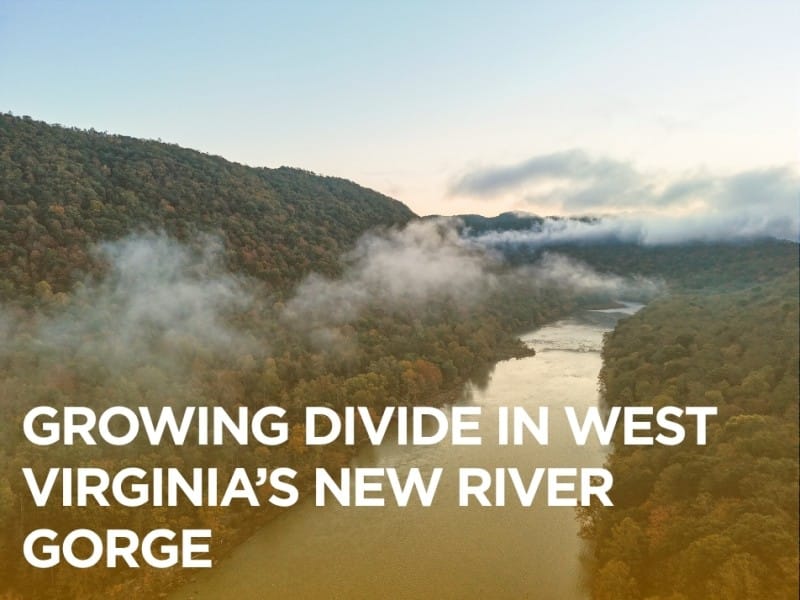
The New River Gorge is a jagged area in the middle of Southern West Virginia’s coalfields. Shaped by one of the oldest rivers in the world, whitewater rapids roll under its high petrified sandstone crags. And, since 2020, it’s been home to the United States’ newest national park.
Jackie Coleman — a lifelong West Virginian and current resident of Whipple, one of the many former coal camp communities around the gorge — has watched the area change first-hand, ever since the New River and surrounding land first joined the federal system piecemeal in the 1970s.
“I lived in Cunard for 15 years, and I’ve seen it go from one guy transporting [rafters] down to the river in his truck… to buses being able to go down, because the Park Service come in and made a decent road for them to be able to get down,” Coleman said.
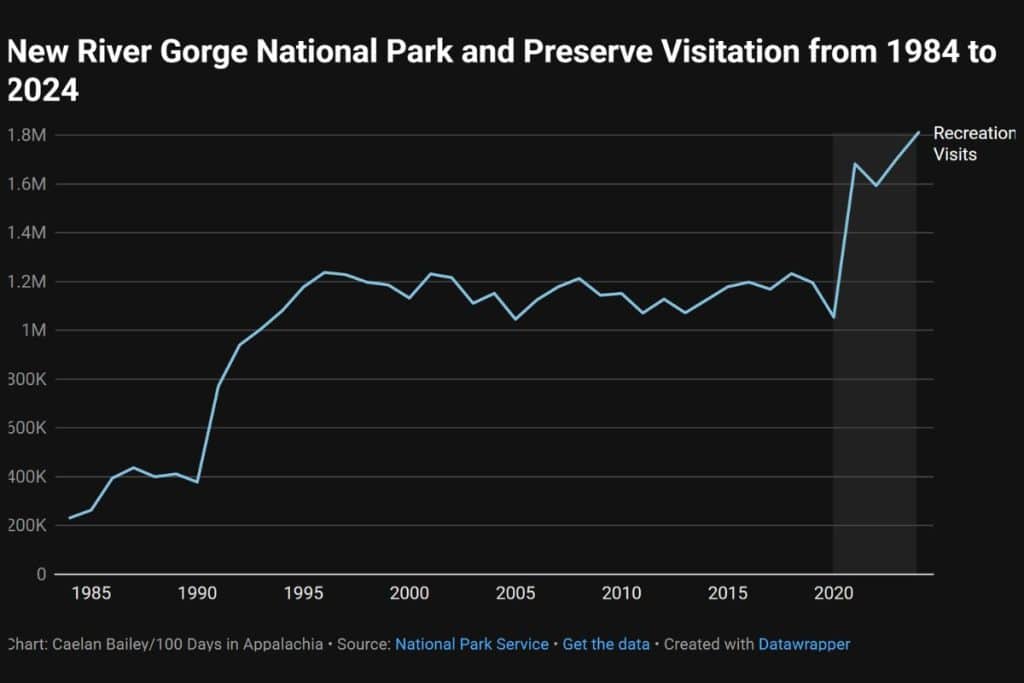
Five years ago, when the New River Gorge became a national park, that designation came with promises from lawmakers like Rep. Carol Miller, R-W.V., that the change would “preserve and protect the New River Gorge for generations to come and make our state an even better place to live, work, and raise a family.” The National Park Service recently touted the $108.4 million tourists spent in communities while visiting the New River Gorge last year, as well as the nearby Gauley River National Recreation Area and Bluestone National Scenic River. And, in 2024, total park visitation climbed to a record high of 1.81 million — more than West Virginia’s total resident population.
But from Coleman’s vantage point, the recent wave of visitors hasn’t improved the day-to-day lives of many in her community. In Whipple, it’s common to see overcrowded, poorly-insulated trailers next to boarded up coal company stores and dirt roads. She works as an AmeriCorps member with the Southern Appalachian Labor School, which recently added a ramp to her double-wide trailer to make it more accessible for her husband and daughter. And while she’s never rafted herself — despite once working for a major commercial outfitter — she still eats fish from the New, through cycles of extreme weather and pollution threats in the region.
“I don’t think the National Park Service has done much in my area, actually, that’s my opinion,” Coleman said.
Now, as the New River Gorge National Park faces budget cuts under the Trump administration, many long-time West Virginians see the divide between their reality of the area — a community that still faces long-standing infrastructure and quality-of-life issues — and the version accessible to tourists and some newcomers drawn to the area’s rising reputation for high-barrier outdoor recreation continuing to grow.
That divide is increasingly seen in Fayetteville, the small mountain town of around 2,750 across the Gorge from the main park welcome center by way of the iconic arched steel bridge.
“You get community, you get a national park in your backyard, you get places of nature,” Tabitha Stover, Executive Director of Visit Fayetteville, said of the area’s benefits. “I can take my kids and go swim in a waterfall after work. I mean, it’s magical.”

While the area has long been known for fishing since the indigenous Shawnee first lived on the land, whitewater rafters started coming to the area in the 1960s and 1970s when the New River was established as a National River and the annual release of the Summersville Dam began creating highly-sought-after rapids on the Gauley River every fall. With the arrival of Water Stone Outdoors outfitter in the 90s, climbers increasingly began arriving for a year-round season, especially as climbing gyms have become popular in cities across the country.
From Stover’s vantage point at the visitor center at the end of downtown Fayetteville’s Court Street, she has seen “a huge impact from National Park designation.” Stover said the designation adds more casual tourists and national attention, seeing exponential growth for the last few years, especially when the park was within drivable distance from nearby cities during the pandemic.
But John David, director of SALS and long-time labor organizer in the region, said many of the long-time West Virginians SALS works with “don’t relate to the, let’s call it privileged folks” drawn to the area for its beauty and opportunities for outdoor recreation.
In an area with no public transportation, SALS housing advocates pointed to the tightly-packed downtown Fayetteville, a walkable area from nearby houses with visibly thriving businesses. But within walking distance, those are mostly limited to restaurants, boutiques, outdoors stores, and a range of high-price amenities. Former nearby grocery stores have closed and sold their buildings. Now, the closest grocery store is the Walmart, a ten minute drive down the four lane highway that connects I-77 to the Gorge.
West Virginia’s state government has increasingly supplemented funds towards outdoors access roads and parking lots, citing tourism spending while leaving the statewide tax system unchanged and the short-term rental market unregulated. While some preexisting tax revenue sources may have risen — for example, in Fayetteville, hotel occupancy tax collections increased from $108,639 in fiscal year 2020 to $408,644 in 2025 — Sean O’Leary, budget analyst at the West Virginia Center on Budget and Policy said the state would have to step in to create new funding streams, like a hospitality tax or fees on larger companies in the area.
And the jagged boundaries of the national park and federally preserved land around the Gorge is often a nebulous collage of state and federal funding for infrastructure. In the last year, West Virginia politicians have highlighted state-funded projects like a new hiking trail parking lot ahead of last year’s Bridge Day festival, or repairing the historic Tunney Hunsaker bridge over the New before rafters needed it for seasonal river access. The statewide Roads for Prosperity project’s spending in Fayette County has included projects like $1 million to Big Creek Bridge, which is known to connect rafters to the Greenbrier River.

As for affordable housing, SALS advocates said they struggle to gain local funding for livability improvement projects. In Fayetteville, local tax incentives have gone towards converting the old schoolhouses to a company owned by the Wendell family, who have since turned the elementary school into luxury apartments. The high school is currently under renovations to become a boutique hotel.
But job growth in Fayette County has “been basically flat, both overall jobs and leisure and hospitality jobs,” O’Leary said.
Coleman said, recently, she’s seen people looking for real estate in low-income areas like hers, where local outdoors amenities are accessible.
“It’s mostly people from out of state coming into the areas, and they can buy the land up dirt cheap,” Coleman said. If her property taxes rose, Coleman said they would “probably end up putting [her] in bankruptcy.”
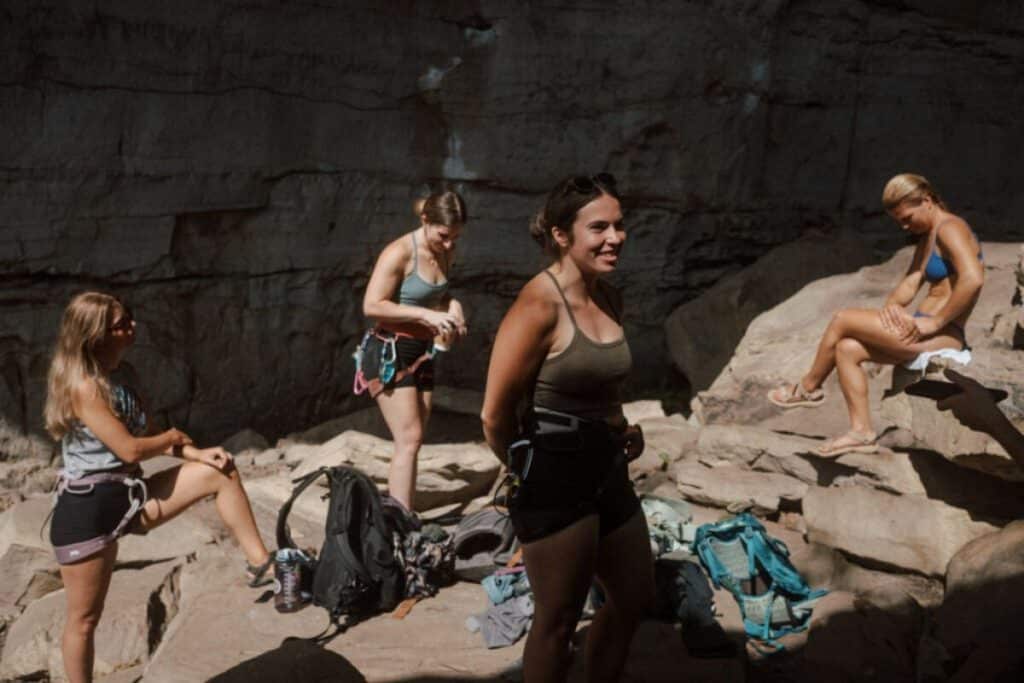
Alex Hansen is one of those out-of-state transplants, drawn to the area after years of visiting for rock climbing trips. By selling their house in Massachusetts, he and his wife Meghan Braley were able to buy property outside of Fayetteville. They now both work part-time with the Access Fund, a climbing nonprofit that teaches outdoors etiquette like leave-no-trace on climbing trails, and have enjoyed amenities like Summersville Lake State Park’s recently-built climber’s parking lot.
But Hansen acknowledges that there is still a big divide in the area’s outdoors culture. While fishing and ATV trails have long been popular in Southern West Virginia, rock climbing and commercial whitewater rafting often have higher barriers to widespread grassroots popularity.
“There is this educational bridge you have to cross, a monetary bridge you have to cross,” Hansen said. “And I think that makes it very hard for locals to get into the sport of climbing.”
Matt Carpenter is a lifelong West Virginian who has long been part of the outdoors culture: he’s from Raleigh County, learned to climb long before the sport’s current wave of national attention, and now serves as a teacher at the consolidated Oak Hill High School and the president of the New River Alliance of Climbers. As the area’s popularity has grown, he says climbing sites are becoming increasingly busy.
“It brings tax infrastructure, brings credibility and political power to the idea of outdoor recreation, but it also drives up housing prices for locals that you know may have lived through their whole lives, and now they’re seeing housing prices going up and taxes going up alongside that,” Carpenter said, noting he bought rental properties when he saw the outdoors recreation boom on the horizon.
“And you know, some locals are pretty upset to see their quiet, sleepy towns kind of have hordes of tourists coming through them.”
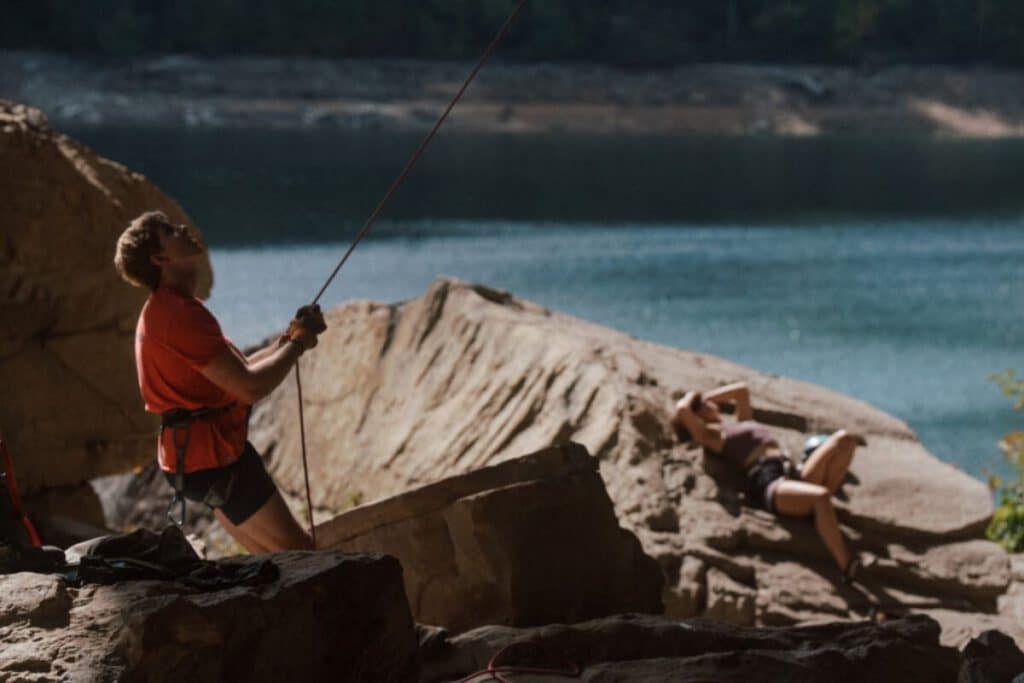
Carpenter is seeing a divide between those two community experiences, especially when many transplants are able to keep remote work salaries after the pandemic — with some encouraged by the state’s Ascend program, which features a stipend for remote workers moving to the state and encourages free outdoor recreation access — and longer-standing local attitudes around the workforce are still rooted in the coal industry’s volatility.
“It’s still kind of surprising how few of the families and the students I teach growing up around here are really interested or invested in that [outdoor recreation] industry, like I have more students who are still clinging to the coal industry,” Carpenter said, also noting the tendency of tourism jobs to be seasonal. “I wonder maybe if, in the future, if the culture will catch up to the change in the industry here.”
But that culture change relies on long-time residents being able to afford to stay in the New River Gorge areas, and avoiding the so-called “amenity trap” many mountain communities around older national parks in the American West have experienced. When fast ecotourism growth meets a lack of regulation, especially around property values and sales, those living around “gateway” communities like Fayetteville can find their lives becoming unaffordable — even more so with the steep terrain of the Appalachians further limiting buildable land.
Megan Lawson, an economist who leads outdoors recreation and public lands research at the nonprofit Headwaters Economics, said raw tourism spending numbers in such “gateway communities” can be misleading.
“Are communities somehow able to capture that wealth that’s moving through the place, or is it just leaving?” Lawson said.
Lawson said starting community conversations earlier makes it “easier to sort of change course than to reverse course,” saying a slowdown in tourism to the area could open a window for those conversations. Difficult funding conversations are another opportunity, which could come as President Donald Trump continues to eye cuts to federal spending.
“You call this a national park, and then you cut funding across the board, and you’re kind of setting up a national park for failure,” Stover said. She said she has already seen a slowdown in visitation, which she attributes to broader issues discouraging Canadian tourists and an economic downturn lowering vacation budgets.
While some projects may be delayed, New River Gorge Chief of Interpretation Eve West says more changes may be coming to make up for the funding difference. “Right now, the park is totally free,” West said. “It may not always be that way.” West said when National Parks do charge fees, 80% of revenue goes directly to the local park, while 20% goes into a national general fund.
Outdoors enthusiasts who spoke to 100 Days also pointed to how few fees West Virginia charged, even for non-residents, as compared to regional National and state parks and amenities. Harper’s Ferry National Park charges for an entry pass. West Virginia does not charge entry fees for its state parks — including popular state parks around the New River Gorge like Babcock State Park and Summersville Lake State Park. In 2017, then-Gov. Jim Justice, who made tourism promotion a centerpiece of his administration, canceled a pilot program to begin charging at some parks.
Those who spoke to 100 Days said they would be willing to pay a fee to access the high-quality amenities around New River Gorge uniquely accessible from population hubs around the East Coast, especially if there was an exception for West Virginia residents.
SALS board chair Joe Webb, who works on community projects from summer housing improvements to job training to Medicaid education, said he’s seen a shift in recent years. He noted the uptick in visitors moving to the area for recreation, highlighting changes like Adventures on the Gorge’s transition from a local business to an acquisition by a multinational company last year. While Webb doesn’t want tourism to stop, he’s cautious about a growing cultural divide, especially with the coalfields’ history of economic extraction.
“It’s just leveraging the folks that come here and not giving them so good of a deal, give them a deal that’s mutually beneficial,” Webb said.
If you appreciate BBG's work, please support us with a contribution of whatever you can afford.
Support our stories