
Built During the Civil War, This Black School in West Virginia Rewrites American History
By Traci Phillips
In Parkersburg, WV, there is a school most Americans have never heard of—yet its history complicates nearly everything we assume about Black education in the United States.
Parkersburg is a small city along the Ohio River with a population of roughly 30,000 people today. While only a small percentage of residents currently identify as Black, the city played a significant role in early Black education during one of the most turbulent periods in American history.
In January 1862, while the Civil War was still underway and slavery remained legal in much of
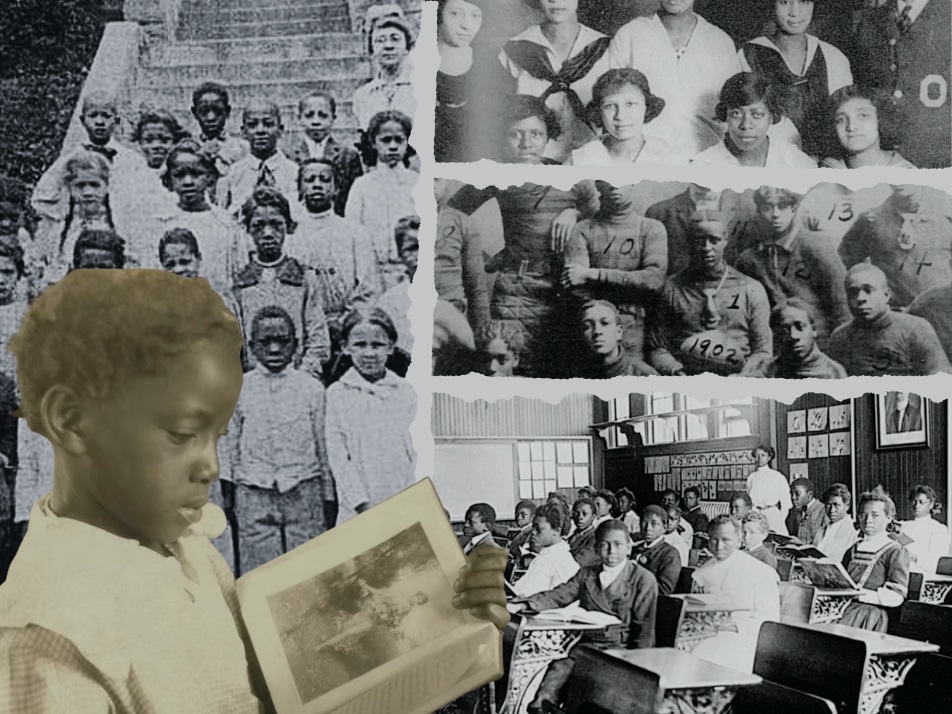
The Black residents of Parkersburg established what was originally known as the Parkersburg Colored School, later renamed Sumner School. The school was founded before West Virginia had a statewide public school system and at a time when formal education for Black children was restricted or prohibited in many states.
Historical records highlighted by the Zinn Education Project show that the school was organized by Black community leaders who pooled resources, secured teachers, and created a learning space for their children without government sponsorship or outside philanthropy. Scholars recognize Sumner School as one of the earliest known free schools for Black children south of the Mason-Dixon Line.
Over time, Sumner School grew into more than a place of instruction. It became a central institution within Parkersburg’s Black community, educating students through Reconstruction, segregation, and the Jim Crow era. Generations of children passed through its classrooms at a time when Black schools were routinely underfunded and marginalized, yet expected to produce students capable of navigating a deeply unequal society.
“This pioneering institution served as a blueprint for similar schools in Clarksburg, Martinsburg, and Charleston,” wrote historian Michael J. Rice, author of The Sumner 7: A History of Sumner High School Parkersburg, WV. Rice also noted that when desegregation began in the 1950s, Sumner’s students were academically prepared to transition into integrated public schools—an outcome he directly links to the strength of the education provided within a self-started Black institution.
In 1955, Sumner School closed following desegregation in the aftermath of Brown v. Board of Education. As with many all-Black schools across the country, its closure was framed as progress, even as it resulted in the loss of a longstanding cultural and educational anchor for the community. Over time, much of the school’s history faded from public awareness, reflecting a broader national pattern in which Black-built institutions were dismantled or preserved without full historical context.
Today, only part of the original Sumner School complex remains. The gymnasium has been preserved and now houses the Sumnerite African-American History Museum & Multipurpose Center. Community-led efforts, including the work of the Sumner-7 Project, continue to document, preserve, and share the school’s legacy. More information about that work is available at thesumner7.org.
At Black By God: The West Virginian, we’re telling this story because Sumner School is not simply local history—it is American history. At a moment when honest teaching about race and the past is increasingly contested, Sumner School stands as documented evidence of something often overlooked: Black communities did not wait for freedom to be fully realized before investing in education.
They built it themselves.
The building still stands.
So does the record of what it represents.
If you appreciate BBG's work, please support us with a contribution of whatever you can afford.
Support our stories
Related Articles


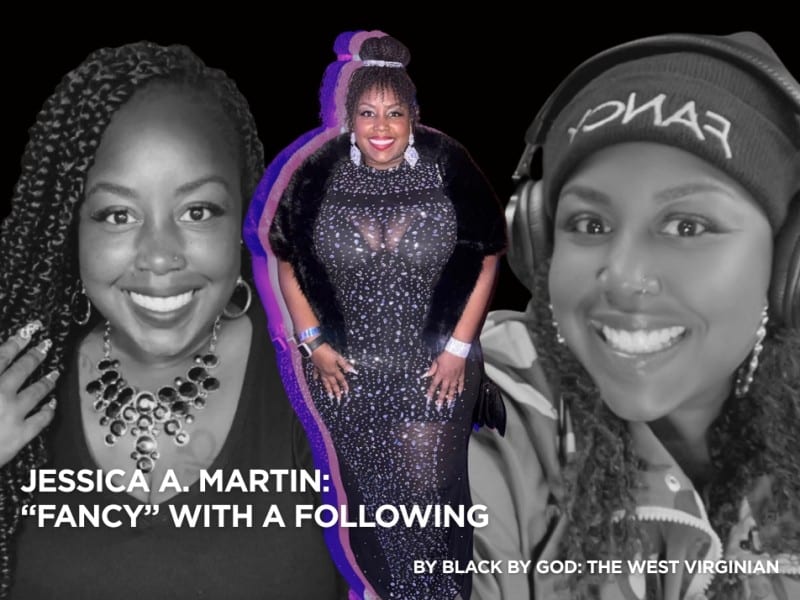
Jessica A. Martin: “Fancy” With a Following
How a Charleston content creator turns positivity into community influence