
WV bill would outlaw and penalize programs offering needle exchange services
HB 4413 would make needle exchange programs illegal in West Virginia. Folks who refuse to follow the law would face up to $2,500 daily in fines.
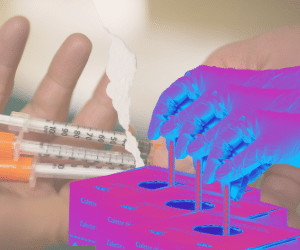
The ten syringe exchange programs that serve 12 West Virginia counties would be shut down if HB 4413 becomes law. The bill would make it unlawful for an individual or provider to give out sterile needles and other injection paraphernalia without a prescription.
Under HB 4413, any owner, operator or other person would have 120 days from the day the bill becomes law to dissolve all clean needle programs offered. In this timeframe, they would be required to completely cease all syringe services. Should they fail to stop, folks could face up to $2,500 a day in fines.
HB 4413’s lead sponsor, Del. Geno Chiarelli, R–Monongalia explained the bill to the House Public Health Subcommittee on Wednesday.
“This does not ban harm reduction programs as a whole,” Chiarelli said. “This only affects syringe programs itself.”
We’ll bring the best from BBG right to your inbox. You can easily unsubscribe at any time.
Sign Up for our Newsletters!
Extensive research, endorsed by eight federally commissioned reviews, has shown that syringe exchange programs reduce HIV transmission without increasing drug use, according to the American Academy of HIV Medicine.
Community member Andrea Johnson told the committee’s lawmakers about her experience with utilizing clean needle exchanges.
“I know that a needle exchange is scary,” Johnson said. “It sounds scary, but the reality is we are all going to use anyway. I could not count how many times I have shared a needle with five people in the room because we didn’t have access to a clean one. And not doing it was not an option.”
Of the more than 2,000 West Virginians who live with HIV, 23 percent of those credit the infection to contamination from an infected syringe. According to West Virginia University, this percentage is the third highest in the nation.
Black people in our state are significantly more likely to have HIV, according to data visualized by Emory University’s Rollins School of Public Health. Compared to all West Virginians as a whole, they are more than four times as likely to have the disease.
HB 4413 has been moved to markup and discussion for further review. It will then be considered by the full House Health Committee. If it passes, it will also have to pass the House Judiciary Committee before coming to the House Floor for a vote.
If you appreciate BBG's work, please support us with a contribution of whatever you can afford.
Support our stories
Author

Related Articles


WV Senate committee advances bill removing curriculum, vaccine and standardized test requirements for private schools
SB 216 would allow private schools to teach students virtually anything — or nothing at all. It would remove requirements related to instructional hours, curriculum objectives, standardized tests and vaccines.
WV senate advances bill to criminalize sending people abortion pills
Senate Bill 173 would impose mandatory prison sentences of between three and 10 years on non-medical professionals who prescribe or send abortion medication to West Virginia residents through online services.