
Morrisey paints a rosy, somewhat inaccurate, picture of WV’s economy
During his second State of the State address, the Governor outlined key legislative goals, including tax cuts, tourism, infrastructure and growing the workforce to strengthen the economy.
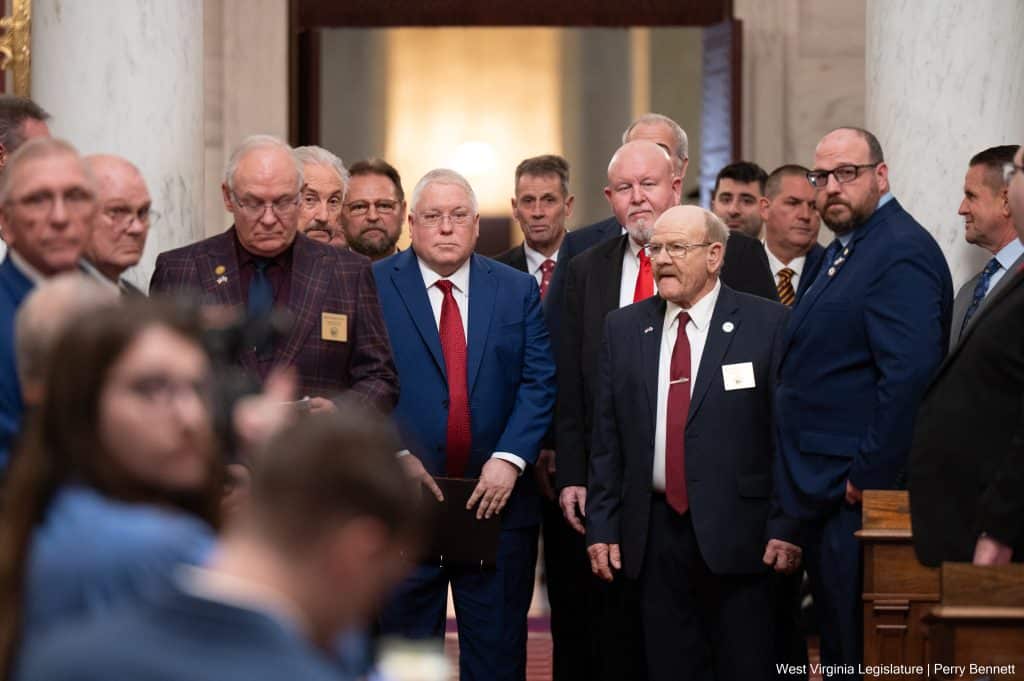
Gov. Patrick Morrisey delivered his second State of the State address Wednesday, Jan. 14, He celebrated investment in the state and outlined his legislative goals for the 2026 Legislative Session. Despite a stagnant U.S. economy, rising inflation and West Virginia’s continued struggles on national indicators, Morrisey said the state of the state is “getting stronger,” declaring, “We are just getting started.”
In an address lasting just over an hour, Morrisey highlighted his plans to further cut state income taxes and make permanent Trump-era tax cuts. He also hopes to invest further in technical colleges, the HOPE scholarship, tourism, the state’s energy sector and infrastructure.
While many of the governor’s comments drew broad support from lawmakers and other people in attendance, other portions of his speech saw less enthusiastic praise. At one point, Morrisey stated he would have to work on gaining more applause for portions of his legislative agenda. This may be a sign that Morrisey will continue butting heads with lawmakers from his party, as they continue to disagree on the right strategy for West Virginia.
Economy and Infrastructure…
We’ll bring the best from BBG right to your inbox. You can easily unsubscribe at any time.
Sign Up for our Newsletters!
Morrisey focused heavily on several key successes over the last year, including $4.5 billion in private sector investment, which he says will bring 4,200 “good paying jobs” to West Virginia. He cited last year’s microgrid law – which stripped permitting requirements for private energy generation, geared towards data centers – as the largest contributor to the investment.
“That law – I believe it – is going to become one of the single biggest economic development drivers in our state’s history,” Morrisey said. “Companies are calling. They want in.”
The governor also praised his administration’s tourism department, saying the industry supports 60,000 jobs throughout the state and has generated $1 billion in tax revenue. Morrisey went on to ask state lawmakers for $20 million for better lodging, more campsites and higher quality roadways to further improve state-owned parks and boost tourism.
Despite his lauding of the impact tourism has on the economy, Morrisey’s parallel support for microgrids and data centers may negatively impact one of the state’s largest revenue sources: natural beauty.
Critics of the microgrid law and data center projects across West Virginia, including a proposed facility in Tucker County, argue the microgrid law – and its accompanying expansion of data centers – will negatively impact tourism.
The Tucker County site, known as the Ridgeline Facility, could stretch 10,000 acres at its proposed peak and would include a natural gas power plant. Residents and advocates from the community group Tucker United have raised concerns over air quality, light pollution, intensive use of local water resources and the potential disruption of the area’s wilderness – just miles from the famous Blackwater Falls – as potential disrupters to the community’s booming tourism industry.
Morrisey said these projects, which he expects to expand in the coming years, will translate into thousands of jobs for electricians, plumbers and other trade professionals, as well as employees of the new facilities. In his view, this could help boost workforce participation in a state largely reliant on the service industry, as blue collar jobs continue to disappear.
The governor also signaled a desire to lean on infrastructure work, including road improvements, water and sewer projects and broadband expansion, to boost the state’s workforce.
During his speech, Morrisey celebrated the Trump administration’s award of over $500 million in federal Broadband Equity Access and Development (BEAD) program funds. Despite his honorific praise of the current president – and routine dismissal of the previous president – the BEAD program was originally signed into law by former president Joe Biden. The previous administration originally earmarked over $1 billion of BEAD funding for the state – nearly double what Trump awarded West Virginia.
Education…
There should be no surprise in knowing that Morrisey is all-in for the state’s HOPE Scholarship fund: a voucher program that allows parents to put public school funds toward their student’s private or homeschool education. This movement towards a less centralized education structure has been a calling card for conservative politics for decades.
To that end, the governor called on the state Legislature to fully fund the HOPE Scholarship in advance – a goal that, if achieved, could push already struggling school districts. Across the state, local schools have shuttered, cut staff or delayed key maintenance projects due to concerns over finances.
Earlier this week, teachers in Hancock County learned they may not get paid this month.
Still, Morrisey did call on the Legislature to increase public teacher pay – and all public employees’ pay – and cap Public Employment Insurance Agency (PEIA) premiums at 3 percent.
Further, the governor said he hoped to see more funding earmarked for higher education, particularly for technical schools, to help grow West Virginia’s blue collar workforce.
Poverty and Affordability…
The governor spoke briefly about the kitchen table issues impacting West Virginians; namely, grocery prices, healthcare costs and other affordability issues.
Despite Trump holding office for the last year – and despite the president’s promise to bring down prices on day one of his administration – Morrisey blamed “disastrous Biden policies” for “skyrocketing grocery bills” in West Virginia.
While Trump claims as recently as this week that prices are coming down, recent reports show the prices of many staples – including meats, vegetables and coffee – are rising. Other items, like eggs, have seen a decline. The cost of goods can increase or decrease for many reasons – including the cost of labor, fuel, climate, tariff rates and even weather.
Morrisey said he and the Legislature are prepared to fix affordability issues, asking West Virginians to join him in supporting “common sense goals.”
To combat economic woes, Morrisey called upon the Legislature to further cut the state income tax by 10 percent and codify Trump’s national tax cuts in state law.
Many of the tax cuts Morrisey says he hopes to see cemented into state law came from the president’s signature domestic policy package, referred to as the “One Big Beautiful Bill.” While some cuts positively affect low wage workers – like its no tax on tips provision – a significant amount of the bill benefits the wealthiest Americans.
These tax cuts are offset by several items in the bill that hurt social services and government-funded programs, including an estimated $84 million cut to West Virginia’s SNAP benefits, 69,000 West Virginians losing healthcare coverage and over 13,000 people in the state seeing their Pell Grant funding cut.
While cutting taxes would technically see more money returned to the people of West Virginia, the vast majority of relief would be felt by the state’s highest earners – not the hundreds of thousands of people described as financially insecure. And the governor’s plan to use part of the state’s $128 million surplus to pay for tax cuts could further impact funding for other social services that support struggling West Virginians.
Red Meat…
Morrisey’s second State of the State relied less on red meat culture war issues, compared to his 2025 address and inaugural address. Still, the governor couldn’t contain his anti-woke predilections for long.
Morrisey applauded Senate Bill 456, known as the “Riley Gaines Act,” named after a woman who launched her career in right-wing politics after tying for fifth place with a transgender swimmer at the 2022 NCAA Women’s Swimming Championship. The bill excludes from law intersex people (people born with natural variations in their sex characteristics) and transgender people. It defines “man” and “woman” based on “biological sex” and asserts that there are only two genders.
“West Virginians aren’t confused. We know the difference between men and women,” Morrisey said.
Morrisey further honored state Attorney General JB McCuskey, who earlier this week was at the U.S. Supreme Court, as arguments were held over a ban against transgender people playing on sports teams aligning with their gender identity. The case centers around Becky Pepper-Jackson, a 15-year-old transgender high schooler from Bridgeport.
Pepper-Jackson has identified as a girl since the third grade and takes puberty blockers and hormone therapy.
While not referring to Pepper-Jackson by name, Morrisey decried “boys” in girls sports, drawing applause from the crowd, including from Del. Anitra Hamilton, D-Monongalia.
“Girls should not be forced to play with boys,” Morrisey said of the case.
West Virginia has some of the nation’s most strict laws against gender-affirming care and restrictions against transgender and intersex people.
Conclusion…
Morrisey’s 2026 State of the State address focused less on culture wars and attempted to highlight successes and opportunities. However, his tenuous relationship with legislators – most of whom belong to his own party in the super-super-super Republican majority – could see his legislative goals crawl toward the 60-day finish line, if they finish at all.
Whether the governor sees his priorities approved or rejected, the success of West Virginia will largely rely on national politics – an ever tumultuous environment, as the Trump administration continues to skirt norms in an attempt to accelerate his, and his colleagues, own ambitions.
If you appreciate BBG's work, please support us with a contribution of whatever you can afford.
Support our stories
Author

Related Articles

WV Senate committee advances bill removing curriculum, vaccine and standardized test requirements for private schools
SB 216 would allow private schools to teach students virtually anything — or nothing at all. It would remove requirements related to instructional hours, curriculum objectives, standardized tests and vaccines.
WV senate advances bill to criminalize sending people abortion pills
Senate Bill 173 would impose mandatory prison sentences of between three and 10 years on non-medical professionals who prescribe or send abortion medication to West Virginia residents through online services.
WV bill would outlaw and penalize programs offering needle exchange services
HB 4413 would make needle exchange programs illegal in West Virginia. Folks who refuse to follow the law would face up to $2,500 daily in fines.