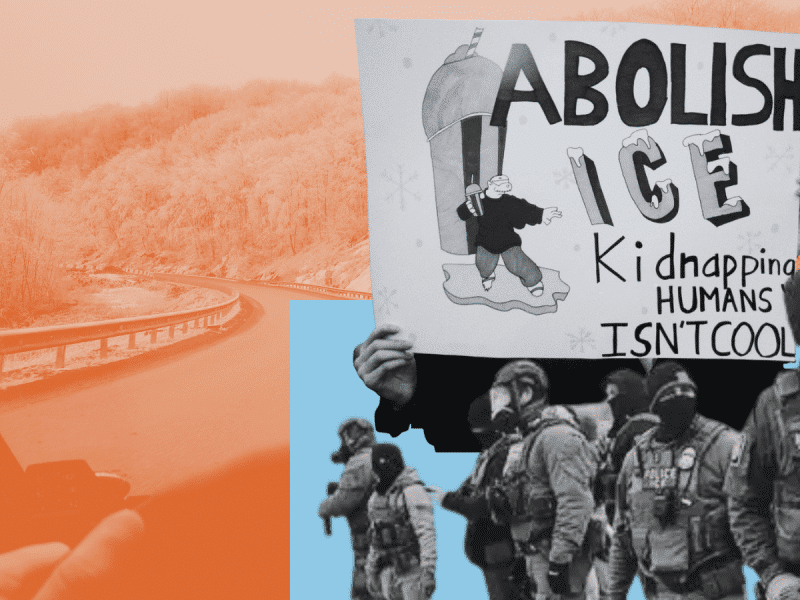
WV House committee advances bill that could lower child labor standards
House Bill 4005 would remove the list of prohibited hazardous occupations from law and tie West Virginia law to federal Department of Labor Standards. This would lead to a loss in certain protections for sixteen and seventeen-year-olds, if the U.S. Department of Labor loosens its standards.
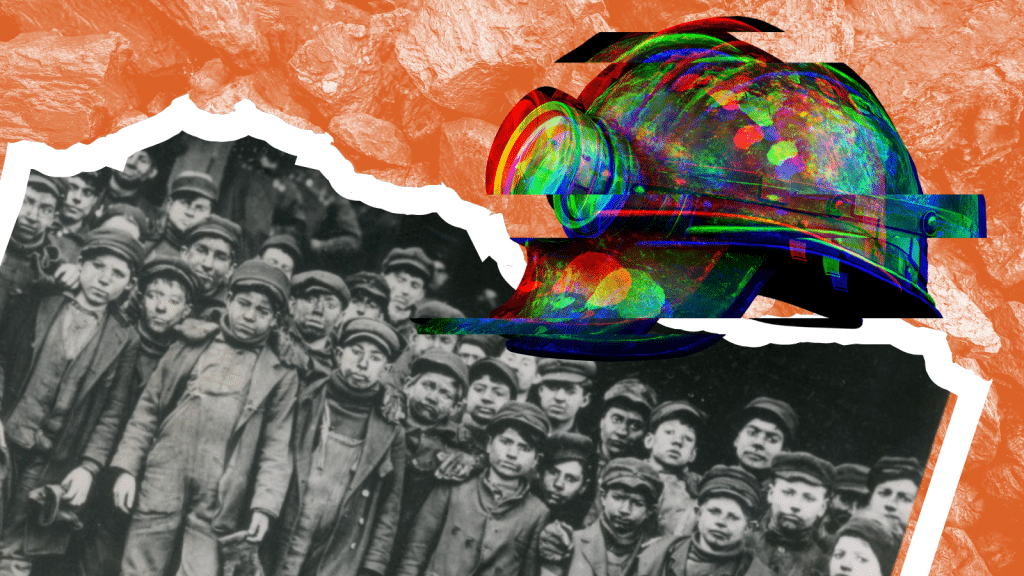
CHARLESTON– West Virginia lawmakers recently passed House Bill 4005 out of a House committee, bringing it one step closer to becoming law. Also known as “The Workforce Development Act of 2026,” the bill’s stated goal is increasing student access to apprenticeship programs. It would also delete from code the list of prohibited hazardous occupations for minors. Instead, state law would be tied to standards set by the U.S. Department of Labor. The bill also removes language limiting use of machinery to “occasional and incidental use.”
The bill’s lead sponsor Delegate Ryan Browning, R-Wayne, argued that the bill would open access to youth apprenticeship programs for sixteen and seventeen-year-olds that are currently restricted to eighteen-year-olds.
Browning said the bill was inspired by a constituent who runs apprenticeship programs sharing that 16 and 17-year-olds who were interested in his apprenticeship programs weren’t allowed to participate.
“His argument was, if kids can run a welder or drive a car with a cell phone or any number of dangerous things, then they should be allowed to work in a safe manufacturing environment under this program, ” Browning said. “And he would like to reach out to those kids earlier, to get them into the workforce, to show them there’s a different way, a different path, other than, you know, just going to college.”
We’ll bring the best from BBG right to your inbox. You can easily unsubscribe at any time.
Sign Up for our Newsletters!
The president of the West Virginia Manufacturers Association, Bill Bissett, told the committee that opening apprenticeships to younger students would help “demystify” manufacturing jobs and attract more young people to an industry currently experiencing workforce issues.
“Everyone in this room knows we have a lot of open jobs, and every one of my members has workforce issues,” Bissett said. “This is a way, I think, to help with that.”
Delegate Hollis Lewis, D-Kanawha, asked if there were any liability concerns about kids getting injured.
“We want them supervised, as they would any new employee, but especially younger folks, without a doubt,” Bissett responded. “That said, I think there are some of my member companies who won’t want to do this. They don’t want people under the age of 18, but should they choose to do so, especially those small and medium manufacturers, like we have here in the Kanawha Valley, I think, can really benefit.”
Concerns about labor safety are particularly relevant for Black West Virginians. Research from the AFL-CIO shows that Black – and Latino – workers have higher workplace fatality rates. West Virginia is also among the top five states with the highest workplace fatality rates.
Currently, state code contains a list of seventeen hazardous occupations that minors are prohibited from working in, closely mirroring, but independent of, federal regulations. Those include coal mining, logging and jobs that involve exposure to radioactive substances.
Should HB 4005 become law, that list will be deleted from state code, and restrictions will instead be directly tied to federal labor regulations. This means that if the federal government loosens regulations on child labor, then those regulations would be loosened in West Virginia, without any action from state lawmakers.
President Trump’s Administration has not explicitly signaled that it plans to reduce child labor protections, though it also has not stated that enforcing them is a priority. It is a priority contained in the Heritage Foundation’s Project 2025 to revise hazard-order regulations to allow teenagers to work in hazardous jobs.
HB 4005’s introduction comes after several states, including West Virginia, already passed laws loosening restrictions on child labor, often citing labor shortages. In 2025, the West Virginia Legislature passed a law ending work permits for fourteen and fifteen-year-olds. Research has found that states that require work permits see 13.3 percent fewer violations of child labor laws and 31.8 percent fewer minors involved in violations.
Browning did not respond to a request for further comment by the time of publication.
HB 4005 will likely be up for a House Floor vote on Friday. Then it must pass through senate committees, pass the Senate Floor, and be signed by the governor to become law.
This story has been updated to reflect that HB 4005 passed out of committee and will likely head to the floor.
If you appreciate BBG's work, please support us with a contribution of whatever you can afford.
Support our stories
Author

Related Articles
WV Senate once again advances bill to increase prison sentences and parole requirements
SB 137 would raise minimum sentences and minimum time served before eligibility of parole for those convicted of second-degree murder and voluntary manslaughter.
Morrisey wants $10 million for AI flood warning. The bill to allow it would also remove a resiliency fund’s spending requirements around poor communities & payments to homeowners.
If passed, SB 390 would loosen restrictions on how the West Virginia Flood Resiliency Trust Fund — which has never been funded — can spend its money.