A Poetic Titan and His Impact on My Creative Path
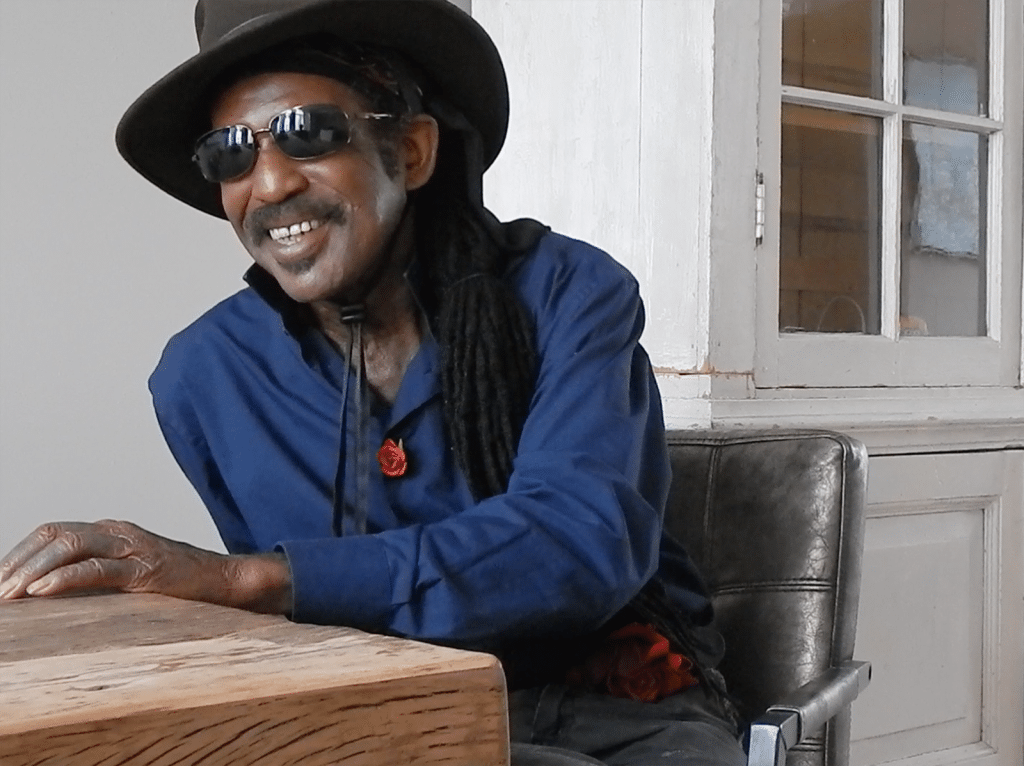
Gylan Kain, an influential poet and playwright from Harlem, N.Y., and a founding member of the Original Last Poets, crafted a new wave of spoken word poetry with his vibrant, rhythmic delivery, leaving an indelible mark on the art form before his passing on Feb. 7, 2024, in Lelystad, Netherlands.
I remember the day I knew I could be a poet. It was 1992, I was 18, soaking in the sunlight streaming through the window of my boyfriend’s Tribeca neighborhood apartment. The Hudson River and Newark skyline unfolding before me, and the ambition of New York City around me.
Back then, Tribeca wasn’t the upscale neighborhood it is today. It was a hidden gem in Manhattan, where hailing a taxi felt like an adventure, lending it a unique, almost “rural” charm. As someone from a small town in West Virginia, I surprisingly felt at home in this part of Manhattan, thanks to my boyfriend’s guidance as I adjusted to my new life in New York. Interestingly, Bethann, my modeling agent, had her office just a short walk from his apartment. Tribeca was a lively hub of Black beauty and creative connections, offering me a magic mycelium of people and experiences that profoundly shaped me.
There, in Tribeca, I learned about the Original Last Poets. My boyfriend played their music for me on a cassette tape, underlining their seminal role in the Black literary canon. He introduced me to the Black Arts Movement (BAM) and poets such as Ntozake Shange, Amiri Baraka, and Felipe Luciano, whose names were then foreign to me. In a twist that felt like destiny, he revealed that Gylan Kain, a founding member of the Last Poets, was his father.
This connection made the idea of pursuing poetry not just a possibility but a calling of sorts. I embarked on my poetic journey by starting poetry events at the World Famous Empty Glass in Charleston, West Virginia, where I would share my youthful, crass, confessional poems.
These were my first steps.
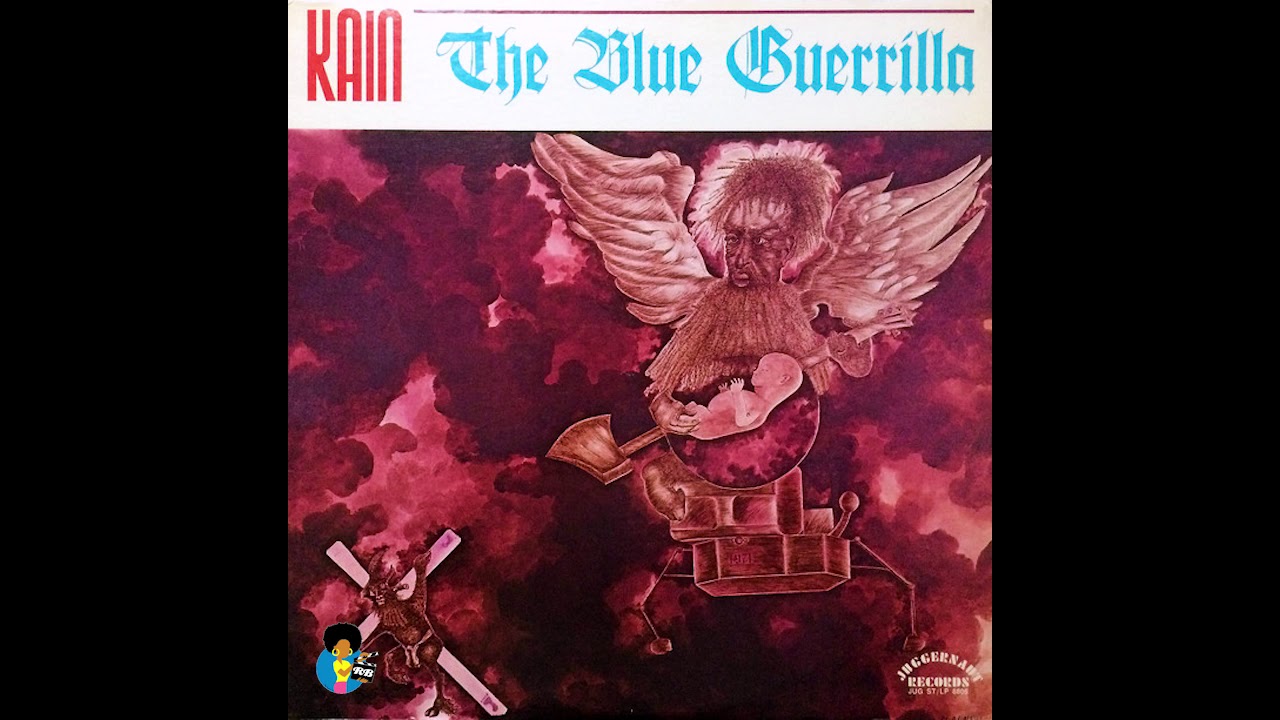
My relationship with Kain’s son took on new dimensions when we welcomed a child into the world; albeit distant, we — all Black artists in America — share a community together. He, an accomplished actor, emphasized that poetry requires craftsmanship, self-study, and dedication. Initially, I took his advice as skepticism towards my creative abilities — or perhaps he did harbor some doubts. But his challenge, deeply rooted in his heritage as the son of a poet and Black artist, proved instrumental in my journey. This push and a powerful directive from poet Amiri Baraka to “pull my book out like a gun” propelled me to publish my first book, “Valley Girl.” This milestone led me to become an Affrilachian Poet and two incredible poetic duets with Anthony Bourdain on Parts Unknown and Yo-Yo Ma’s Our Common Nature. My work has numerous citations in the Appalachian Studies canon, and my poetic adventures have taken me overseas, where I got the chance to perform with a band inspired by Amiri Baraka’s work. During those gigs, I loved to weave in elements of Kain’s “The Blue Guerrilla” — his iconic track and album. It was always a special moment when someone in the crowd caught the Kain riffs.
As I approach the milestone of 50, I marvel at my journey of poetic pursuits, a life enriched with endless verses since that sunny fall day when I discovered the Original Last Poets. That discovery has connected me to a lineage and tradition.
Along with the joy of connection and being understood, poetry has brought challenges and plenty of disappointments — and I’m not just talking about rejection letters. I mean the deep differences that come with the wrestling of a Black American narrative in poetry. This, too, is part of the tradition. Yet, through it all, poetry has remained steadfast in my life, bringing people closer and, at times, pushing them away. These experiences have underscored that despite disagreements, poets can unite in their love for Black culture and family.
Gylan Kain’s impact on my life is profound – as a poet, as my daughter’s grandfather, and as a figure wrapped in family stories, embodying mystery, Black Power, pride, bravery, genius, and imperfections. Holding a piece of Kain’s legacy and knowing the beautiful individuals and creativity he’s inspired are among my greatest honors.
My condolences to the friends, family, and admirers of Gylan Kain.
Kain’s formal acknowledgment is below.
~ Crystal Good
BBG Founder/Publisher
crystal@blackbygod.org
“It is with great sadness that we announce the passing of our father, Gylan Kain, on February 7, 2024.” ~ Amber Kain
Gylan Kain, legendary poet and performance artist, dies at 81
Kain was a beloved poet and actor, with a career ranging from the legendary Last Poets to the Public Theater. His work inspired generations of artists, and was sampled by the likes of Dr. Dre and The Prodigy, among others.
He was born Frank Gillen Oates in Harlem Hospital in New York City on May 26, 1942. He lived with his mother above a storefront apostolic church, where the focus lay on struggling for deliverance by receiving the Holy Ghost, as he would later put it. A high school fascination with Shakespeare motivated him to pursue a career as a writer and actor. In the 1960’s he legally changed his name to Gylan Kain, inspired by poet Dylan Thomas and philosopher Albert Camus, who wrote that the biblical Cain was the first rebel.
In 1968, on Malcolm X’s birthday, he founded spoken word poetry collective The Last Poets, which has often been cited as the fountainhead of rap music. The Museum of Modern Art in New York presented the Last Poets’ performance film Right On! (1971, directed by Herbert Danska and produced by Woodie King Jr.), with an introduction by fellow Last Poet and Kain’s spiritual brother, Felipe Luciano, in 2020. The Smithsonian’s National Museum of African American History and Culture has a collection of artwork related to the film.
Although Kain was no longer religious by the time he was an adult, the church was a big influence in his art. As a young artist living in the Village, it occurred to him the church he grew up in was ‘Total Theater’, he said in 2021. “The minister was a poet, a singular person standing up there, speaking from the deeper register of his person, moving like John Coltrane. I was looking for the revolution, trying to replace what the holy ghost was, and I realized I could be a poet in that way.”
In 1970, Kain left The Last Poets, continuing his career with his impactful album The Blue Guerrilla (1970), featuring pianist Gregory ‘Saint’ Strickland and guitarist Nile Rodgers. Soon after, Kain was discovered by director Joseph Papp, founder of The Public Theater. “As Keusi, the dubious assassin, Kain gives a beautifully understated and thoughtful performance,” The New York Times wrote about his role in Papp’s production Black Terror (1971). “His doubts and worries are always apparent, but so is his withdrawn strength and Dignity.”
Kain also starred alongside Morgan Freeman and Gloria Foster in a Shakespearean repertory company made up entirely of black and Hispanic actors, performing in Julius Caesar and a production of Coriolanus featuring Kain’s son Khayyam and a young Denzel Washington in 1979.
Kain spent the second half of his life in Amsterdam, The Netherlands, starting in 1984. There he worked as an actor, playing Malcolm X in When The Chickens Came Home to Roost (1993) and Turner in The Turner Revelation, a play he authored himself. He also continued as a spoken word artist, releasing his album Feel This (1997) and featuring on Dutch fusion band Electric Barbarian’s debut album él (2004). Kain often tried (but mostly failed) to keep his connection to The Last Poets out of the press, wishing instead to be seen for his current work.
Kain died in a residential care center in Lelystad, The Netherlands, after struggling with chronic heart failure for two years. He kept writing during all of that time, treating his life and art as one and the same as he had always done. He leaves behind his Children Khalil (Elise) Kain, Khairah (Mike) Klein, Khayyam (Jungshih) Kain, Amber Kain, and Rufus (Jessica) Kain, as well as their mothers (June, Karen, and Lian) and his seven grandchildren.
We hope the world will remember him by his chosen moniker; the name plate next to his doorbell in Amsterdam simply read: KAIN THE POET
At BBG, we celebrate the significance of the Black press in honoring Black lives. If you’re looking to publish an obituary, please get in touch. We’re establishing a process to provide space for these tributes free of charge, acknowledging the financial challenges that traditional obituary’s often present.
If you appreciate BBG's work, please support us with a contribution of whatever you can afford.
Support our stories
Author