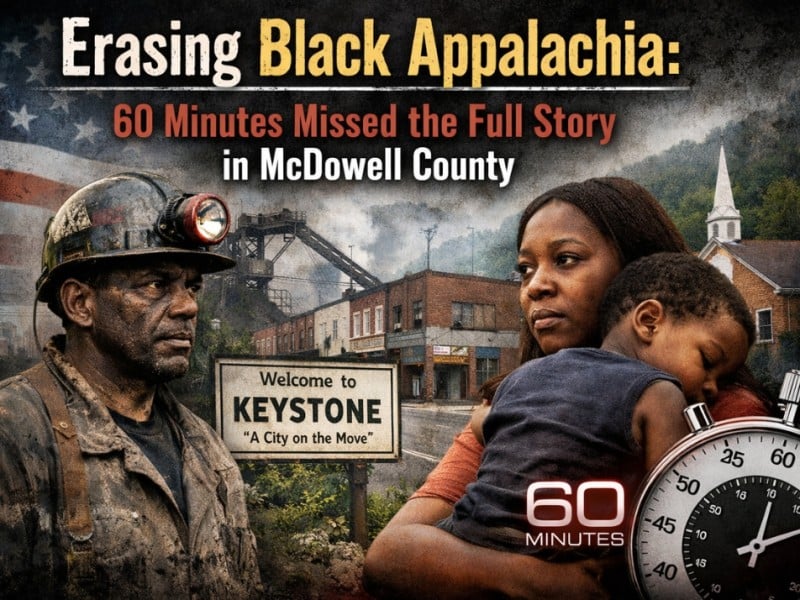
Erasing Black Appalachia: 60 Minutes Missed the Full Story in McDowell County
By Dr. William H. Turner, PhD
Author: The Harlan Renaissance: Stories of Black Life in Appalachian Coal Camps (2021)
Cecilia Vega’s report on poverty and safety net cuts in McDowell County, West Virginia, for 60 Minutes, which aired on CBS Sunday, February 22, 2026, portrayed a wide-ranging story with impressive visuals, but it excluded any references to the population of Black people that has lived, labored, suffered, and persevered in the Pocahontas coalfields since its founding in 1858. The majority-Black town of Keystone – through which the feature did a drive by – going back to the early 1900s, was one of the first communities in WV to establish substantial Black political autonomy, with Black residents holding positions on the city council and electing one of the state’s first Black mayors. Nearby Gary and Welch, still have significant numbers of Black residents.
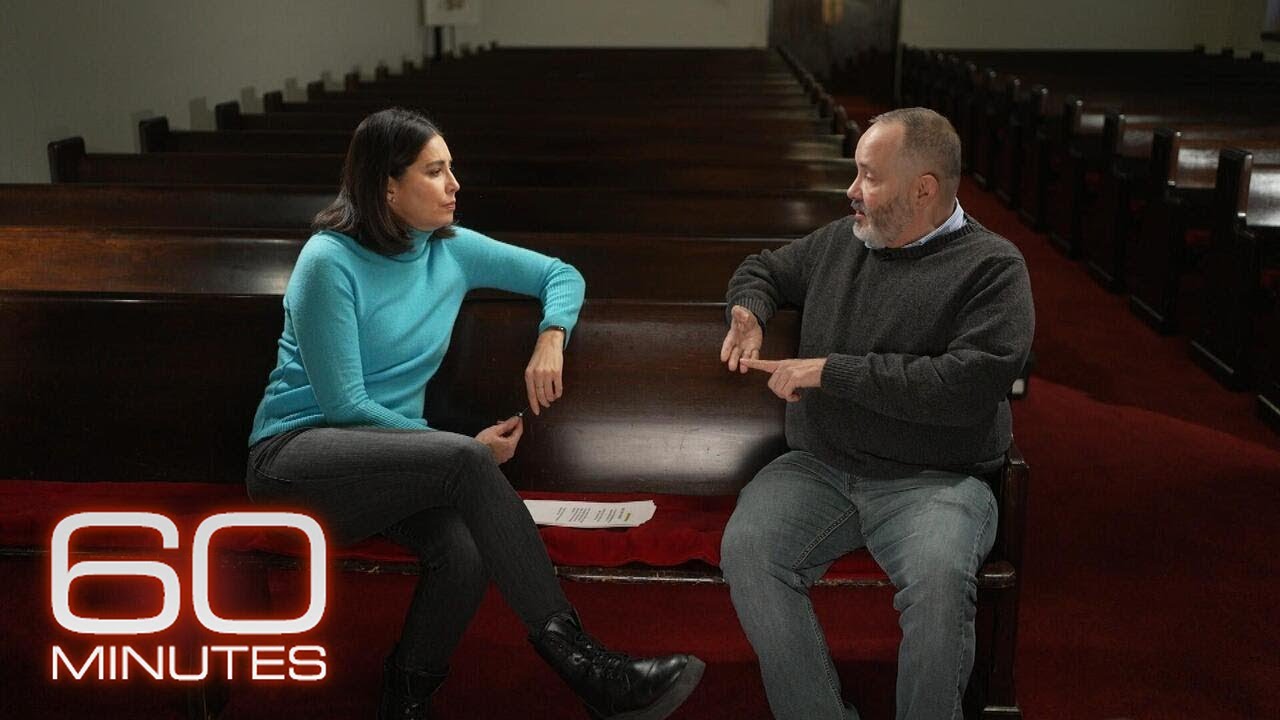
Having spent more than a half century mapping the lived experiences of Blacks in Appalachia (the title of a book I co-edited 40 years ago), I assume the omission of Blacks in the episode was deliberate, if only because it was executed with relative attention to detail. Then too, the new management at CBS — and its parent company, Paramount Global – made it clear that they are committed to eliminating or significantly rolling back Diversity, Equity, and Inclusion (DEI) policies, which impacts editorial content.
Poverty in the Appalachian coalfields is not a wholly White experience. Mainstream media portrayals of coal company towns (like the one I was raised in – Harlan County, Kentucky) are almost always carefully rendered around the historical exploitation of coal miners, environmental devastation, and generational hardship. Usually, such depictions of Appalachia, like Vega’s, present a very distinctive optical and historical profile. Black coal miners, families, churches, neighborhoods, political operatives, medical and educational professionals, labor organizers, and Black children growing up amid the same scarcity simply fail to make the cut.
One can only imagine they were edited out for reasons of storyline consistency. Then too, in the spirit of VP JD Vance’s New York Times best-selling memoir Hillbilly Elegy (2016), poverty presented across racial and ethnic lines clutters the script. Race and social class exploitation muddies the plot, and acknowledging Black Appalachians would have required much deeper mining-down and a much broader analytical brush: for example, common sense informs us that where protracted poverty exists, being black makes one poorer than the average White person.
Ms. Vega’s 60 Minutes episode operated on the premise that Black residents either did not exist in West Virginia’s disadvantaged communities or existed so irrelevantly as to be undeserving of comment. In a curious way, it is refreshing to see poverty portrayed without the burden of historical accuracy. By obliterating Black West Virginians from the account, 60 Minutes replicated the perception of Black invisibility in the Appalachian narratives of hardship. The episode depicted a region already misunderstood and rendered it even more incomplete.
If CBS and 60 Minutes revisit West Virginia and include its entire people—not just the ones who conform to a familiar and commercially viable image—it will also tell Black – and increasingly Hispanic (clearing my throat, Ms. Vega) – stories that will deepen, rather than dilute, the stories of Appalachia. However well-intentioned was CBS’s latest “Appalachian poverty tour,” the impact of once again presenting an all-White Appalachia is distorted, disingenuous, and a disservice to the public.
If you appreciate BBG's work, please support us with a contribution of whatever you can afford.
Support our stories