Standing Against Hate: Why West Virginians Must Reject Immigrant Scapegoating This Election
By: Joanna DiStefano, Senior Associate, Grassroots Impact
The escalation of campaign rhetoric on the national stage targeting immigrants is deeply disturbing. Hate speech has long been a cheap ploy to build political capital, and what we are seeing now is a dangerous distraction from real issues. As West Virginians, our connections to immigrant cultures give us reason to push back against racism and xenophobia as Election Day draws near.
Haitian immigrants in Springfield, OH, have been targets of violence since the presidential debate last month when Donald Trump insinuated that immigrants living and working there are dishonest, lazy, and the source of violent crime. The unapologetic attachment to the demonization of immigrants since then is absolutely inexcusable. Just earlier this week during the vice presidential debate, JD Vance doubled down on the absurd notion that immigrants are to blame for the national housing crisis, among other things.
Statements like these deserve a healthy dose of suspicion. We know this instinctively as West Virginians because of the deep pride we hold in our immigrant ancestors who worked in the coal towns and logging camps that built this state. It’s not hard to imagine how, despite their efforts to fulfill the promise of American opportunity, they were made to feel unwelcome and unappreciated, even the target of intimidation and violence.
Whatever mischaracterizations and outright lies may spout from a political candidate’s mouth, we know the truth. Immigrants continue to be valued members of our communities. They are our friends, neighbors, and co-workers. The immigrant experience is central to being a West Virginian. We cannot allow the hateful narratives bandied about nationally to gain any traction here.
In this moment, we are not powerless. History and current events show us that even the faintest attempt at demonization can and must be confronted. First and foremost, when someone makes a racist or xenophobic comment, ask them to explain their meaning. This provides an opportunity to illustrate how this line of thinking does not align with other values they have demonstrated and elevate the truth. It is an important reminder, for both our neighbors and for political candidates, that we will not be distracted by scapegoating and hateful lies that put our communities in danger.
Secondly, seek out opportunities to talk with candidates. Hearing from folks with differing perspectives helps to remind candidates they are called to serve everyone regardless of political affiliation, race, or citizenship status. Above all, it encourages candidates to support policies that benefit the most people, not just a select few, and discourages extreme positions on any issue.
Here in this last mile lead-up to Election Day, constituent contact is invaluable. Candidates will be more visible and accessible in the coming weeks as they stump for themselves and other candidates in their party. Take time to research candidates and plan on attending public events, like the Kanawha County Candidate Forum at the First Baptist Church in Charleston on October 22 at 6 PM. Commit to being there and speaking up for an issue that is close to your heart:
· Above all, strive to maintain a respectful and courteous tone.
· Introduce yourself including where you live so they know you are a constituent.
· Begin with an acknowledgement of their work or a recent action that you found meaningful.
· Connect their demonstrated values to the issue you want to talk about by sharing a pertinent fact. Give scope to the problem as it appears in your community.
· Share a potential solution that they would have the power to enact as a legislator.
· Frame a yes/no question to ask the candidate if they support that solution.
· Conclude with a thank you and ask how you can follow up with them.
These last weeks before Election Day are especially consequential. Not only does the outcome of each race on the ballot hang in the balance, but constituent engagement cements the reality that public service requires accountability far beyond the campaign trail. Now is the time to remind candidates that hate speech is not welcome in West Virginia. We expect more from the folks who seek to represent us in government. If candidates want our vote, they need to help solve problems, not make new ones.
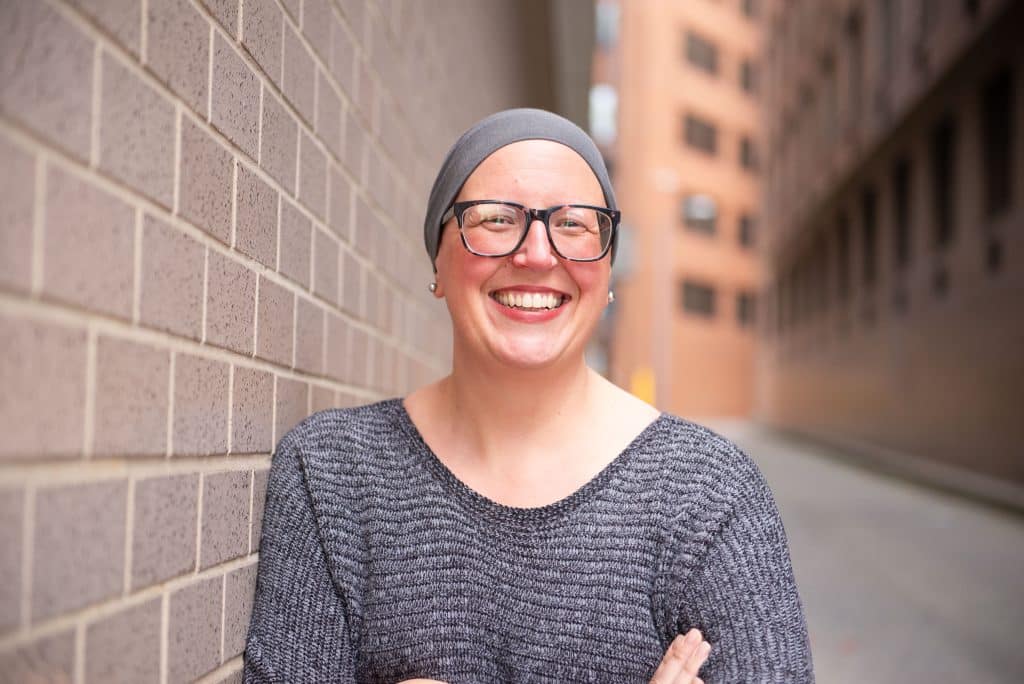
Joanna DiStefano is a Senior Associate for Grassroots Impact at RESULTS, a network of non-partisan grassroots advocates working to influence political decisions that will bring an end to poverty. Born and raised in Randolph County, WV, she now makes her home in Morgantown.
If you appreciate BBG's work, please support us with a contribution of whatever you can afford.
Support our stories