
Black By God: People Moving the Mountains Spotlight Profile: Quenton King

By Traci Phillips | Black By God – The West Virginian
The Policy Architect Putting Black Appalachia Back on America’s Environmental Justice Map
Black Appalachia is almost never included in America’s environmental justice story. Quenton King is changing that.
Across the country, national conversations highlight crises like Flint’s water, Louisiana’s Cancer Alley, and South L.A.’s pollution corridors. These communities deserve attention. But there is another truth America continually overlooks: Black rural communities – especially in Appalachia – face the same environmental burdens without the national spotlight, resources, or investment.
In the heart of West Virginia, Quenton King is quietly rewriting that narrative. His work challenges the country to widen its view of where environmental injustice exists — and who deserves protection, resources, and representation in the fight for clean air, clean water, and climate resilience.
A National Leader Rooted in Local Truths
Born and raised in West Virginia’s Eastern Panhandle, King represents a new generation of Black rural leadership redefining what’s possible in regions historically excluded from national policy tables.
Today, he serves as President of the West Virginia Environmental Council (WVEC) — a statewide coalition championing environmental protections in a climate where those protections are often under attack. His leadership includes shaping legislative strategy, educating residents, and pushing for accountability on issues that directly affect people’s health and quality of life.
But King’s impact stretches far beyond state borders.
As a Federal Legislative Specialist with Appalachian Voices, he navigates national climate dollars, federal agency processes, and complex environmental regulations. He helps rural towns — including Black, low-income, and historically excluded communities — understand how to access federal funds that could transform their futures.
In many communities, this type of “policy translation” is the difference between progress and continued neglect. King is one of the few ensuring that Appalachia — especially Black Appalachia — is not left behind in the nation’s energy transition.
Expanding America’s Environmental Justice Lens
Environmental justice issues in West Virginia are not abstract. They are lived realities: polluted streams, weakened regulations, extractive industries, and contaminated water systems. Yet these stories rarely reach the national conversation.
King forces the country to pay attention.
He points out that rural Black communities experience the same environmental harms commonly associated with major EJ hotspots — but without philanthropic backing, national media coverage, or political urgency. The lack of recognition translates into a lack of investment.
Through his work as a reporter for Mountain State Spotlight, King documents these issues with data, community voices, and policy analysis. His stories connect the dots between:
- health disparities
- rural poverty
- environmental risk
- federal disinvestment
- and political neglect
His message is clear: If America wants an equitable climate future, rural Black communities must be at the center of the conversation — not an afterthought.
A Bridge Between Federal Power and Local Possibility
When Congress passes a major bill or the EPA releases a new rule, most small towns lack the staff, knowledge, or capacity to pursue opportunities. That’s not a community failure — it’s the result of decades of underfunding.
King steps in as a strategist, educator, and advocate.
He breaks down federal jargon into real-life impact:
- What does this funding do?
- Who qualifies?
- What deadlines matter?
- How will this affect your health, your school, your water, your energy bills?
He approaches this work with respect and clarity — honoring the lived expertise of people who have been stewards of their land for generations.
This ability to translate complex policy into everyday value is rare. And transformative.
Why His Work Matters to the Country
The next decade will unleash historic investments in climate resilience, clean energy, and public health. These dollars will decide which communities thrive — and which get left behind again.
Without leaders like King, Black rural communities risk missing opportunities that could:
- upgrade water systems
- improve air quality
- create jobs
- support local agriculture
- build climate resilience
- and strengthen community health
His work exposes a truth national audiences can no longer ignore:
Environmental justice is not just an urban fight.
It is a rural fight.
A Black fight.
An American fight.
The Future of Rural Black Leadership
Quenton King challenges national narratives about rural America. He shows that Black Appalachians are not passive or invisible — they are strategists, innovators, and protectors of their communities.
His leadership reminds the country that Appalachia is not a stereotype, but a region full of Black brilliance, culture, and resilience.
That is why King is the first honoree in Black By God: People Moving the Mountains — a series spotlighting Black West Virginians whose work is shaping not only their communities, but the nation.
If you appreciate BBG's work, please support us with a contribution of whatever you can afford.
Support our stories
Related Articles

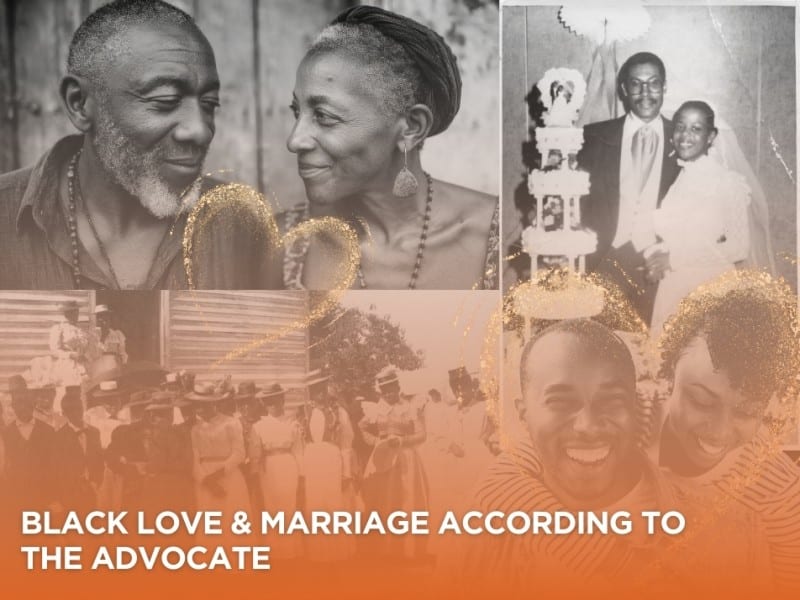
Black Love & Marriage According to The Advocate
The newspaper only survived 12 years but thanks to the foresight of the publisher, an archive of Black West Virginian marriages and wedding practices exists 114 years later.