What We Grow Is Bigger Than Crops: Lessons from Herbalist AunTEA Farmer Cee
By: Chamear Davis | BBG agriCULTURE Fellow
Hello from the Meadow.
I have to talk to you all about the time I got to spend with my marketing genius, powerhouse AunTEA, Farmer Cee. I had the pleasure of meeting Clarinda Stanley a couple of weeks ago because she was the inspiring keynote speaker for the 2026 WVU Extension Small Farm Conference I attended at the Charleston Coliseum and Convention Center.
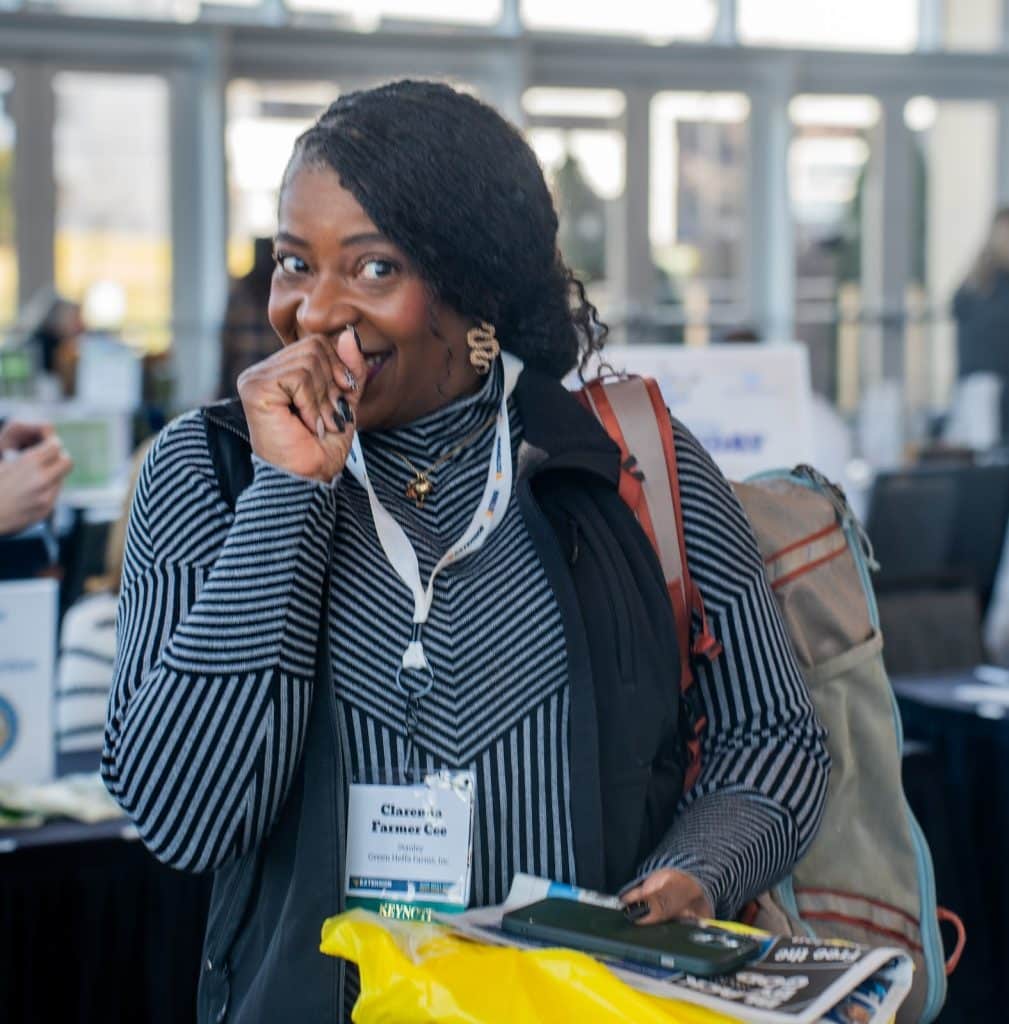
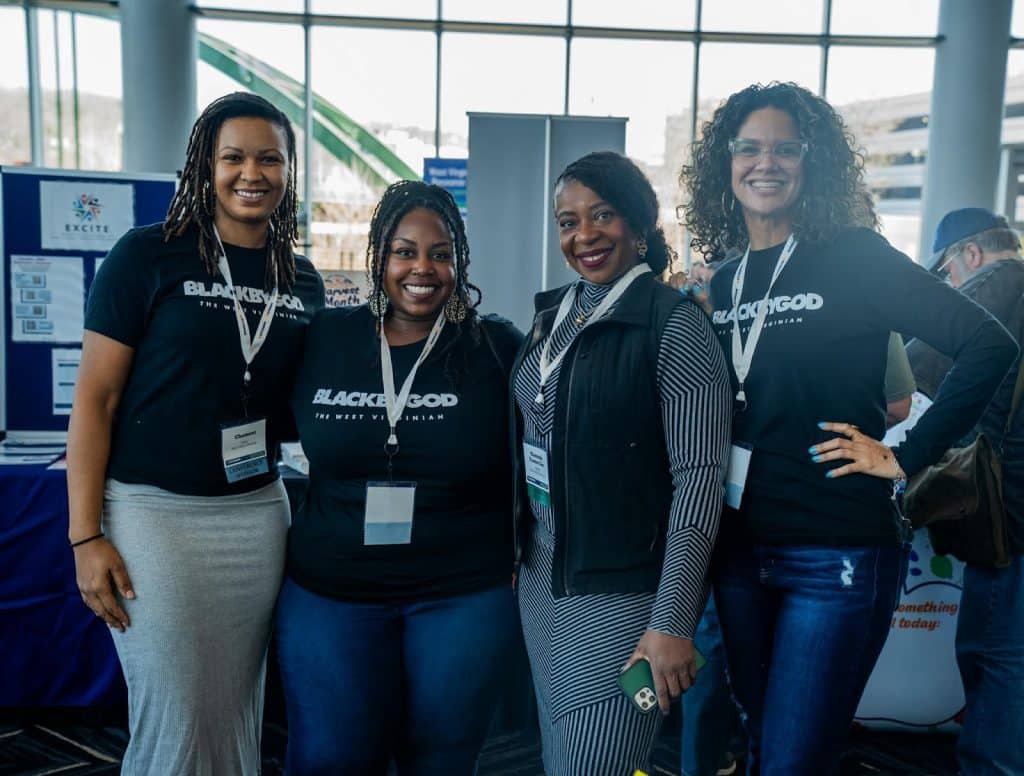
There is a picture of Farmer Cee when she first arrived at the conference and encountered the Black By God agriCULTURE Story Farmers. She has her fist to her mouth, and you can see it in her face—that “Oh snap, I found you” look. It’s that feeling of kinship Black women get when we find each other in spaces where there are so few of us.
Statistically, Black women farmers in West Virginia are invisible—too few of us to even count. The very bottom of the totem pole. But as Farmer Cee reminded us, “If you know about totem poles, you know the power is at the bottom.”
And that power? We’ve been building it.
So we have been doing what Black people in Appalachia have always done—finding each other, building with each other, and creating space where there wasn’t any. It was through the intentional, collective work of groups like the Black Gardeners and Growers of West Virginia, Black Girls Grow, and the Black By God agriCULTURE program that we were able to create that space of cultural comfort and being seen for Farmer Cee.
During her keynote speech, which was a total masterclass in branding, she showed us why she is such a force. Her farm, Green Heffa Farms in Liberty, North Carolina, is where she harvests herbs and crops for her holistic tea blends. She has trademarked this Boutique Farm model, which is all about growing products with high value as opposed to just focusing on high volume. It’s a total pivot from the industrial mindset; it’s about being intentional with what you produce and how you present it to the world. To make that model work, she uses a framework she calls the 5 Vs of Branding. As she broke them down, I was taking notes and asking myself those same questions for Mear Mae’s Meadow, my urban farm on Charleston’s West Side:
- Vision: What is the dream for your brand? For the Meadow, the dream is to provide a sustainable source of produce and to empower our community to reclaim our connection to the land.
- Value: What makes your contribution unique? It’s our Afro-Lachian roots and the way we are working together to achieve our common goals, combining ancestral knowledge with modern urban farming.
- Velocity: How fast are you moving? We are moving with purpose, growing from an idea into a foundational resource for our area of Appalachia.
- Visibility: Who is seeing your story? We are making sure our neighbors and our youth see that farming is a viable, powerful path for us.
- Viability: Can this sustain itself? We are building a model that doesn’t just rely on a single season or a single farmer, but creates a lasting legacy for the land and the people connected to it.
We sat there after her presentation, steeped in the wisdom of it all—Black women across disciplines: journalists, photographers, influencers, farmers, editors. All of us building something. Energized about the brands and the futures we are cultivating together. Having a round table about how we can use our visibility to improve our viability.That kind of work doesn’t happen by accident. As Farmer Cee told us, “I’m very intentional, so everything I do I want it to be something that is going to have longevity. So I give it some thought” says Farmer Cee.

We carried that cultivating energy from the conference to the Black History Month Farm to Table dinner presented by Chef Ke at the J.Q. Dickinson Salt Works in Malden. The space is beautiful, rustic, and warm, with a “hometown store” feel that showcases their local, value-added products. But being in Malden was deeply personal for me. My Maw Maw Mae, the Mae in Mear Mae’s Meadow, lived just down the street in Rand. I rode past this place before and after every visit.
This specific place was once one of the largest plantations in the Kanawha Valley where our ancestors were enslaved. Yet, sitting at a table with Chef Ke’s food in front of us, felt like transforming their pain into purpose. We are using that very land to celebrate Black history, Black culture, and Black abundance.
On that soil, we were celebrating a Black woman Chef (Keyarna Frederick), another Black woman Urban Farmer (Chamear Davis), and a Black woman Keynote Speaker (Clarenda “Farmer Cee” Stanley). With food grown by Black hands and music provided by black storytellers (Bob Thompson on the keys and Shayla Lethridge’s soulful, melodic voice), it was a profound full-circle moment. Could the ancestors have even dreamed this one up? Did they ever imagine a night like this?
Sitting in that space, on that land, in that moment—it was also a reminder of something deeper.
That humility and visibility are not opposites. As Farmer Cee said, being humble doesn’t mean being quiet. It doesn’t mean dimming your light or pretending you’re not exactly who you know you are.
And in that moment, none of us were dimming anything.
One of the most powerful moments of the night was being honored myself, as the proceeds from this beautiful farm to table dinner were dedicated to Mear Mae’s Meadow. In that space of bonding and kinship, Farmer Cee saw me—not just as Chamear, but as “Niecy.” In that moment, I gained more than a connection. I gained a mentor. An AunTEA.
Speaking to the importance of representation within the community, she shared, “it’s about telling your story—making sure people know you’re here and that you’re part of the ecosystem.”
That validation confirmed something I already felt—I am exactly where I’m supposed to be.
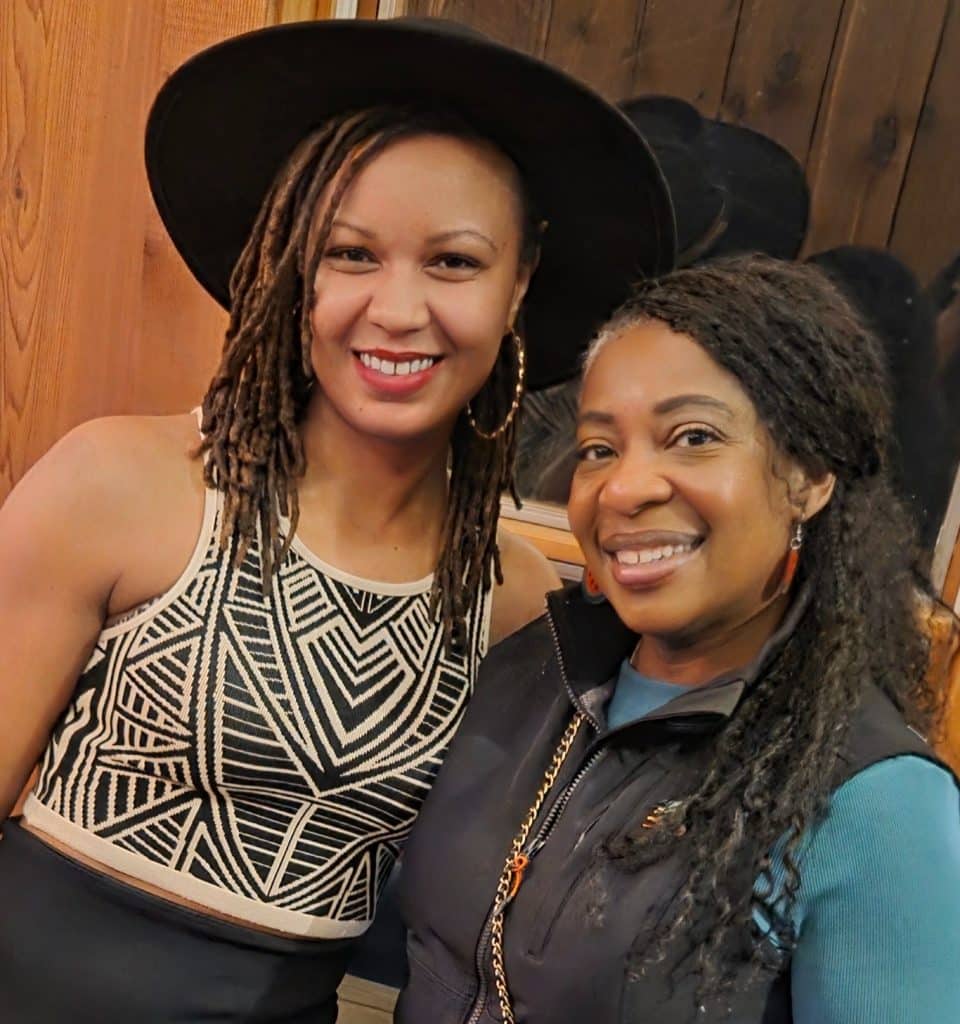
Farmer Cee asked a question during her presentation: “What do people say about you when you leave the room?” Well, what I say about her is that she left me with more than just notes; she left me with a clear sense of direction for Mear Mae’s Meadow, our contribution to the Afro-Lachian Food Network, and our unwavering commitment to this community. I left that weekend rooted by the reminder that our stories are the most valuable thing that we grow.
About the Author:
Chamear Davis is a West Virginia native, a wife, a mother, and a dedicated Urban Land Steward. As the founder of Mear Mae’s Meadow, an urban farm and microgreens business based on Charleston’s West Side, she is committed to reclamation and community food sovereignty. Beyond the meadow, Chamear serves as a Project Steward with New Economy Works WV, where she provides technical assistance and support to local cooperatives. Whether she is tending to her crops or building infrastructure for the Afro-Lachian Food Network, her work is driven by the belief that our stories and our soil are our most valuable resources.
Subscribe to the BBG AgriCULTURE newsletter at blackbygod.org.
If you appreciate BBG's work, please support us with a contribution of whatever you can afford.
Support our stories
Related Articles
From Carlo Petrini to Eddie Mukiibi: Why the Future of Slow Food Matters to Black Appalachia
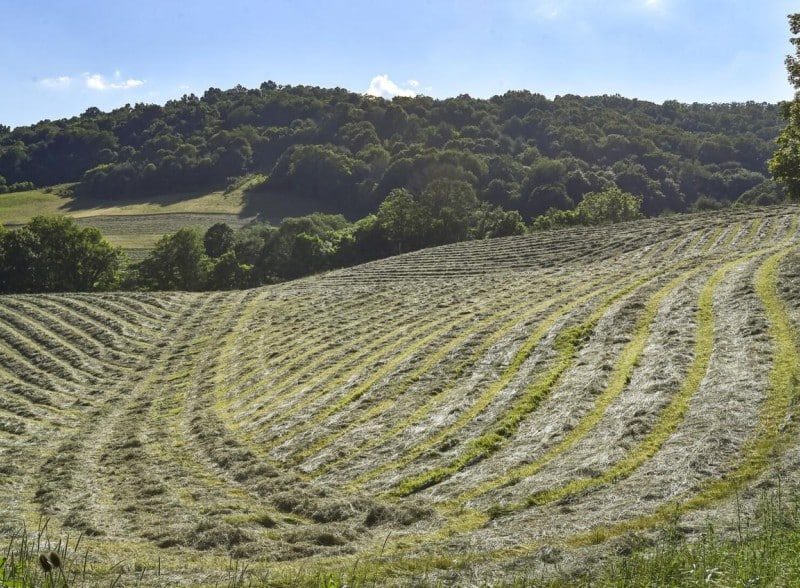
My journey into the global food movement began on a Black family farm in Madison County, Kentucky, located at the foothills of eastern Appalachia. Long before I ever traveled to Italy, met Carlo Petrini, or sat across a table from Edie Mukiibi, I learned lessons about food, land, family, and community from people whose names would never appear in newspapers or history books but who laid the foundation for my work as an agrarian, intellectual activist.