Looking Back on the Final Day of WV’s 2026 Legislative Session
Filming cops, teacher pay raises, Raylee’s law, cannabis cash and…magic mushrooms?
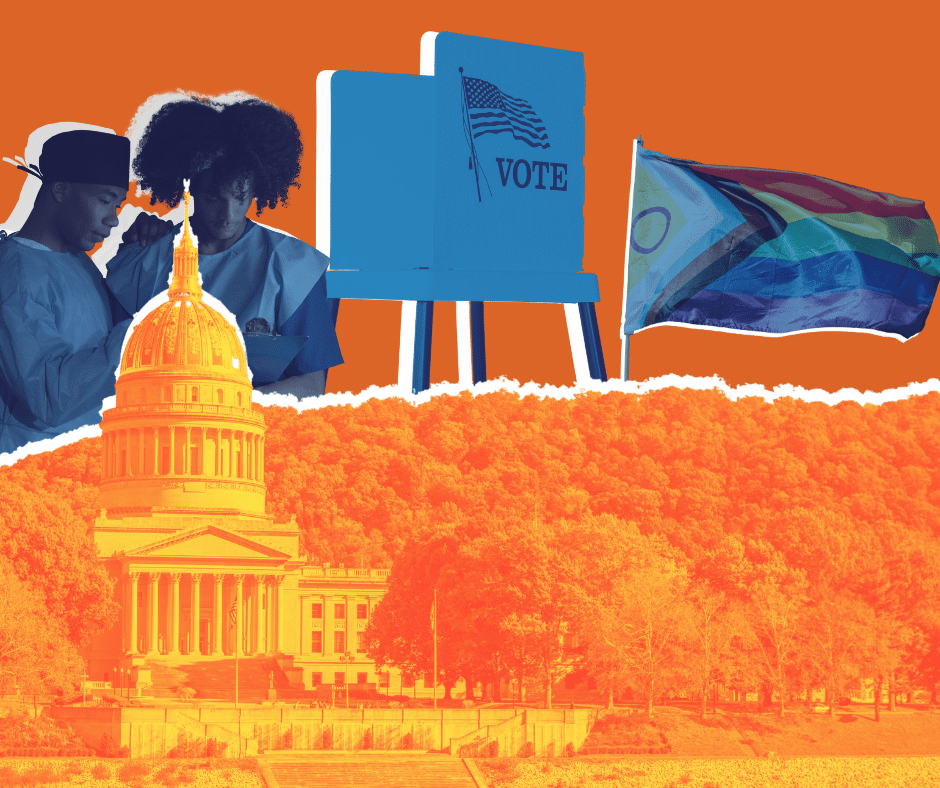
After 60 days of debate, amendments and votes, the West Virginia Legislature officially closed its 2026 session at the Capitol on March 14. While dozens of bills completed the long journey through both chambers, the fate of many still isn’t entirely settled — Gov. Patrick Morrisey still holds the power to veto them.
Many bills stalled out and died before the deadline, while others bounced between the House and Senate in the final hours for last-minute approval. When the clock struck midnight and lawmakers adjourned sine die, this is the most important legislation that made it.
SB 4: A bill to convict or fine people that harass any first responders after receiving a verbal warning.
After a brief disagreement over language changes, the bill passed both houses, although Morrisey hasn’t signed or vetoed it yet. It would specifically make it unlawful to get within 30 feet of a first responder or law enforcement officer after receiving a verbal warning. This could potentially prohibit people from filming law enforcement.
We’ll bring the best from BBG right to your inbox. You can easily unsubscribe at any time.
Sign Up for our Newsletters!
HB 4712: A bill to increase criminal penalties for people convicted of DUIs that result in death.
This bill was named after Baylea Bower, a 25-year-old woman who was killed during a head-on collision in Raleigh County last year. Following the crash, the community came together in outrage, with many saying the impaired driver, who caused the crash, was not properly sentenced. Destany Lester, 18, received six months of home confinement and two to 24 months of rehabilitation.
The Senate made an amendment allowing for prosecution and the guilty party to be charged with a felony and penalties. It increased incarceration time to between 5 and 30 years, up from the original 3 to 15 years. It also upped the fines to no less than $2,000 and no more than $6,000. The House concurred and passed the bill unanimously, although Morrisey still hasn’t signed or vetoed it.
HB 5168: A bill to increase funding for EMS.
Lawmakers finally passed legislation to create permanent state-level funding for West Virginia’s cash-strapped local EMS agencies. Although the very first version of the bill would have required local governments to provide a 100 percent match for any state funds, that percentage was lowered over the course of the session.
When the bill was presented to the floor during the last day of session, Del. Patrick McGeehan, R-Hancock, moved that the House simply concur with the Senate’s amendments. The Senate had further lowered the state match from 50 percent to 30 percent of local funds put up for EMS.
Although the body discussed sending the bill back to the Senate with an amendment raising it back to 50 percent, the House ultimately decided to just concur with the Senate’s version. This bill passed the House with only Del Michael Hite, R-Berkeley, voting against. Morrisey still hasn’t signed or vetoed HB 5168.
HB 5101: A bill to increase penalties for certain acts of domestic violence, as well as changing bail requirements.
Also known as the Joanna Phillips Domestic Violence Prevention Act, this bill would transform the way people are convicted of crimes related to domestic violence. It would require magistrates to check for any priors, increase bail requirements and make strangulation of a domestic partner a felony of up to 10 years in prison. This bill was sent to Morrisey’s desk, although he still hasn’t signed or vetoed it.
HB 4765: A bill to raise pay for state employees, including teachers.
Lawmakers passed a 3 percent pay raise for state workers, including teachers. Although the Senate tried to amend the bill to include additional “locality” based pay raises for teachers in certain counties—mainly the wealthier ones—the House didn’t agree to that.
Morrisey hasn’t signed or vetoed this bill yet.
SB 906: Permitting lawful prescription of psilocybin.
This trigger bill will allow medical providers in West Virginia to prescribe psilocybin if the U.S. Drug Enforcement Administration makes it legal to do so.
Del. Rolland Jennings, R-Preston, raised opposition for the bill before it passed, expressing a large amount of concern.
“Is this the same thing that’s under the street name called ‘shrooms?’” he asked.
Kind of, but not really.
Psilocybin is the active ingredient in some hallucinogenic or “magic” mushrooms. Consuming or “tripping” on magic mushrooms can cause euphoria, heightened introspection, pleasant hallucinations and time distortion. It can also cause anxiety, confusion or disturbing hallucinations.
Early-stage research suggests controlled use psilocybin could be used to treat many chronic conditions, including depression, anxiety and even headaches. Many studies are in progress, but psilocybin has not been approved by the U.S. government to treat any medical conditions.
This bill passed the House with a 90-4 vote, and then it was unanimously passed in the Senate. Morrisey still hasn’t signed or vetoed it.
HB 5074: Allocating money from the Medical Cannabis Program Fund.
This bill will finally allow money from the state’s Medical Cannabis Program Fund to be spent. Since 2021, the fund has amassed $34 million in taxes, licensing fees and interest from cannabis dispensaries.
Lawmakers voted to send money from the fund toward several areas, including substance use disorder research, a state fund for fighting substance abuse and grants to local law enforcement agencies.
House Democrats wanted to amend the bill and send $20 million total from the fund toward the following: the Public Employees Insurance Agency (PEIA) Stability Fund, case workers for the Bureau of Child Protective Services, Court Appointed Special Advocates for children in foster care and the Higher Education Improvement Fund.
“This far exceeds the current budget we have. I don’t want to lose the bill as a whole, so I urge rejection of the amendment.” Del. Robert Akers, R-Kanawha said.
Their amendment was voted down overwhelmingly. The bill itself did pass with an 86-10 vote. Morrisey still hasn’t signed or vetoed it.
HB 5582: A bill to indefinitely extend a drug testing program for TANF recipients
Right now, all West Virginians who receive Temporary Assistance for Needy Families (TANF) must complete a drug testing questionnaire. A drug test must be completed if the questionnaire is failed, or if they have any prior drug-related convictions.
Should a participant fail, the first offense requires them to complete substance abuse training and job skills training. The second offense triggers a 12-month suspension from TANF, and the final offense is a permanent ban from TANF.
Drug testing was set to expire at the end of 2026. This bill would ensure it continues indefinitely. Morrisey still hasn’t signed or vetoed it.
One key bill that didn’t pass? Raylee’s Law: HB 5537
This bill would have prevented parents from pulling their children out of public school for homeschooling if they are involved in an active child abuse or neglect investigation.
Raylee’s Law had been a major point of discussion over the entirety of the legislative session. And it continued to spark a lot of debate during the final hours leading up to sine die. HB 5537 was named after an eight-year-old from Fayette county, Raylee Browning, who died in 2018 due to abuse and neglect. Her teachers notified CPS of their concerns of abuse, but then her caregivers promptly removed her and opted for homeschooling.
After the original Raylee’s Law didn’t survive Crossover Day, the House folded it into a different bill more broadly aimed at strengthening reporting requirements when children may be at risk. The House received the bill from the Senate at 10 a.m. during the final day of session, but didn’t take it up for debate until after 11 p.m.
Supporters argued it would close gaps that allow abuse to go unnoticed. Opponents said the bill represented government overreach into the lives of homeschooling families.
Del. Laura Kimble, R-Harrison, introduced amendments requiring school personnel and superintendents to report concerns to social services within 24 hours. Her proposals were repeatedly challenged and ultimately rejected, as critics raised concerns about feasibility and legality.
Del. Adam Burkhammer, R-Lewis, emerged as a leading opponent, arguing the bill was flawed and risked violating confidentiality during investigations.
“I don’t care what time it is—our job is to write good law,” he said, also voicing concerns that parts of the bill could negatively impact homeschool families.
Del. Chris Anders, R-Berkeley, echoed that concern, saying, “Government should support families, not control them,” as he pushed an amendment aimed at protecting homeschooling freedoms. His proposal failed.
On the other side, frustration mounted.
Del. Elliott Pritt, R-Fayette, urged lawmakers to stop adding amendments and pass the bill as-is. “We have an opportunity to do something tonight to protect children,” he pleaded.
As the clock ticked down, emotions boiled over. At 11:54 p.m., Del. Shawn Fluharty, D-Ohio, delivered a sharp rebuke of the process, accusing lawmakers of waiting too long to act on an issue tied to real cases of child abuse.
“The language before you has passed this body two times. We have had this bill since 10 a.m. We sat on this for 8 hours,” he said. “People are abusing children, taking advantage of this loophole. This is not about homeschool. We have played political football on this for four years, and we wait ‘til now to take it up. Shame on all of us.”
Del. Kathie Hess Crouse, R-Putnam, countered that the failure in the case behind the bill wasn’t homeschooling, but a breakdown in the system of Fayette County CPS itself.
With minutes left, amendments continued to fail as time slipped away. One final amendment from Burkhammer passed—but by then, it was too late to move the entire bill forward. As the clock struck midnight, the House adjourned.
HB 5537 died, not from a single vote, but from a combination of deep division, last-minute changes and time running out—as so many good bills often do, within the walls of the West Virginia Capitol.
If you appreciate BBG's work, please support us with a contribution of whatever you can afford.
Support our stories
Author

Related Articles
Death threats, witchcraft, and bigotry, oh my; Berkeley GOP candidate’s racist comments promise another ugly House race
Controversy continues in West Virginia’s 91st House District as Republican candidate Chris Clagett faces calls to withdraw over social media posts.

‘I wasn’t homeless because I was using, I was using because I was homeless’ – former unhoused talk long path to rejoining society
Truth Pharm presents participant-informed research on homelessness, digital barriers, and care systems at CEG’s 3rd Annual Syndemic Summit in Huntington, WV.

Local experts talk history, discuss the impact of Trump’s campaign to end Birthright Citizenship
Panelists at a Charleston library forum unpack birthright citizenship, the 14th Amendment, legal precedent, and civil rights protections in West Virginia.