
Reclaiming the 40 Acres Promise: Black Farmers in Appalachia Plant Seeds of Justice and Equity
By: Aliyah Smith- Gomis
When people think of workers in the agricultural, fishing, forestry, and logging industries, we generally think of the majority (White people). However, there are minority populations in these industries that have been forgotten and unseen over time. Specifically for Black agrarians, it has been normalized that our only connection to this land was as slaves, performing strenuous labor on plantations. But as we began to further examine the past, we’ve come to realize that our role in agriculture did not start with slavery nor end with it. Today, many Black farmers are coming to the forefront to reclaim their identity in the industry, correcting the narrative and revolutionizing the face of agriculture in America.
Understanding The Past
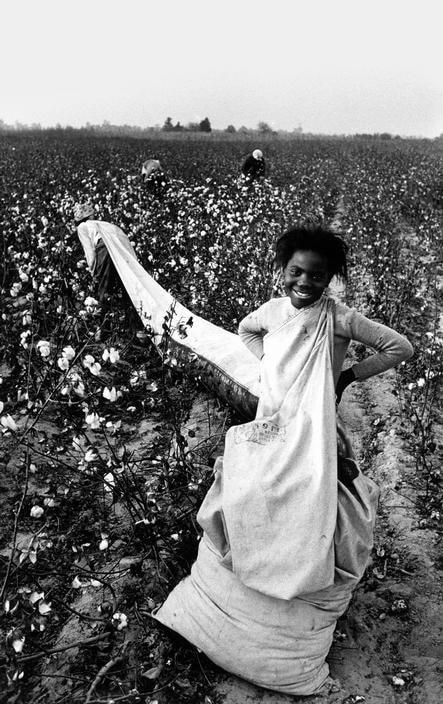
Historically, our people have thrived on the land since the beginning of time. From Africa, the Caribbean, and other places that our ancestors have originated from. For generations, we’ve used our cultural wisdom of the land to grow crops, produce holistic medicines, and for spiritual purposes.
Even during the period of Slavery in America, colonizers used enslaved people to grow cash crops, which were the backbones of the American economy. As far as poultry, our enslaved ancestors took the “unfavorable” parts of the cattle and created favorable meals that we now enjoy today such as chitlins, pig’s feet, ox tails, and so on. Black people have attempted to maintain their connection with agriculture and the environment. However, every attempt has been met with inequalities that have severed our connection for the last few centuries.
Let’s take it back to the beginning – In 1863, President Abraham Lincoln signed the Emancipation Proclamation, granting Black Americans their independence and freedom. In 1865, Union General William T. Sherman issued a wartime proclamation that promised to provide 40 acres of land to be redistributed to freed Black families to reinvigorate the South’s agricultural sector. To fulfill this promise, Sherman issued Special Field Order 15 in January of 1865, which commanded that the 400,000 acres of property confiscated from Confederate landowners be redistributed to Black families in 40-acre plots. The land was allocated to 40,000 freed slaves. Mules were not included in the order, but the Union army did give some away as a sign of good faith (hence the infamous saying of “40 acres and a mule.”)
After Lincoln’s assassination in April of 1865, presidential successor, Andrew Johnson, failed to uphold this proclamation and overturned the order before the end of 1865. Johnson also returned the promised land to the White landowners and former slave owners who originally owned it. This was the beginning of systemic racism against Black agrarians, and since then, the United States government continued to create barriers that made it difficult for Black farmers to accumulate wealth.
Weathering the Storm
As a result of the broken promises, former slaves resorted to sharecropping. This was a formal arrangement where White landowners would rent plots of land to Black people in exchange for a portion of the crops produced. In addition to land, the owners also extended credit to the sharecroppers to purchase materials from them. Unfortunately, the White landowners would underpay the sharecroppers, and they would charge unfair prices and high interest rates,
keeping Black growers in an endless cycle of debt and poverty.1
Despite the many challenges, Black Americans were able to acquire about 15 million acres of land by 1910. At the height of this success in 1920, 14 percent of Black growers owned and operated their land. 1 During this period of resilience, several contributions from Black farmers have revolutionized the way our food system functions today. To name a few, Henry Blair invented the early seed planters for corn and cotton, George Washington Carver pioneered crop rotation and developed various uses for peanuts, and Booker T. Whatley promoted sustainable farming practices by examining efficient farming practices for small farmers, which are still used today.2
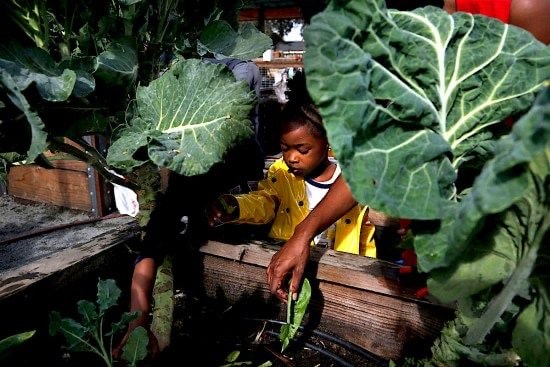
Within the last century, Black farmers have lost most of their land, and the 14 percent of Black farmers dramatically decreased. Today, Black people are severely underrepresented in agriculture, and according to a 2017 United States Department of Agriculture (USDA) census, 1% of farmers across the country identify as Black compared to 95% who identify as Caucasian/White.34 In addition, research has found that Black farms were smaller than their White counterparts, and the value of their agriculture sales were less than one (1) percent of the U.S. total.5
There have been several reasons for this sharp decline such as industrialization, major land loss due to instances such as heirs’ property, and discrimination. However, the true root cause is systematic racism which has caused discrimination from entities such as the USDA, inequitable lending practices, financial issues, and land loss. These issues have denied opportunities for Black agrarians to thrive and become as equally successful as their White counterparts, leading us to where we are today.
Here in Appalachia, the number of Black people in agriculture are even smaller than the national numbers. To paint a better visual, In the heart of Appalachia, West Virginia has a total of 23,622 farms, and out of that number, only 31 are Black-owned and/or operated. 5 Amongst these 31 agrarians are farmers such as Jason Tartt, farmer and owner of T&T Organics located in McDowell County, West Virginia.
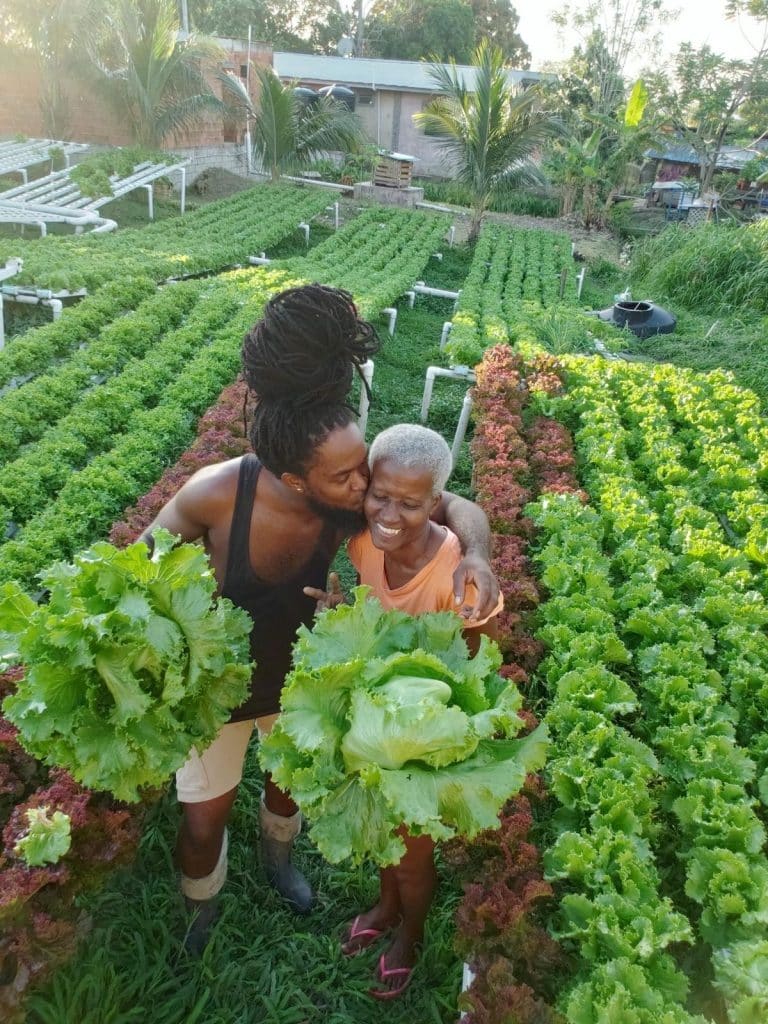
Although Black farmers account for only 1% of the land in the U.S, there has been a movement of Black agrarians who are drawing strength from our historical past by using agriculture as a strategy to produce healthier food systems and address the overall health and well-being for Black people across the country. These movements, often called food-based resilience practices, are an example of modern-day food justice advocacy. Organizations such as the Detroit Black Community Food Security Network (DBCFSN) and Alkebu-lan Village, have created programs that provide community gardens, seed-sharing programs, and access to healthy foods. Jason Tartt is one of many who is adapting this work to Appalachia. In his hometown in West Virginia, Jason uses his land to bring economic development through mountain farming. 6 Locals work on his farm to learn organic mountain farming methods and business models such as fruit orchards, beekeeping, and tapping maple syrup. Jason’s main goal is to educate locals on developing value-added products to increase their income. In addition to his work, Jason is working on a project with Amelia Bandy (Economic Development Greater East) and Josh McGee (Founder of the Y’all Sauce Company) to create a business production for hot honey, which will provide local jobs at a living wage and market local honey and peppers.


Appalachia’s Unique Advantage
To revitalize our ancestor’s legacy as ecological stewards, we must continue to change the narrative and reconstruct the normalized image of what a farmer looks like. Increasing land access and ownership has always been a major priority for Black Americans, and food justice advocacy has provided an effective pathway toward that goal. Considering the Great Migration of Black people trickling back into the South (including the central and southern regions of
Appalachia), it’s important to think about how we can translate this work into our region. According to Elizabeth Hirschman’s research in Climate Change Migration and the Economic Rebirth of Central Appalachia, the Appalachian region is projected to remain one of the most habitable areas in the U.S. by 2050. Research has shown that this region offers natural protection against the extreme weather events that are becoming more common elsewhere, and positions Appalachia as a potential climate refuge.7 This information is vital when it comes to discussing the growth and sustainability of Black growers. Jason Tart’s farm located in McDowell County, West Virginia is a testament to the viability of the region. His farm is located on land that has more capacity to produce honey than the entire state of West Virginia.
As research has proven, Appalachia offers the opportunity to create a new era for Black agrarians. We must come together to create a strong network to better support opportunities for reconciliation and a more sustainable food system. We have knowledgeable leaders amongst us, such as Jason Tartt, who can provide the needed expertise to amplify food justice advocacy in our region. As we continue to accomplish the agenda of our ancestors (Increasing land access and ownership for Black Americans), I recommend that we add increasing representation in the agricultural industry to our list of priorities.
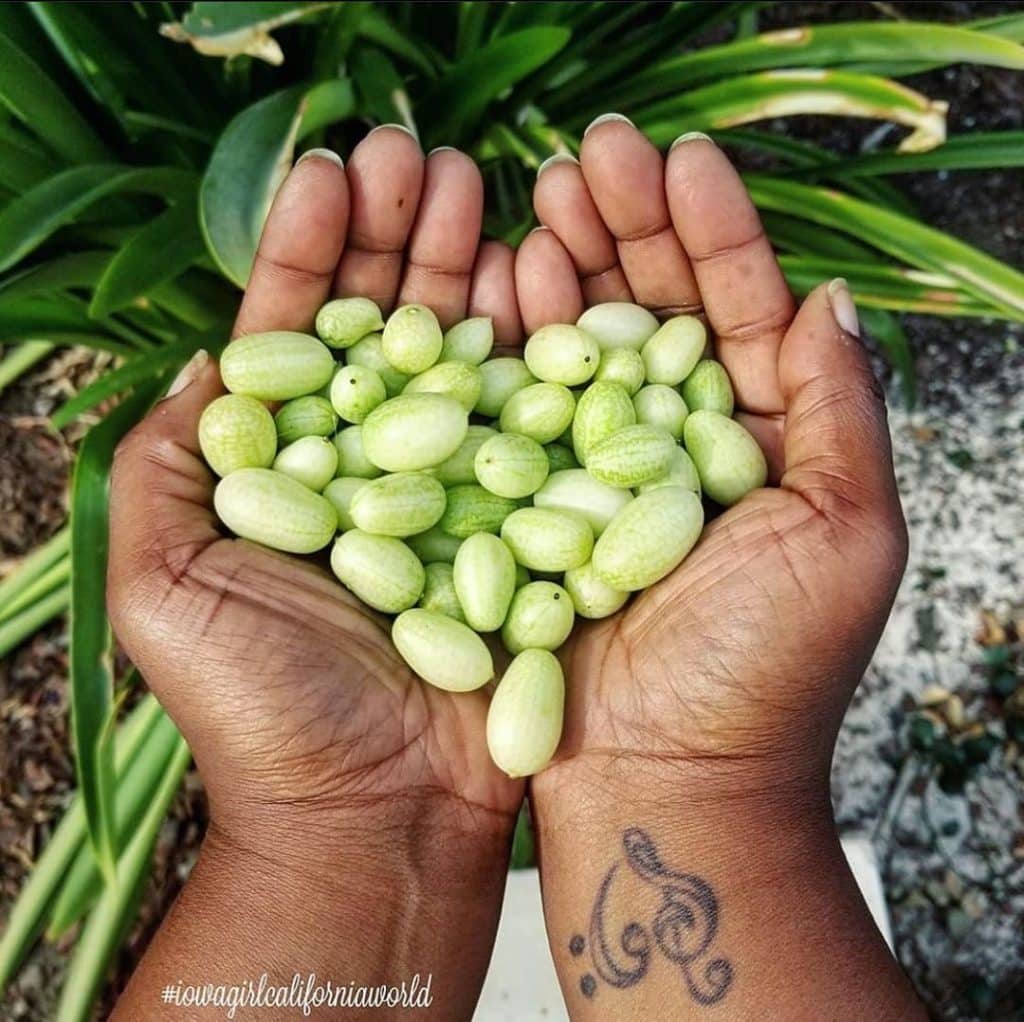

Considering the fruitfulness of our region, where would be a better place to start? Drawing from McKnight’s and Kretzmann’s work on Asset Based Community Development (ABCD)8, I suggest that we start utilizing the assets within our communities to create partnerships throughout the region. The Black Farmer Index has a comprehensive online directory of Black growers across the country and maps out various Black farmers across all Appalachian states. By utilizing this resource, we can create a network of Black agrarians throughout Appalachia that can revolutionize the agriculture landscape and foster a new era of inclusion within the agricultural industry in the United States.

References
- Packman H. Juneteenth and the Broken Promise of “40 Acres and a Mule.” National Farmers
Union. Published June 19, 2020. https://nfu.org/2020/06/19/juneteenth-and-the-broken-promise-
of-40-acres-and-a-mule/ ↩︎ - Poughkeepsie Farm Project. Poughkeepsie Farm Project. Poughkeepsie Farm Project.
Published February 4, 2017.
https://www.farmproject.org/blog/2017/2/4/hikqys8igvv0bo368aco3mrb1rv7d1 ↩︎ - AgriSafe Network. Webinar: Exploring Health and Safety for Black Farmers: Racism, Land
Access, Mental Health, and Resources. AgriSafe Network. Published February 23, 2023.
Accessed November 5, 2023. https://www.agrisafe.org/event/webinar-exploring-health-and-
safety-for-black-farmers-racism-land-access-mental-health-and-resources/ ↩︎ - USDA NASS. Black Producers up 5 Percent since 2012; One-Fifth Serve or Have Served in
the Military Highlights.; 2017. https://www.nass.usda.gov/Publications/Highlights/2019/2017Census_Black_Producers.pdf ↩︎ - USDA NASS. Black Producers up 5 Percent since 2012; One-Fifth Serve or Have Served in
the Military Highlights.; 2017. https://www.nass.usda.gov/Publications/Highlights/2019/2017Census_Black_Producers.pdf ↩︎ - Black Farmers Are Rebuilding Agriculture in Coal Country. Civil Eats. Published January 24, 2022.
https://civileats.com/2022/01/24/black-farmers-are-rebuilding-agriculture-in-coal-country/ ↩︎ - Hirschman EC. Climate Change Migration and the Economic Rebirth of Central Appalachia.
Social Sciences. 2022;11(10):462. doi:https://doi.org/10.3390/socsci11100462 ↩︎ - History | About | ABCD Institute | DePaul University, Chicago. Depaul.edu. Published 2024.
Accessed September 27, 2024. https://resources.depaul.edu/abcd-
institute/about/Pages/History.aspx#:~:text=%E2%80%8B%E2%80%8B%20The%20Asset%2D
Based ↩︎
If you appreciate BBG's work, please support us with a contribution of whatever you can afford.
Support our stories
Related Articles

Mama’s Meatloaf
From a 2025 Appalachian Foodways Practitioner Fellowship winner, a family dish with a reputation!
WV Senate committee advances bill to reduce fees for small farms
Under SB 226, farmers could sell up to 30 tons of animal feed annually, without paying inspection fees or getting a Commercial Feed Distributor permit — as long as the feed is produced exclusively on-site.

WV lawmakers once again advance bill to help create on-campus food and health aid pantries
HB 4081 would create a new grant program under the WV Higher Education Policy Commission. Grant dollars could be used to purchase food, bandages, toothbrushes, soap, tampons or even the space needed to open a pantry.