New Year’s Didn’t Start at Midnight — It Started in the Kitchen
From cabbage with a coin to cornbread and prayer, how Black Appalachian families prepare for the year ahead.
What y’all cooking?
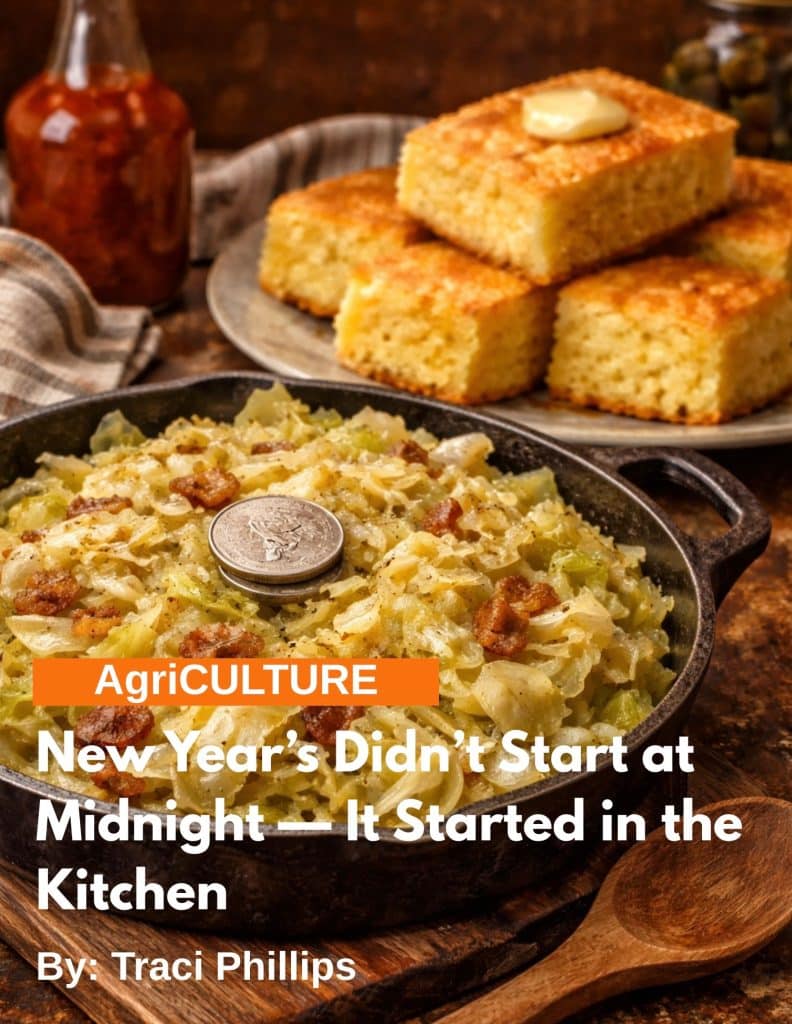
I’m cooking cabbage with a coin in it — and cornbread. If you know, you know if you don’t, let me explain.
In Black families across West Virginia and central Appalachia, the New Year has never started with resolutions. It started with preparation. Putting a coin in cabbage on New Year’s Day is a prosperity tradition. Cabbage already symbolizes paper money — layered, folded, meant to grow. The coin represents hard currency, savings, and money that stays. Together, they mean money coming in and money holding on.
But cabbage does more than symbolize wealth. It’s medicine. Rich in fiber, vitamins C and K, and known for supporting digestion and gut health. Long before anyone called it “food as medicine,” our people were eating greens to reset the body after a long year — heavy meals, stress, sickness, and survival.
Some families drop the coin directly in the pot. Others slide it under the pot, the plate, or even the table. The point isn’t where the coin goes — it’s the intention. You’re starting the year focused on provision and restoration.
And the rest of the plate is speaking too.
Black-eyed peas represent coins and survival. Small, humble, but filling. Elders always said if you eat your peas, you won’t be broke. Nutritionally, they’re packed with protein, folate, and iron — strength food. The kind meant to carry you when resources are low and work is hard.
Cornbread represents gold, land, and nourishment. It’s grounding. Filling. Meant to hold you steady. Made from corn, a sacred crop in Appalachia and Indigenous foodways, it fuels the body with energy and warmth. Some families insist it has to be baked, not boxed. Some say never turn it upside down — because you don’t flip your blessings or your balance.
Pork also appears in many kitchens. Eating pork on New Year’s Day symbolizes moving ahead, not looking back. And for working families, it was calorie-dense fuel — food that sustained long days and long winters. Fried fish shows up too, especially in river towns and city kitchens. Fish fed families when options were limited. It represents sustenance — the promise that you’ll make it.
Taken together, the meal says one thing clearly: we’re entering the year prepared.
Before any of that hits the table, though, the house gets cleaned — before midnight, not after. Floors swept. Clutter gone. Old energy released. You don’t start the year in chaos, and you don’t sweep blessings out once it arrives.
And when the clock gets close to twelve, somebody is praying.
Whether it’s at church or in the living room, prayer anchors the moment. Watch Night services trace back to December 31, 1862, when enslaved people gathered waiting for news of freedom — and that history still shapes how Black families welcome a new year.
For Black Appalachian families, the New Year was never about reinvention. The food isn’t superstition, it’s was about gratitude. So yes — I’m cooking cabbage with a coin in it and cornbread.
If you appreciate BBG's work, please support us with a contribution of whatever you can afford.
Support our stories