Data Centers Face Pushback in Appalachia Over Virtual Hearings and Community Access
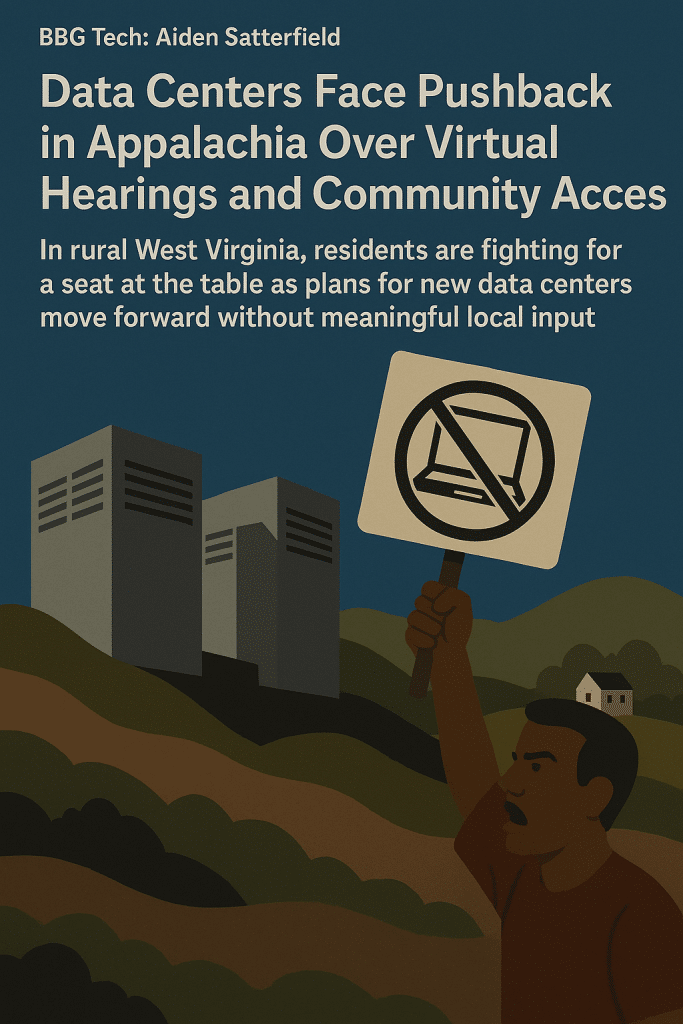
In rural West Virginia, residents are fighting for a seat at the table as plans for new data centers move forward without meaningful local input.
What Happened
Earlier this year, the WV Department of Environmental Protection (WV DEP) released draft air quality permits for two off-grid, gas-powered “data center energy campuses” proposed by TransGas Development Systems in Mingo County one near Holden and the other near Wharncliffe. The state agreed to do a virtual public hearing on August 18, but technical issues, like limited broadband and required online registration left many residents locked out of the conversation. In response, community members plan to deliver letters today, August 20 at WV DEP headquarters urging for an in-person hearing in Mingo County and an extension of the comment period, which now ends August 22 at 5 PM. It doesn’t make sense to hold a virtual hearing in communities where internet access is limited and many residents struggle with technology. If the goal is real community input, the process should make participation as easy as possible and for these areas, that means in-person meetings. An in-person option wouldn’t just increase engagement, it could also help build trust and comfort with technology over time.
Voices from the Ground
Mingo County residents are loud and clear: a virtual platform doesn’t meet the moment here. They pointed to internet connectivity issues, complex registration forms, and uneven technology access that shut them out of what should have been a public process. Mariah Clay, once in attendance, highlighted the health stakes, noting local residents rank near the top percentile in respiratory illnesses like COPD and asthma. Sierra Club’s James Kotcon raised alarms on greenhouse gas emissions, reminding officials these proposed facilities could rival coal plants in size and impact.
The Bigger Picture
This isn’t just about two data centers. It reflects a broader national trend. Rural broadband gaps already limit civic engagement, and now tech development is advancing with little local input. When people in towns that haven’t changed in decades actually know what’s coming, they have a reason to take part in the discussion. Many might even be open to change but when decisions happen without them, they’re left shocked. West Virginia’s new law (House Bill 2014) allows data center and microgrid projects to bypass local zoning and limits county revenue, effectively sidelining communities from decisions that affect air quality, health, and local budgets.
What Comes Next
With just two days left before the written comment deadline on August 22, residents are demanding more than perfunctory participation, they want in-person hearings, extended timelines, and meaningful transparency. If DEP wants to uphold public trust, they need to show up in Mingo, not behind screens.
This is more than policy,it’s about making sure rural West Virginians have the voice they deserve.
If you appreciate BBG's work, please support us with a contribution of whatever you can afford.
Support our stories
Author

Related Articles
Blockchain, crypto, and the new DUNA law: lawmakers and nonprofits gather for digital innovation summit
Despite low broadband ranks, West Virginia lawmakers passed the DUNA Act and debated stablecoin bills. Learn how blockchain legislation aims to spur economic growth.