
WV Senate passes bill to put the state in charge of beekeeping rules
Some lawmakers expressed concern that SB 927 would unfairly take away local control.

The West Virginia Senate recently passed a bill that would make the state the main authority in charge of beekeeping rules.
SB 927 would put all decisions about beekeeping under the West Virginia Department of Agriculture and make clear that the state’s Commissioner of Agriculture has the final say over beekeeping across West Virginia. Right now, some cities have their own rules about where people can place beehives, how far they must be from property lines and even how tall fences must be around them. If this bill becomes law, those local rules could no longer override state standards.
Supporters say this change would make things simpler and more consistent, while opponents say SB 927 represents state overreach. Instead of different rules in every city, SB 927 would ensure beekeepers follow one set of statewide guidelines. The bill would also update existing law to include a type of parasitic mite as a recognized honeybee pest. The Department of Agriculture already has the right to propose rules to eradicate, suppress or control honeybee pests.
The importance of bees and other pollinators
We’ll bring the best from BBG right to your inbox. You can easily unsubscribe at any time.
Sign Up for our Newsletters!
Last week, during a Senate Agriculture Committee Meeting, supporters of SB 927 told lawmakers that local restrictions are making it harder to address a growing problem: fewer honeybees, especially in cities.
One South Charleston resident, Dan Brammer, said he has seen a sharp drop in honeybees in community gardens over the past five years. In some places, he estimates pollinators have decreased by about half. Without enough bees, gardeners have had to pollinate plants like squash and zucchini by hand early in the growing season.
“We need to ease the restrictions on getting permits to raise bees in the city limits,” Brammer said.
He also argued that some city rules don’t make practical sense. For example, certain ordinances require beehives to be at least 200 feet from property lines and surrounded by tall fences. But bees can fly up to two miles to find food. He questioned how a 200-foot rule would reduce bee movement or improve safety.
Licia Pannell, a Black female beekeeper and founder of Unity Sisters Farms in Charleston, also spoke in favor of the bill. She said beekeeping supports local food production, education and small business opportunities. With only a small amount of land, families can raise bees, produce honey and help pollinate community gardens.
“On the West Side, we are working on connecting people to the land, pollinators, and local food production,” Pannell said. “Bees play a major role in that work. They support our fruit trees, our flowers and our vegetables in our community gardens. They strengthen the systems that help neighbors feed themselves. Right now, unclear rules and unnecessary boundaries make it harder for everyday residents to responsibly keep bees.”
Pannell said that SB 927 would remove unnecessary barriers while still protecting safety and neighbor concerns.
Mike Lamp, president of the West Virginia Beekeepers Association agreed with Pannell, saying consistent statewide oversight helps control diseases and mites that can wipe out bee colonies.
“Back in 1991, the West Virginia Apiary Act was put into place, which states that the commissioner has the sole authority to manage beekeeping in the state of West Virginia,” Lamp said. “The reason this is important is a plethora of reasons, but the main one is disease…The Department of Ag is instrumental in making sure that our bees don’t die.”
Bipartisan concern over the importance of local control
SB 927 passed the Senate Floor 25-9, with lawmakers from both parties voting against it.
Sen. Eric Tarr, R-Putnam, raised concerns that the bill would unfairly take away local control, by preventing municipalities from regulating bee farms through ordinances or permits. He said it could prevent businesses from investing in West Virginia.
Tarr drew parallels between SB 927 and the U.S. Fish & Wildlife Service, which has blocked development in West Virginia because of endangered species.
“In the name of any nematode, mussel, Indiana brown bat, things that might be affected, we have one bureaucratic department there that can hold up billions of dollars of investment,” Tarr said. “What this bill in effect does, as it sits before us today, is give that same preemptive authority to the commissioner of agriculture.”
Sen. Patricia Rucker, R-Jefferson, pointed out that there are already several parts of state code that preempt municipalities from regulating certain issues, including agriculture. She also called out some of the senators who oppose SB 927 because it removes local control—even though they’ve voted for other bills that do the same thing.
She specifically mentioned HB 2014, a controversial bill from last year’s session that removed local control over data center development. Tarr voted in support of that bill.
“Some of those who are right now concerned about local control, supported that legislation,” Rucker said. “And that is because there are times in which we decide as a body that we want to have statewide regulations.”
SB 927 represented a rare moment when the chamber’s most progressive lawmaker agreed with Tarr. Sen. Joey Garcia, D-Marion, also voted against the bill, bringing up—and criticizing—his own previous support of the microgrid bill.
“I will go on record right now saying I think I voted the wrong way. I wish I’d have been with the senator from Logan,” Garcia said of Sen. Rupie Phillips, R-Logan, the only senator to vote against last year’s microgrid bill. “I think that bill was a bill we’ve heard a lot about this year, about taking away that local control and how much that can mean to communities.”
If you appreciate BBG's work, please support us with a contribution of whatever you can afford.
Support our stories
Author

Related Articles

WV house committee advances bill that would limit opportunity for low-Income students
House Bill 4587 would prohibit state funds, including student aid, from going to “low-earning” degree programs.
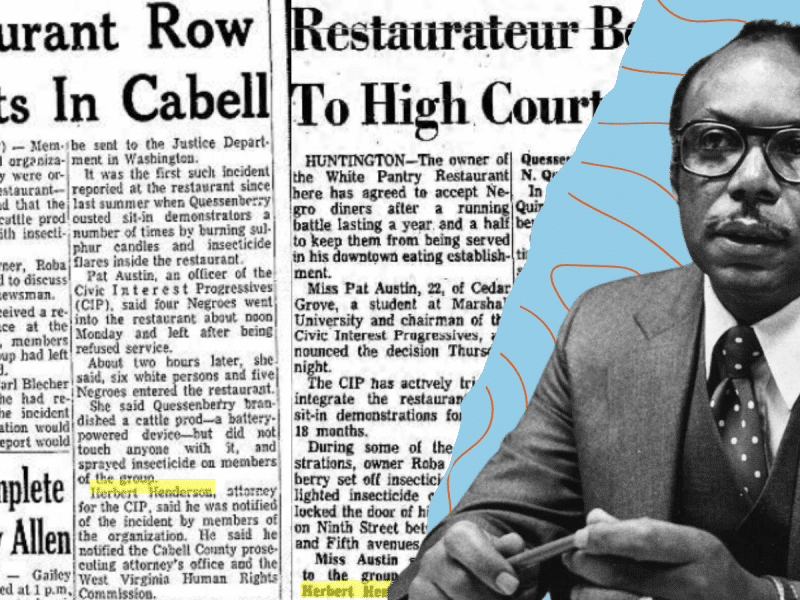
WV bill would eliminate the Herbert Henderson Office of Minority Affairs and name a building after him
Senate Bill 879, introduced by the only Latino woman in the Legislature, is not the first sign that elected officials want the office gone.

WV lawmakers advance bill to let doctors involuntarily commit someone without contacting the courts
Black people are significantly more likely to be committed to psychiatric hospitals against their will.