BBG Travel & Tourism Stop: John Henry, the legend
By Paula Kaufman
Black WV Arts Map Project
Location: Joh Henry Historical Park, Talcott
Artist: Charles O. Cooper
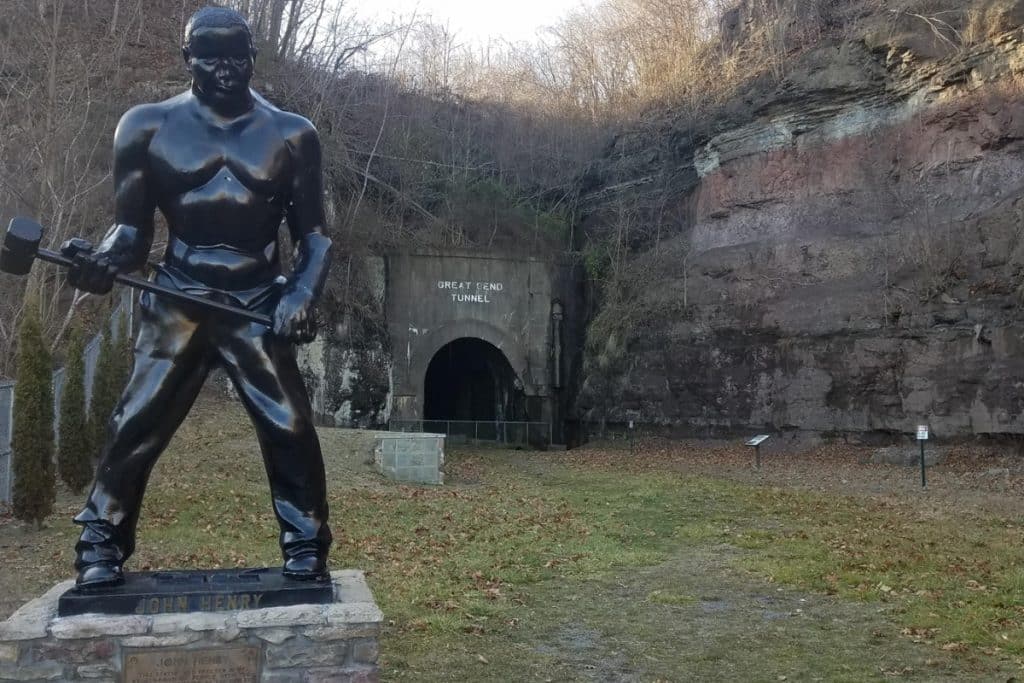
Tucked away in Talcott, Summers County, stands the bronze statue of John Henry, sledgehammer in hand. This Appalachian legend towers eight-feet-tall beside the Great Bend Tunnel. John Henry is popular in Appalachian and Affrilachian folklore.
The statue emphasizes miners’ challenges and triumphs. It also references the often-erased history of Black miners and railroad workers in Appalachia.
The legend goes something like this: there was a contest of man versus machine. Who would win? Technocrats of the late 1800’s said the newly invented steam-powered drill, but in the story, a miner named John Henry dug a tunnel by hand even faster. Man beat machine. The tale and context illuminates much about coal history.
First, trains: The Chesapeake and Ohio Railway (C&O) transformed West Virginia. Suddenly, coal could be transported throughout the country. Trains traveled through the Great Bend Tunnel, ferrying coal across the east coast. The tunnel was its longest at the time, and was a major engineering feat in the early 19th century. Mining boomed, men and their families rushed to set up life in the Mountain State. New towns seemed to pop up on every hillside.
These train tunnels were built by hand. Men swung sledgehammers all day; it was back-breaking. A crew might only advance a few feet per day.
Some claim the myth of John Henry is true—or at least based on truth. Regardless, the story spread through America in songs and various iterations. It showed pride in manpower which was being replaced by machinery.
The John Henry statue is complex. On one hand, it shows exploitation: Men laboring under grueling conditions. On the other, it shows triumph of the human spirit and is a powerful reminder that coal mining is Black history.
Let’s break it down: From the 1880s through the 1930s, Black laborers made up a significant portion of the mining workforce in southern West Virginia. For instance, McDowell County once had the largest Black population in the state ( one-third of miners.) Black history is integral to West Virginia’s mining roots.
Today, Talcott proudly calls itself the “Home of the John Henry Legend.” They host the John Henry Days festival in July, which operates as a local community festival.
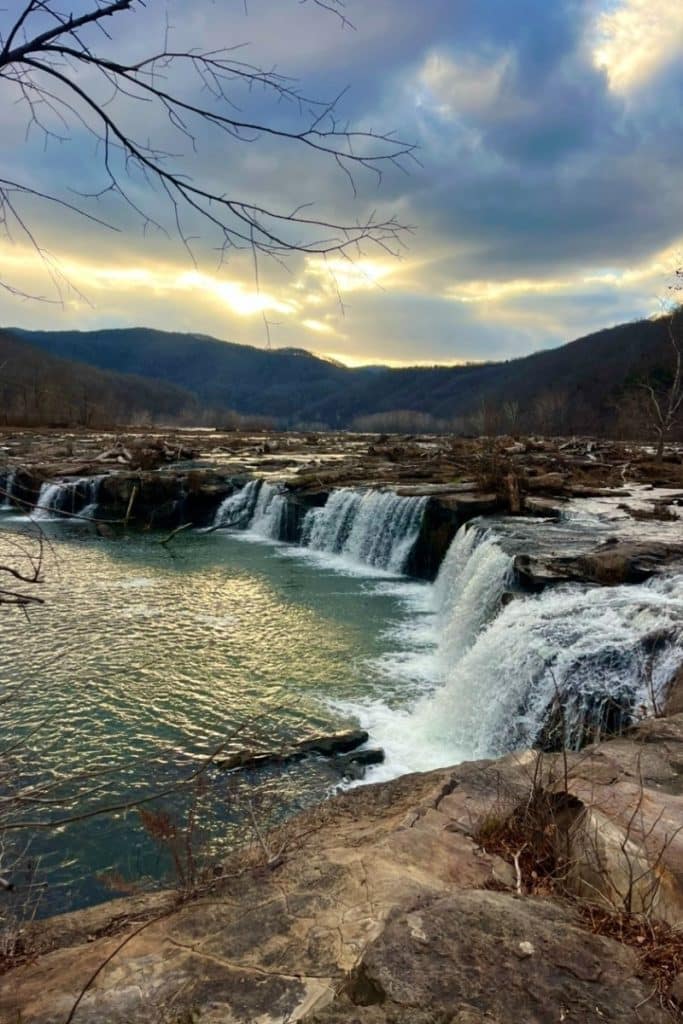
Another special aspect is location. After Talcott, head down the road 30 minutes to Pipestem Resort State Park to hike. Or, 30 minutes up the road in Hinton to grab lunch, then see Sandstone Falls. This is a hidden gem. Cross the boardwalk or take the small loop trail. It’s a view not to be missed. All in all, it should make for a great day, where history, legend and nature intersect.
For BBG Travel & Tourism, statues like John Henry are destinations—places where visitors can connect with Black Appalachian history beyond guidebooks and postcards. If you’re building a West Virginia itinerary that includes culture, context, and community, this stop belongs on your list.
Want more places like this? Subscribe to the Black By God: The West Virginian Travel & Tourism newsletter for murals, landmarks, and stories worth stopping for across the state.
If you appreciate BBG's work, please support us with a contribution of whatever you can afford.
Support our stories