Local experts talk history, discuss the impact of Trump’s campaign to end Birthright Citizenship
Panelists at a Charleston library forum unpack birthright citizenship, the 14th Amendment, legal precedent, and civil rights protections in West Virginia.
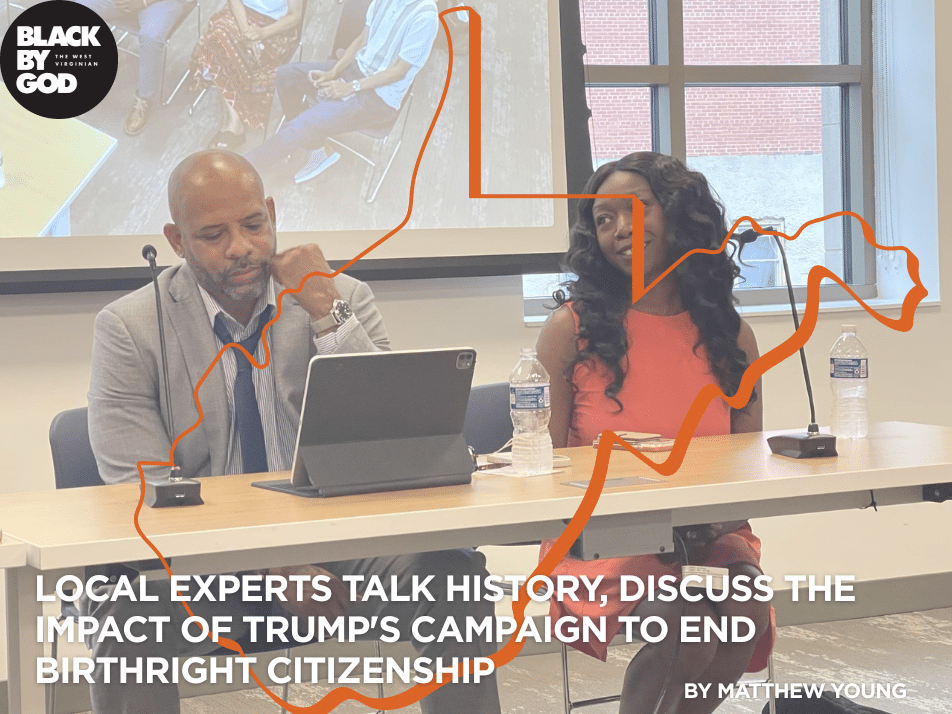
By Matthew Young, BBG
“President Trump issued [an] order, entitled ‘Protecting the meaning and value of American citizenship.’ The order argues that the 14th Amendment has never been interpreted to extend citizenship universally to everyone born within the United States. The 14th Amendment has always excluded [ … ] persons who were born in the United States, but not, quote, ‘subject to the jurisdiction thereof.’”
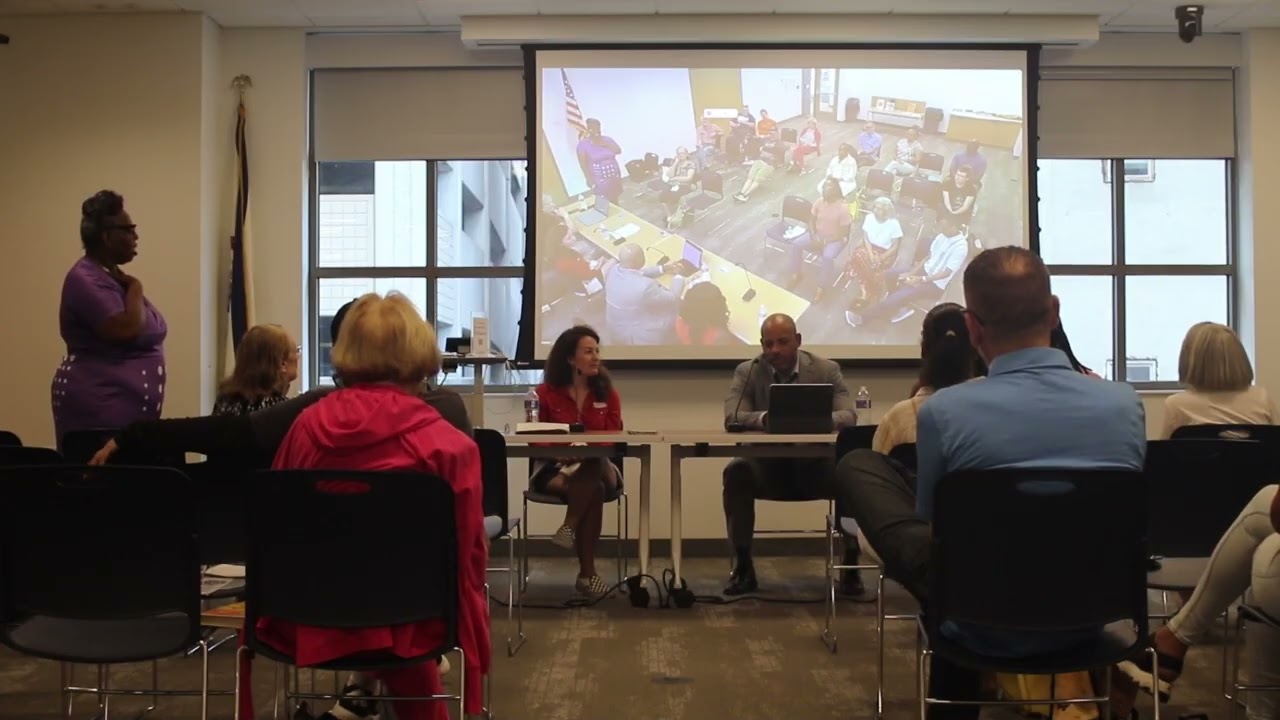
That’s what Sally Roberts Wilson, co-chair of the NAACP West Virginia Political Action Committee and chair of Rise Up West Virginia, said last week, while participating in a public forum at the Charleston branch of the Kanawha County Library. Hosted by the Women in the NAACP in partnership with KVNOW, the forum was held to inform voters about the current administration’s ongoing efforts to abolish birthright citizenship.
“The ‘Reconstruction Amendments’ – the 13th, 14th, and 15th Amendments – are three additions to the U.S. Constitution, ratified between 1865 and 1870, that abolished slavery, established birthright citizenship, guaranteed equal protection under the law, and prohibited racial discrimination in voting,” Wilson explained. “Collectively, the 13th, 14th, and 15th Amendments reshaped the country’s foundation after the Civil War, transforming formerly enslaved people into citizens with constitutionally protected rights.”
“These amendments remain the basis for most modern civil rights laws, and continue to generate major Supreme Court litigation more than 150 years after their adoption,” Wilson noted.
Trump’s ‘Protecting the meaning and value of American citizenship’ executive order
Of the dozens of executive orders issued on Jan. 20, 2025 – the first day of his second term as president – Donald Trump signed an order to protect the “priceless and profound gift” of American citizenship. In order to offer that protection, Trump’s order argues, the U.S. must discontinue granting Birthright Citizenship to infants born within its border to parents who are citizens of other countries. As noted by Wilson, Trump’s argument centers around the widespread and consistent misinterpretation of the 14th Amendment.
As a result of this perceived misinterpretation, Trump’s order further states that “It is the policy of the United States that no department or agency of the United States government shall issue documents recognizing United States citizenship, or accept documents issued by state, local or other governments or authorities purporting to recognize United States citizenship” to any infant born in the U.S. to non-citizen parents.
In actuality, Trump’s order to abolish Birthright Citizenship is contrary to the legal precedent set by the U.S. Supreme Court in their 1895 decision in the case of Wong Kim Ark. An American citizen and San Francisco resident of Chinese descent, Ark was denied re-entry to the United States after a visit to China.
In a 6-2 decision, the Court ruled that the provisions of the 14th Amendment did, in fact, grant Ark American citizenship, with Justice Horace Gray noting Ark’s case “affirms the ancient and fundamental rule of citizenship by birth within the territory, in the allegiance and under the protection of the country.”
This past June, the Supreme Court reaffirmed the Ark decision by striking down Trump’s order as unconstitutional. Undeterred, Trump took the loss in stride by issuing another executive order, titled “Continuing to protect the meaning and value of American citizenship.” However, this revised order, while intended to further test the legal restrictions to his power by altering select wording to achieve essentially the same outcome, has also since been blocked by a federal judge.
The argument against ending Birthright Citizenship
Joining Wilson on the panel was Charleston-area attorney – and former Deputy Counsel for the West Virginia Supreme Court of Appeals – Olubunmi Kusimo-Frazier, who told those in attendance, “I’m just a girl with very strong opinions.”
“The 13th, 14th, and 15th Amendments were put into place [ … ] in order to ensure they were putting into code the guarantees of the Bill of Rights for every person,” Kusimo-Frazier explained, adding that by “every person,” the original meaning was limited to white men.
“We all weren’t a person at that point,” Kusimo-Frazier added. “Only white men were persons, right?”
The three amendments, Kusimo-Frazier continued, were ratified to expand protections constitutionally afforded to landowning white men, to also protect formerly enslaved black men, as well.
“I don’t even know if they really apply to women, because women are not mentioned in the amendments,” Kusimo-Frazier said. “The [amendments] allowed for Black men to vote but women were still not voting.”
In addition to her current practice and time with the State Supreme Court of Appeals, Kusimo-Frazier – a lifelong West Virginian and graduate of Charleston Catholic High School – previously served as prosecuting attorney for both Kanawha and Jackson Counties, as well as on the Criminal Justice Act Panel for the Southern District of West Virginia. Kusimo-Frazier is also the developer of “Justice Reach,” a web-based application, which offers, “Plain-language answers about West Virginia criminal charges, your rights, and what happens next – judgement free, any time.”
Kusimo-Frazier referenced several court rulings that occurred in the period leading up to the Civil War – including the 1857 case of Dred Scott V. Sanford, in which the U.S. Supreme Court ruled that individuals born of African descent could not be citizens of the United States, and Plessy v. Ferguson, where the court affirmed the constitutionality of segregation.
“So the Confederacy goes down, but we are still very much in a racialized space,” Kusimo-Frazier said. “We have federal troops in the south who allow for the enforcement of the 13th, 14th, and 15th Amendments, and Black men are allowed to vote.”
“Guess what happens,” Kusimo-Frazier added. “Black men get into Congress for the first time in the country’s history. Black men are all over the place. There are Black towns. There are Black clubs. We started creating our own society.”
“Then the law changes,” she noted. “[The Supreme Court] interprets the 13th, 14th, and 15th Amendments to say that the states are allowed to make decisions about how they treat people. And as long as they are treating people similarly, then separate is okay.”
Kusimo-Frazier further explained that, in 1867, federal troops were withdrawn from the south, thus ending any real enforcement of the amendments.
“With the 13th, 14th, and 15th Amendments, we understand that although they do guarantee things through a couple legal decisions, those things can be gone,” Kusimo-Frazier added.
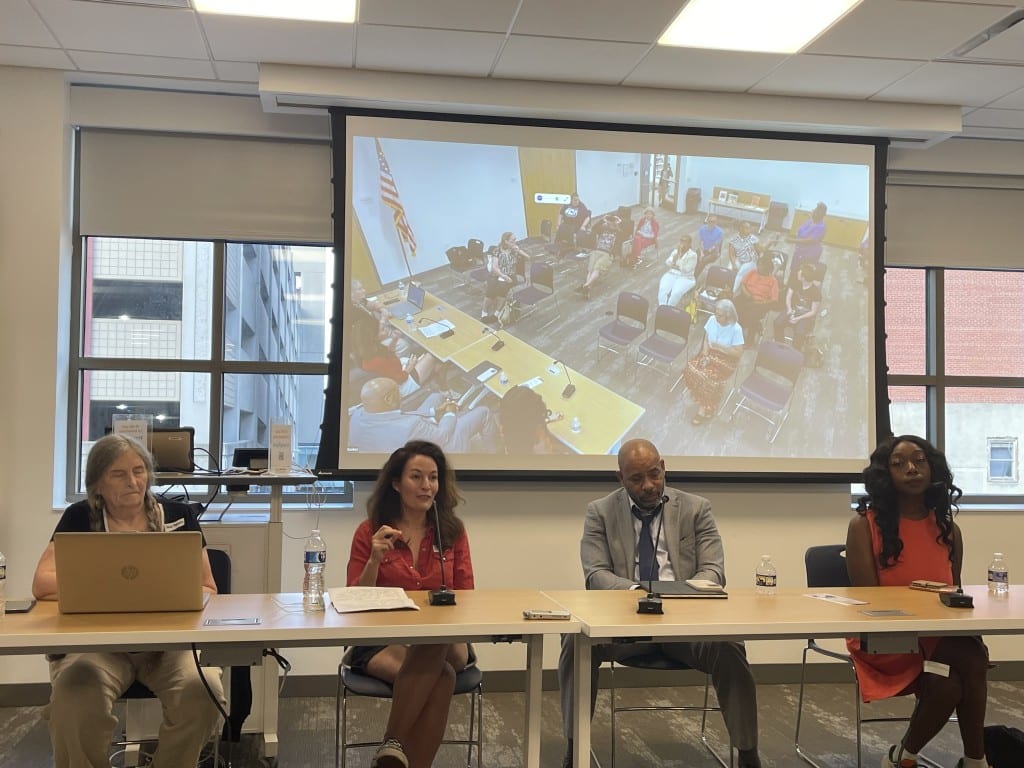
Expanding on her point was fellow panelist Rico Moore, a Charleston-based attorney who often partners with Kusimo-Frazier.
“Most people think that the 13th Amendment did away with slavery, but there’s an exception to slavery,” Moore said. “Does anybody know what it means to be a vagrant?”
Moore’s question sparked conversation among audience members, with the consensus opinion being that to be “in public without purpose” constitutes vagrancy, the penalty for which is time in jail.
“In other words,” Moore began, “If I come up with any reason to arrest your Black ass, you’re going to jail. Then we’ve got slaves all over.”
As explained by the Jim Crow Museum, “Individuals arrested under these laws faced steep fines they could not afford, leading courts to ‘hire out’ or lease their labor to private employers, often their former enslavers.” This practice created a perpetual cycle of incarceration and enslavement for many “free” Black people, which would eventually result in another question of birthright citizenship.
“When you were born in jail to an incarcerated individual, what does the 14th Amendment say?” Moore rhetorically asked. “If you were born in the United States, then you have [citizenship] rights. But if you’re born in jail, they can seemingly ignore those rights.”
“They’ve always made an exception when they need to make an exception to the 13th, 14, and 15th Amendment.” Moore added. “[Kusimo-Frazier] is talking about the past and how it came about. I have issues with what’s going on right now.”
Circling back to Kusimo-Frazier’s earlier point regarding the rights of women was Social Scientist and Charlestonian, Kitty Lindsay, the panel’s fourth-and-final member.
“Womens Suffrage started, really, before the Civil War and continued on after it,” Lindsay said. “It was an opportunity for women – once they saw that Black Americans had been freed, it was like, ‘okay, maybe there’s an opportunity for us now to gain more rights.”
“The Women’s Movement really wanted to define what it meant to be a citizen,” Lindsay continued. “The 14th Amendment says that citizens are entitled to due process and equal protection under the law, but who is counted as a citizen, and [ … ] what does equal mean?”
“The Women’s Movement really tried to ask those questions, to push for answers, in order to establish a framework which they could use to challenge discriminatory laws,” Lindsay added. “Did the 14th Amendment give women all the rights that they desired? No, but it paved the way for women to then point out the inequality that existed.”
The evening’s panel discussion was moderated by co-founder and organizer of Black Policy Day at the West Virginia Legislature, Katonya Hart. Those wishing to check the status of their West Virginia voter registration may do so by visiting sos.wv.gov/govotewv. Election Day is Tuesday, Nov. 3.
If you appreciate BBG's work, please support us with a contribution of whatever you can afford.
Support our stories
Related Articles
This week in Affrilachian history: Sept. 6 through Sept. 12
Explore key September moments in Affrilachian history: WV’s first Black legislator, Harlem Renaissance author John Matheus, and John Henry’s legend.
WV farmers question Trump’s decision to import beef
Local beef producers doubt the move will lower prices and believe it undercuts American farms.
AG McCuskey takes issue with Kanawha County policy on Hope Scholarship and special ed students
AG JB McCuskey calls on state officials to intervene after Kanawha County Schools stripped special ed status from Hope Scholarship students who re-enter public school.