
Law expanding West Virginia’s cottage food industry takes effect June 12
By Lori Kersey | West Virginia Watch
Beginning soon, West Virginia’s cottage food producers will have more options about what they can make and sell.
Senate Bill 44, which expands the state’s existing cottage food program, takes effect June 12. State lawmakers approved the bill during the 2025 regular legislative session.
Under existing laws, people can make and sell “not potentially hazardous” foods from their home.
The new law will allow producers to sell “potentially hazardous” foods, including those that are acidified, pickled or fermented, and foods that are time and temperature-controlled, according to Amie Minor-Richard, deputy commissioner of the state Department of Agriculture.
We’ll bring the best from BBG right to your inbox. You can easily unsubscribe at any time.
Sign Up for our Newsletters!
Selling grade A dairy and meat products are still prohibited under the bill, she said.
People who sell “potentially hazardous” foods will be required to have a kitchen inspection, permit, food safety or food handlers training, and water testing if they’re not using a municipal water source. The same rules apply to people who make and sell food at farmers markets, she said.
“We wanted to align with our farmers market rules so that we did not de-incentivize our farmers markets in (West Virginia),” Minor-Richard wrote in an email to West Virginia Watch. “They are so very important to our farmers and ranchers in the state to sell their farm products.”
The bill was sponsored by Sen. Patricia Rucker, R-Jefferson. The legislation was supported by the Institute for Justice, a Virginia-based public interest law firm aimed at “defending food freedom and the right to earn an honest living.”
“IJ has been advocating for food freedom in West Virginia for several years and was the main supporter of SB 44,” Sydney Travis, activism coordinator for the law firm, wrote in an email to West Virginia Watch.
“This year, we organized a grassroots coalition of over 100 homemade food producers across West Virginia, helping them share their stories with lawmakers about why SB 44 was so important to them,” she said. “We were delighted to partner with Sen. Rucker and her colleagues to garner legislative support for the bill, and look forward to working with stakeholders over the summer to prepare a bill for next year that goes even further.”
Rucker said the introduced version of the bill would have allowed some meat products to be sold as cottage foods, but that provision didn’t make it to the final version of the bill. Rucker said she’ll try to pass that part of the bill in upcoming legislative sessions.
“It’s definitely something that consumers want,” Rucker said. “All those busy moms, they would love to be able to buy something that helps them give their families a fresh cooked meal, and obviously we have folks who were asking me to do that. They want to be able to provide that.
“So I am hoping to work on it,” she said. “And I think that the Department of Agriculture did have concerns, so I have to work with them to figure out how I can get it done.”
Beth Pierce is the owner of Beth’s Baking and Gifts, which she operates from her home in Mason, West Virginia. She started the business making shelf-stable baked goods after retiring from her career at Ohio University.
“I was home, and it didn’t take me very long to figure out I needed to stay active,” Pierce said. “…So I started baking — skills that I had learned through 4-H over the years, (and baking) for my family. I grew up on a farm, so I kind of got back to my roots and back to my grandmother’s recipes and started baking. And it’s really taken off.”
A grandmother of four, Pierce said operating a cottage food business gives her the flexibility to work and also help out watching her granddaughters after school. It also helps offset the cost of her health insurance, she said.
With the new legislation taking effect, Pierce hopes to start selling temperature-controlled foods like pies and cherry-filled pastries.
The Department of Agriculture is working developing the new rules, application process, safety standards, and labeling requirements for the program. A spokeswoman for the department said they plan on filing the rules by the end of the month.
“I’m really excited,” Pierce said. “I have some really good recipes from my grandmother… we’ll have to see what the guidelines are.”
Pierce said the expanded program will allow West Virginia to be more competitive with other states in the country.
“We live in a rural area, so we need to take advantage of what we do have,” she said. “And we’ve got in West Virginia such a legacy. I think it’ll strengthen our local economy, because it’s going to keep money circulating within our community, because the people that order off of me are friends, neighbors.”
She’s hopeful that selling more products will allow her to grow her business enough to hire her daughter-in-law, who’s also interested in having more flexibility in her work schedule.
For Rucker, the bill’s sponsor, Senate Bill 44 is a way to help local businesses and entrepreneurs and allow people to experience locally made foods.
“This is a great way to help protect our farms in West Virginia, and it’s also a great way to encourage folks to start their own businesses.”

Beth Pierce, owner of Beth’s Baking and Gifts, plans to expand her business to offer additional products now that West Virginia is expanding its cottage food program. Pictured are some of the cookies she sells. (Courtesy photo)
Article originally published at West Virginia Watch

Lori Kersey is a reporter with a decade of experience reporting in West Virginia. She covers state government for West Virginia Watch.
West Virginia Watch is part of States Newsroom, the nation’s largest state-focused nonprofit news organization.
Want to Start a Food Business From Your Kitchen? West Virginia Law Makes It Possible
West Virginia cottage food law is one of the best in the country (compared to who?). A food business could be the key to your freedom
By Fresh & Fried Hard Appalachia, powered by Black By God: The West Virginian focuses on the foodways and lifestyle of Black West Virginians as well as neighboring Central Appalachia from a historical perspective.
Do you have dreams of selling your homemade jam or your famous sweet potato pie to the public? Maybe you want to sell plates or sides during the holiday seasons. Is an open air or farmer’s market on your goals list?
West Virginia cottage food and farmer’s market law is one of the friendliest to home food entrepreneurs in this country. While the law is friendly to makers, it still has restrictions, which can be daunting though there are options to explore. This is an abbreviated list curated from Forrager.com, West Virginia Food Freedom, and West Virginia Department of Agriculture.
Sales and Venue Restrictions
This information is good news. Some states prohibit online sales and mail delivery, cap sales and limit venues. In West Virginia, you can also be a wholesaler.
| Annual Sales Cap | No Limit |
| Where Can I Sell Homemade Food Direct to Consumers in West Virginia? | No restrictions |
| Can I Sell Homemade Food to Retail Outlets Like Restaurants and Grocery Stores? | Yes |
| Online Orders | Yes |
| Mail Delivery | Yes |
Allowed and Probited Food Items
You can make and sell most baked goods, some candies that don’t require oils or garlic, fresh fruit pies, fresh fruit jams, jellies and marmalades as long as they don’t contain hot peppers or other non-fruit additives, dry goods (tea leaves, spices and seasonings, dried cereals, dried vegetables and fruits) and some snacks like caramel corn.
YOU CAN NOT make for selling: perishable baked goods (cream or custard filled cakes, pies, doughnuts, cookies), low-acid canned foods, meat jerkies or other meat products. The State of West Virginia has specific laws on pickled and fermented products, especially those sold at farmer’s markets and direct to the public. You can visit the DOA site or read an abbreviated version on Forrager.
The grand takeaway points: you can make foods that don’t require refrigeration and foods that can be a potential threat to the safety of consumers.
The DOA also has separate standards with some variation for farmer’s markets (the latest guide is available on their site) and food trucks. You will also have to check the site (or call) to find out which licenses you should obtain before you begin your business.
Options for when the rules don’t fit your product
Now, to answer the questions posed above: Yes, you can sell jam as long as it isn’t a hot pepper jam. No, you cannot sell your homemade sweet potato or pumpkin pie or any type of custardy pie. Hot plates of food and sides are out of the question.
There is an option to explore: A food accelerator and incubator program with a relationship to a commercial kitchen – one that has passed all of the state’s inspection and licensing requirements. Here is a partial list of programs:
- Bluefield Economic Development Authority, Food Truck and Trailer Incubator Program (This program is supported by the Appalachian Regional Commission and the U.S. Department of Agriculture.)
- Advantage Valley (Charleston and Huntington), The Capitol Kitchen including the forthcoming Food Enterprise Incubator
- Eastern West Virginia Community & Technical College, Food Agriculture Entrepreneur Program
You’ve said yes to the business, now is the time to learn the business of your business. Who knows? We could be buying your product in our local grocery store one day.
To begin your journey to owning a food business, visit the West Virginia One Stop Business Portal for step-by-step guidance in registering and licensing. For support from established West Virginia food business owners consider joining the West Virginia Cottage Bakers and Food Vendors of WV groups on Facebook.
If you appreciate BBG's work, please support us with a contribution of whatever you can afford.
Support our stories
Related Articles
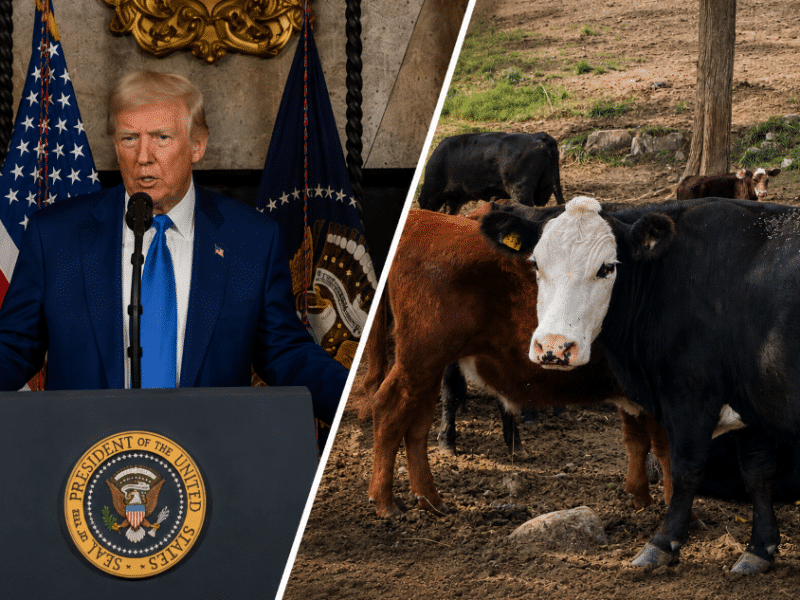
WV farmers question Trump’s decision to import beef
Local beef producers doubt the move will lower prices and believe it undercuts American farms.
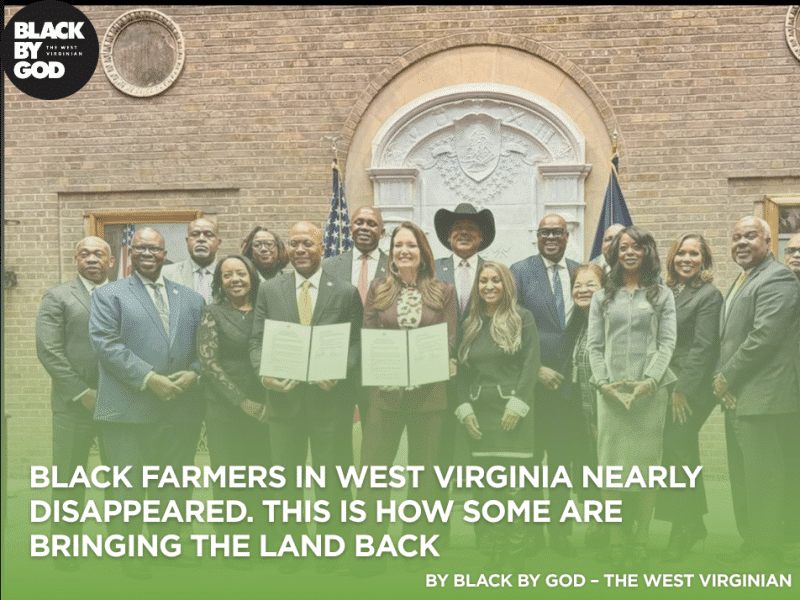
Black Farmers in West Virginia Nearly Disappeared. This Is How Some Are Bringing the Land Back
From 504 Black-owned farms a century ago to just 31 today: Black By God examines how Black West Virginians are reclaiming farmland, legacy, and food systems.
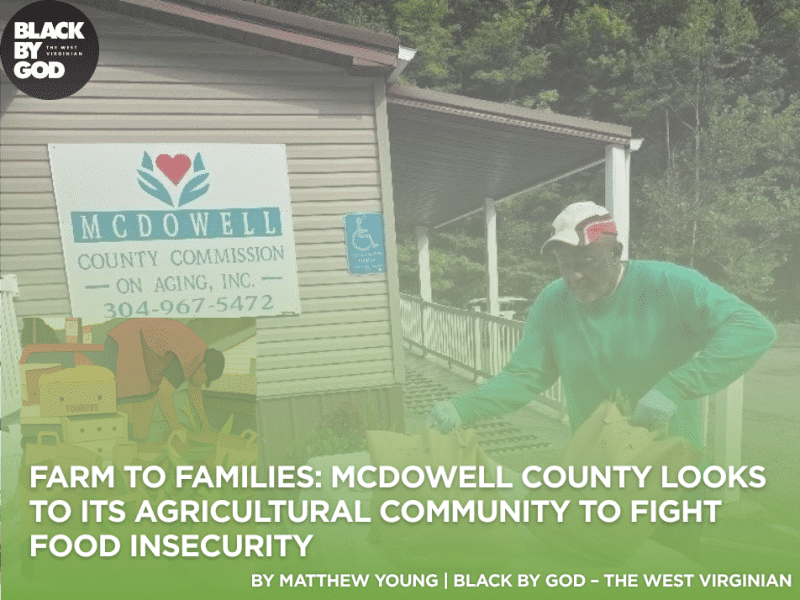
Farm to Families: McDowell County looks to its agricultural community to fight food insecurity
McDowell County’s Farm to Families program provides 50 vulnerable households with $40/week in locally grown produce, tackling food deserts and economic equity.