Back to The County: What T&T Organic Farms Is Showing Us About Land Access in McDowell County, West Virginia
Check out BBG Farm Day June 2026 on Youtube!
By Crystal Good | AgriCULTURE | June 2026

People call it “The County.”
We’ll bring the best from BBG right to your inbox. You can easily unsubscribe at any time.
Sign Up for our Newsletters!
There is a debate on how you say it. McDowell County.
Some natives say it soft, like “Muck-Dowel,” smooth off the tongue. Others say it hard, like “MACK-Dowel,” standing straight up. Everybody is right. But the County knows itself, regardless of how you say it or what you call it. Some call it the “Free State of McDowell,” and that name has roots.
At its peak, McDowell County was the leading coal-producing county in the nation. Home to nearly 100,000 people, it was a place where Black men earned union wages that their families spent in Black-owned businesses that lined the streets of Keystone and Welch. Black people voted and held office, when much of the south would not allow it. McDowell had its own Black political power, an economy, and, some might say, tucked in the mountains of West Virginia, its own world.
The coal companies needed the labor, and for a moment, that need created something that looked like freedom: The Free State of McDowell County.
Then the coal left and took everything with it.
What they could not take, however, was the memory of what this place once was and the “Free State of McDowell” spirit.
When the federal government cut $1.1 million in USDA grant funding from Jason Tartt’s operation, T & T Organic Farms, this spring — part of a program the Trump Administration referred to as “DEI spending” — the farm did what poet L. Renée reminds us of in her forthcoming collection, Holler Root. They went with what they got.
“These hills miss no thing.”
At a recent L. Renée Poets & Writers reading, she opened a poem with this line
It was a list poem about what a mountain witnesses in coal camp places: the kettle coffee, the bacon, the biscuits and prayer, the lunch pails wailing four-four time whenever a boot hits dirt, closing with the mountain proverb we all grew up hearing, “one bird in the hand is worth more than two in the bush.”
You gotta go with what you got!
T&T Organic Farms and its partner nonprofit, EDGE (Economic Development Greater East), operate the DRT Farm — a Demonstration, Research, and Training facility on 350 acres of Berwind Land Company property in central Appalachia, surrounded by the mountains that witnessed all of it. The DRT Farm is home to the AgForce Development Program, a workforce development initiative designed to empower the next generation of food producers and entrepreneurs in the region — and a model for what economic transition in Appalachia can look like when the right partnerships come together.
The story of how T & T farms went with what it got is the story Black by God came to tell.
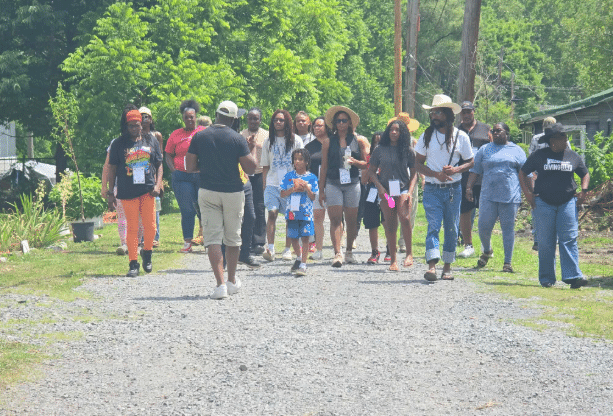
We visited T&T Organic Farms in January 2024 with a small group of Black Policy Day supporters, an annual event that supports year-long political and civic engagement.
What we found then was a vision.
What we found this June 2026 was evidence.
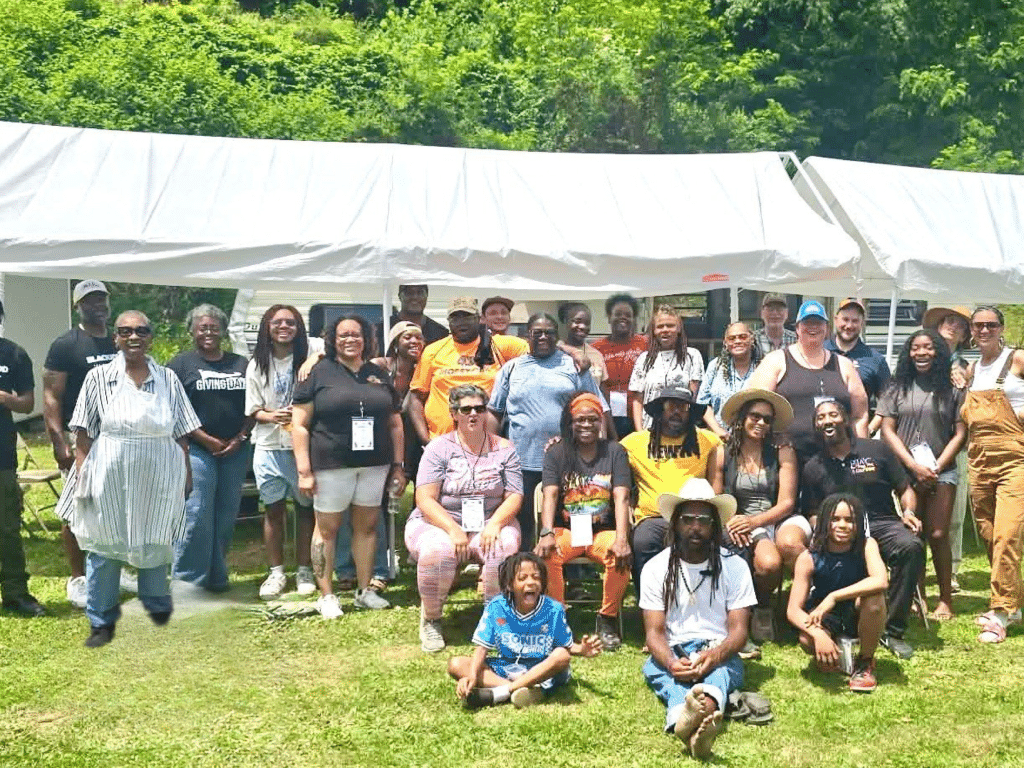
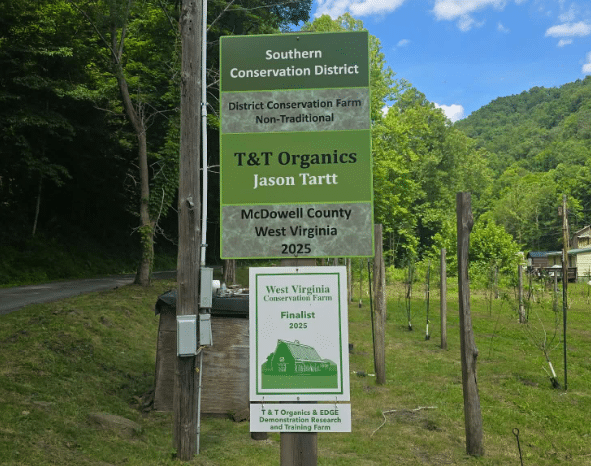
T&T Organics was named West Virginia’s Conservation Farm of the Year by the West Virginia Conservation Agency. Now with fuller orchards, more goats, more chickens, a working sawmill, and that same Berwind/Hartwell community known as “the Camp,” it’s an heirloom seed community building on relationships and cellular memory.
What Is Actually Working
EDGE co-founder Jason Tartt is a US Army veteran and former Defense contractor who came home to build something that could not be extracted. Tartt and the team EDGE have built – with community partners, neighbors, elders, and hard-working people – show up season after season, committed to that ethic of growing something that cannot be extracted.
The EDGE DRT Demonstration Farm operates on 350 acres of formerly logged land, training community members in agribusinesses, ranging from meat goats and mountain-range chickens to beekeeping. Three new businesses were poised to launch this summer before the Trump Administration funding cuts stopped them. But the farm itself did not stop.
What keeps it going is not a single grant, it’s a network that continues to grow.
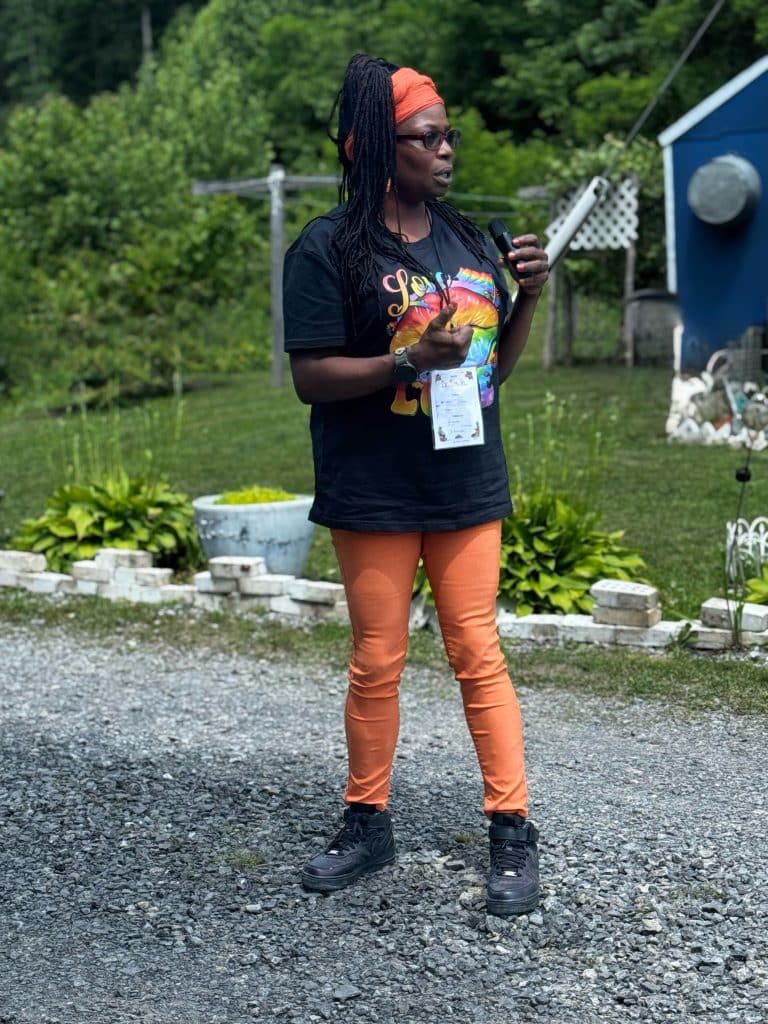
On June 5, Dr. Shanequa Smith and Black Voters Impact Initiative brought the community to the farm. New Economy West Virginia, Mear Mae’s Meadow, and BBG showed up alongside T&T Organics to make the day possible. That network and many more supporters are the infrastructure that no federal termination letter can touch.
Knowledge and Community as Infrastructure
One of the day’s standout moments was a live sawmill demonstration. Uncle Donnie Hairston fired up the mill. Chamear Davis, founder of Mear Mae’s Meadow, BBG’s AgriCULTURE fellow and one of West Virginia’s most grounded voices in food justice, as well as Mavery Davis, urban farmers and community journalists both, showed guests exactly how wood becomes lumber on McDowell County land.
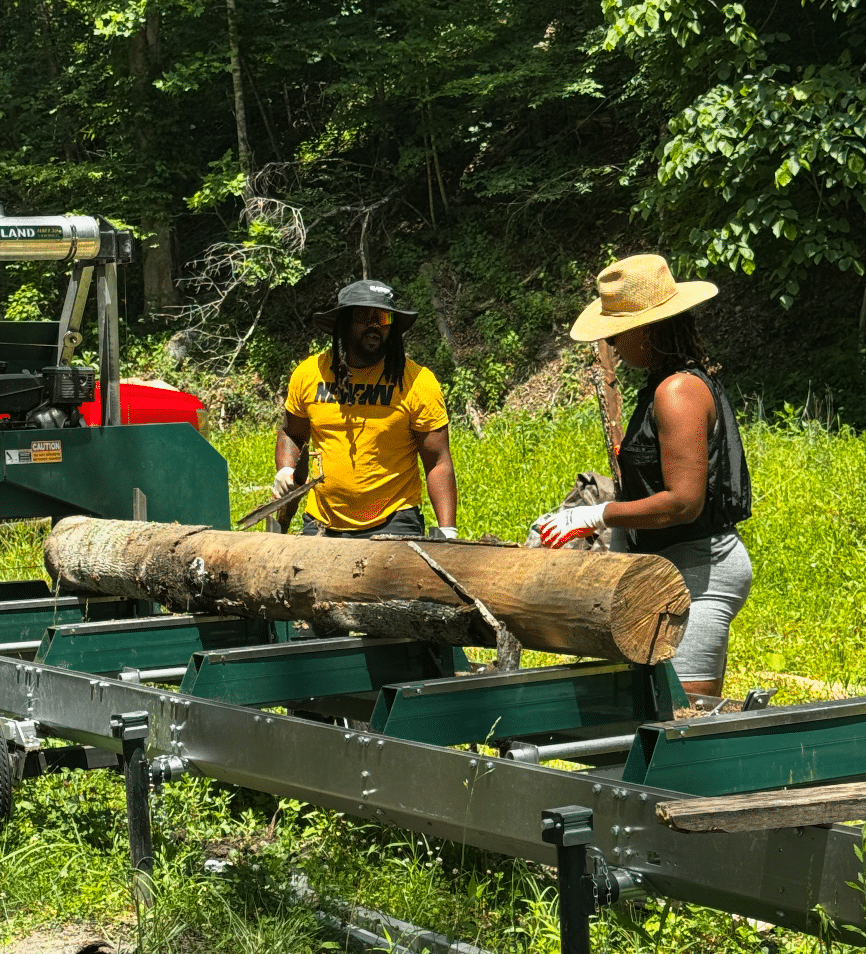
Other highlights of the day included a tree identification workshop led by a representative of the Natural Resources Conservation Service (NRCS), the federal agency that helps landowners manage and conserve their natural resources.
McDowell County native Grady Woods, creator of the Facebook platform “Just My Opinion,” and one of West Virginia’s most authentic digital storytellers, was also on the farm; his camera and his eye both working overtime to document the day for the platforms where this story needs to live. For Grady, this was not just a content opportunity. McDowell County is home.
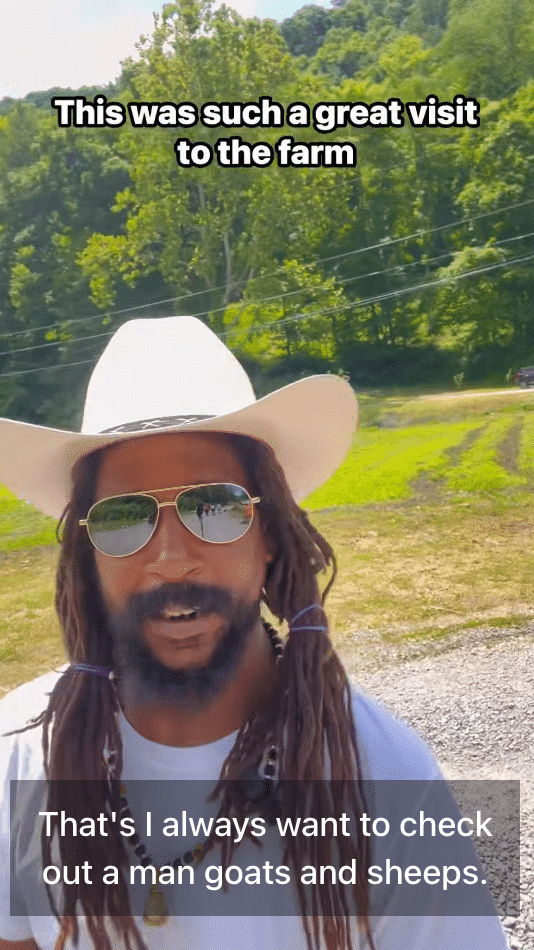
Read about Grady on BBG: Grady Woods: Telling West Virginia’s Story His Way
Details
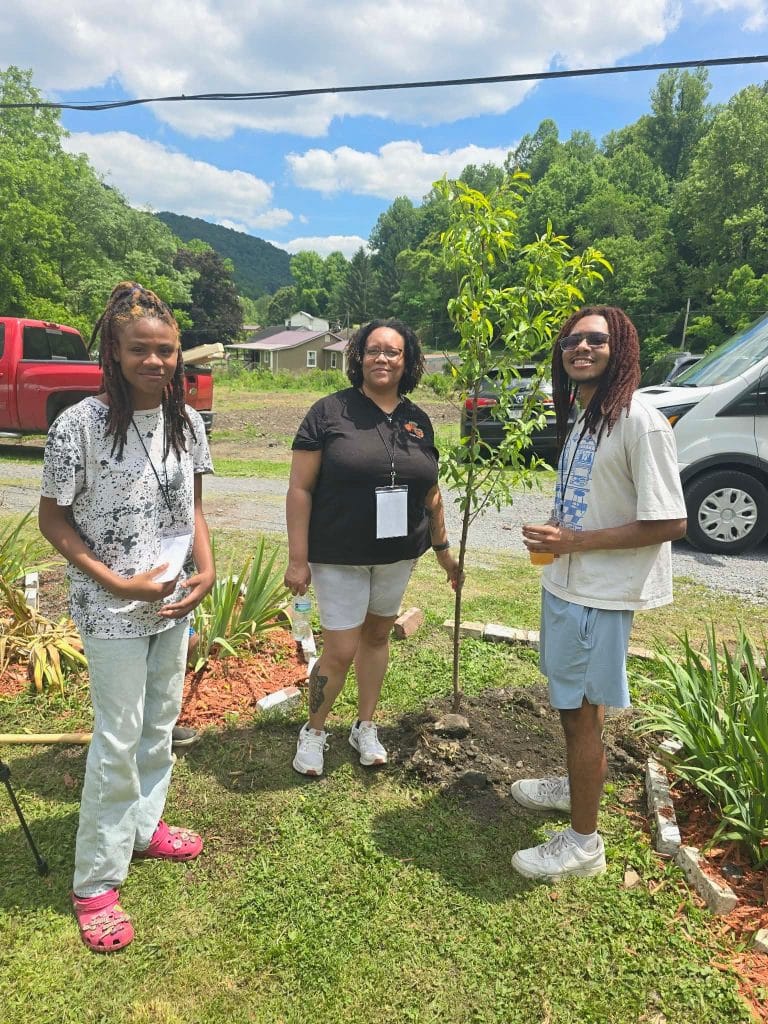
The group planted two peach trees as symbolism and markers of time.
The Table as Evidence
Then there was the food, and Mama Ronnie Marie Tartt upheld her reputation.
None of it would have happened without her crew of seasoned women and their daughters helping to make the food and serving it with grace.
The cooking crew showed up with love and dignity, the kind of cooking that doesn’t come from a recipe – it comes from a lifetime. These were not caterers, these were women who know what it means to feed a community, and who have been doing it longer than most of us have been alive.
Mama laid out a full spread: whole roasted turkey, sliced turkey breast and grilled chicken (both dressed in her Appalachian Gold Mama’s Meat Sauce), dressing, potato salad, macaroni and cheese, collard greens, green beans, baked beans, and angel eggs, with the collards, beans, and eggs all fresh from T&T Farm itself. Then came dessert: sweet potato pie, German chocolate cake, and almond chocolate cake with chocolate icing.
In a county declared a food desert, eating like that – on land Black people tend, prepared by Black praying hands, grown from Black soil – is not just a meal, it is a statement about how we feed each other.
The soundtrack of the day had roots too. Jason Tartt Jr., son of Farmer Tartt Sr. and contributor to BBG’s Dear West Virginia contest, was the soundtrack to the farm visit. His banger about farm life in McDowell County deserves your full attention.
What Others Can Learn
According to the 1920 US Census, and documented by West Virginia’s Bureau of Negro Welfare and Statistics, there were 504 Black farmers across West Virginia, operating 503 Black-owned farms. Today, out of 23,622 farms in the state, only 31 are Black-owned.
That collapse did not happen by accident. It was policy.
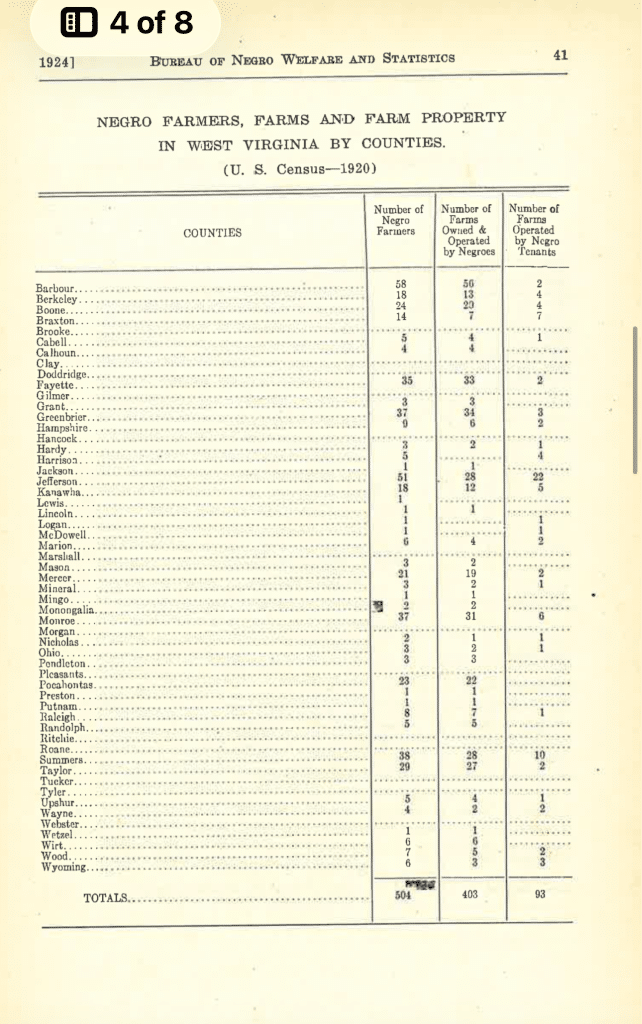
Black farmers in America have lost more than 90% of the land they once owned, a generational theft carried out through discriminatory lending, legal manipulation, and deliberate neglect by the very federal agencies designed to help them. In Appalachia, that loss has a particular texture: Black communities who farmed these mountains for generations watched the coal economy consume the land, then abandon it. What T&T Organic Farms represents is not nostalgia. It is a counter-argument, with receipts.
The model Tartt has built is replicable because it is not dependent on any single institution. It is built on diversified production, goats, poultry, orchards, timber, maple syrup, the same crops that sustained mountain communities before coal arrived and told everyone that the only thing worth pulling from this ground was what lay beneath it. It is built on workforce development that happens on the land itself, not in a conference room. It is built on cooperative economics, the same tradition Black Americans have relied on when formal systems refused to serve them.
What the USDA cuts exposed is also what the farm visit proved: federal investment matters, but federal investment alone was never going to save McDowell County. What saves a community is the community deciding it will not be saved by anyone else.
Appalachia has millions of acres of agricultural land that is underleveraged and underowned by the people who live there, and continues to be vulnerable to outside corporate acquisition. Black farmers who remain in the region and those who might return are sitting at the intersection of land access, food sovereignty, climate resilience, and cultural memory. T&T Organic Farms is proof that the intersection is not a problem. It is an opportunity.
The federal government, state government, local government, the coal companies, the timber companies, and the land-owning companies walked away from the people of McDowell County. The community did not.
BBG will keep coming back.
This visit was made possible by Black Voters Impact Initiative, WVU Resident Communities, Black By God: The West Virginian, New Economy West Virginia, Mear Mae’s Meadow, and T&T Organics.
Read More from BBG AgriCULTURE
Building Sustainable Food Systems in Charleston: A Journey to T&T Organic Farms — Crystal Good, January 2024
BBG Agriculture Spotlight: Chamear Davis of Mear Mae’s Meadow
Beneath the Surface: What Garlic Teaches Us About Modern Resistance — Chamear Davis
They Came to Us: A New Model for Supporting Black Farmers in West Virginia — Mavery Davis & Chamear Davis
They’ll Cut Off Your Project: USDA Chops $300 Million Farm Program, Halting Work in West Virginia — BBG AgriCULTURE
Grady Woods: Telling West Virginia’s Story His Way — BBG Culture

Black By God is reporting on how Black farmers in Central West Virginia are rebuilding agricultural systems despite barriers to land, policy, and capital—highlighting what’s working, who’s leading, and how communities are adapting.
If you appreciate BBG's work, please support us with a contribution of whatever you can afford.
Support our stories
Author
Related Articles
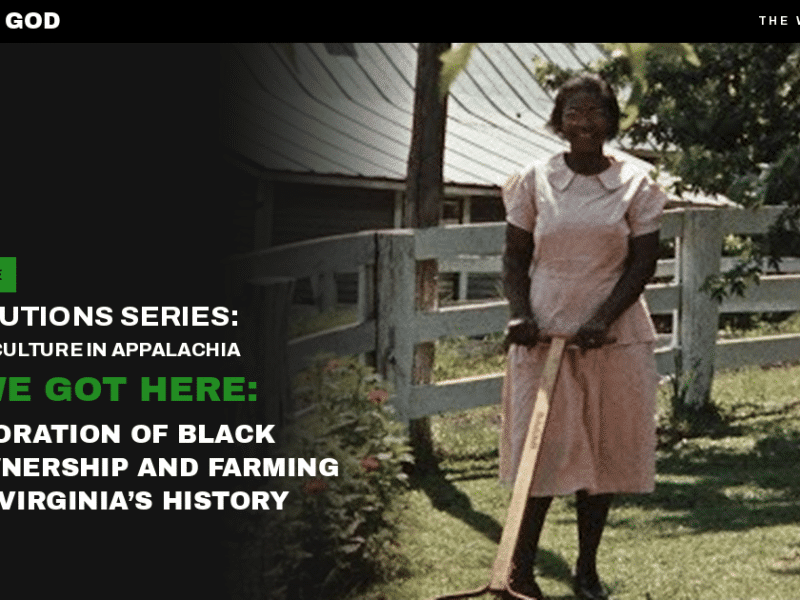
How we got here: An exploration of Black land ownership and farming in West Virginia’s history
Black By God is reporting on how Black farmers in West Virginia are rebuilding agricultural systems despite barriers to land, policy, and capital—highlighting what’s working, who’s leading, and how communities are adapting.
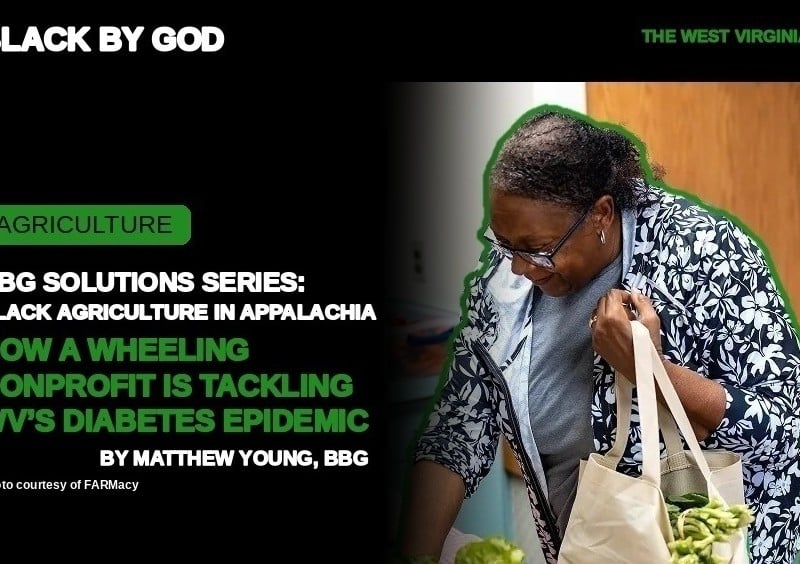
How a Wheeling nonprofit is tackling West Virginia’s Diabetes epidemic
FARMacy is building a network of farmers and agricultural producers throughout West Virginia to provide fresh produce to those who need it most.