Black Farmers in West Virginia Nearly Disappeared. This Is How Some Are Bringing the Land Back
From 504 Black-owned farms a century ago to just 31 today: Black By God examines how Black West Virginians are reclaiming farmland, legacy, and food systems.

By: Black By God
Black By God is reporting on how Black farmers in West Virginia are rebuilding agricultural systems despite barriers to land, policy, and capital—highlighting what’s working, who’s leading, and how communities are adapting.
Look closely at the West Virginia state flag and you’ll find him: a farmer. He stands beside a plow with an axe resting at his side, a cornstalk and a sheaf of wheat at his feet. For more than 160 years, he has represented a state built by people who worked the land.
But there’s another farming story the flag doesn’t tell.
A century ago, Black farmers operated 504 farms across West Virginia. Today, just 31 Black-owned farms remain. The numbers tell the story of a century of change. Families left farms for coal camps and factory jobs. Land was divided among heirs, sold under financial pressure or lost altogether. Discriminatory policies made it harder for Black farmers to buy land, keep it and pass it to the next generation. One by one, farms disappeared from the landscape. Each lost farm represented more than acreage—it represented a family that could no longer pass land, wealth and agricultural knowledge to the next generation.
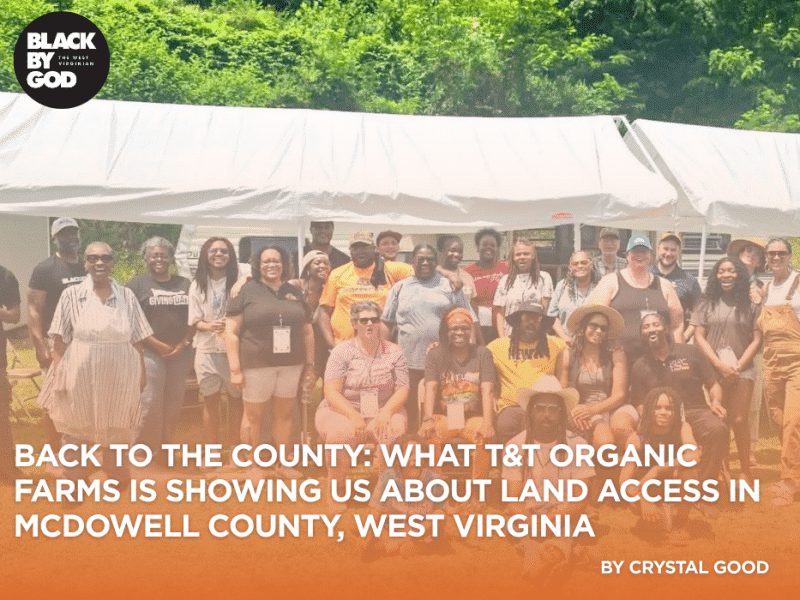
But not everyone walked away. In McDowell County, Jason Tartt is working land his family has held for generations. Across the state, educators, organizers and farmers are helping people grow food, preserve family land and reconnect Black communities with an agricultural tradition that is older than West Virginia itself.
Their work won’t erase a century of land loss overnight. But it raises a different question: after generations of decline, is it possible to grow something back? The answer begins long before emancipation. Black farming in these mountains didn’t begin after the Civil War, it began before West Virginia even became a state.
How We Got Here
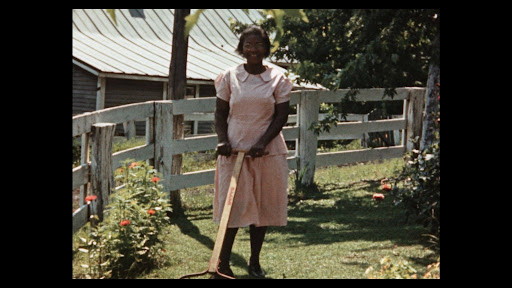
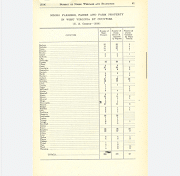
Black farming in these mountains didn’t begin after the Civil War or even after West Virginia became a state. It began decades earlier, on the western edge of colonial Virginia, where free and formerly indentured Africans settled alongside other pioneers and built lives from the land.
“Look at the Black proletarians, the working class,” said Pastor Matthew J. Watts of Charleston, West Virginia’s Grace Baptist Church. Watts is also founder of the Tuesday Morning Group, as well as president and CEO of the HOPE Community Development Corporation. “By them coming out of an agrarian society – coming from the agrarian south, from Virginia, from North Carolina, from South Carolina, from Georgia – it would only stand to reason that they would have brought their agricultural skills with them.”
Farming wasn’t simply a way to earn a living – it was survival. Families grew crops, raised livestock, milled grain and developed the agricultural knowledge that sustained communities long before there was a state called West Virginia. For free Black settlers, working the land also offered something just as valuable: the opportunity to build an independent life in a place where freedom was never guaranteed.
By the first federal census in 1790, Virginia counted more than 292,000 enslaved people and about 12,000 free people of color. Most lived in the eastern part of the commonwealth, but Black communities had already taken root across the western counties that would eventually become West Virginia.
That freedom, however, existed alongside slavery. One of the earliest documented Black presences in what is now West Virginia dates to about 1748 on the Hampshire County estate of Thomas Fairfax, 6th Lord Fairfax of Cameron. Fairfax leased land to tenant farmers while relying on enslaved labor to maintain his vast holdings. As settlement expanded westward, slavery expanded with it.
Salt, Slavery and the Land That Built a University
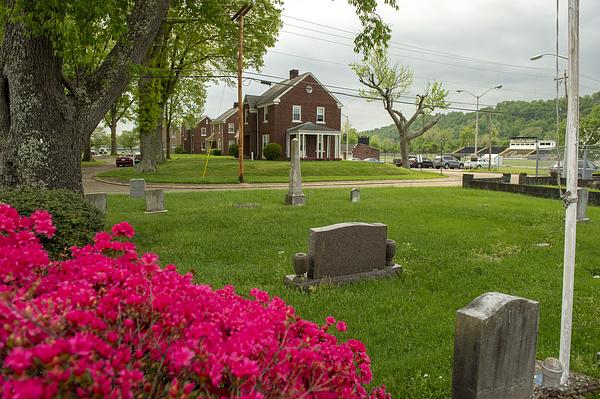
Unlike the plantation economies of the Deep South, slavery in western Virginia often fueled industry instead of cotton or rice production. The Kanawha Valley’s booming salt industry depended on enslaved labor. Men, women and children hauled brine, tended furnaces and performed dangerous work that helped make Kanawha salt one of the region’s most profitable industries.
That history survives in the records. In 2020, the Huntington Library acquired nearly 2,000 business records from Dickinson & Shrewsbury, the company that later became today’s J.Q. Dickinson Salt-Works. The collection includes inventories naming enslaved workers and a rare letter written by an enslaved person, documenting the human lives behind one of western Virginia’s most profitable businesses.
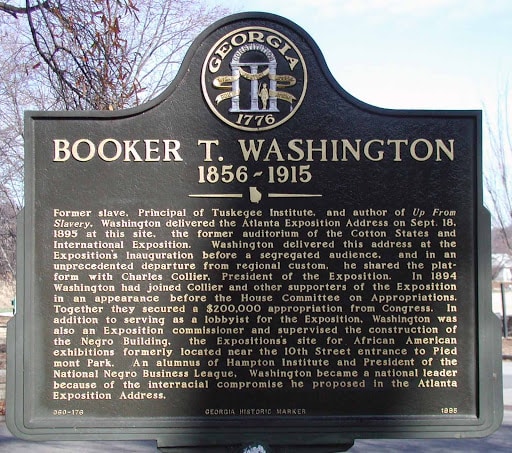
The salt industry also shaped the early life of Booker T. Washington. Freed as a child after emancipation reached western Virginia, Washington spent part of his youth packing salt before dawn in Malden. Those experiences helped shape his belief that education, skilled trades and agriculture could provide formerly enslaved people with economic independence. He later carried those ideas to Tuskegee Institute, where agriculture became central to his vision for Black self-determination.
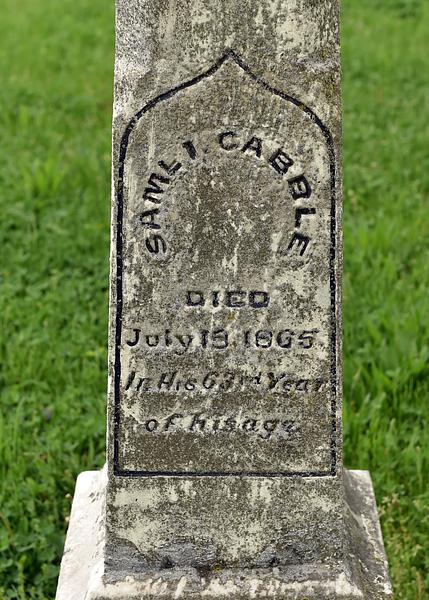
West Virginia embraced a similar philosophy through its own land-grant institution—on land with a remarkable story of its own. By 1860, historian Scott A. MacKenzie estimates that Kanawha County was home to 2,184 enslaved people held by 241 enslavers. Among them was Samuel Cabell, whose legacy would become unexpectedly tied to one of the most important stories of Black land ownership in West Virginia.
Mary Barnes fought to keep the land
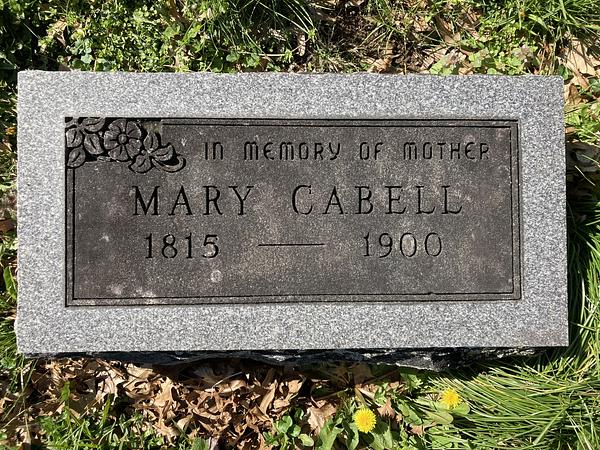
Around 1840, Samuel Cabell purchased and married an enslaved woman named Mary Barnes to work his farm and salt operation near what is now Institute, West Virginia. Over the next two decades, Barnes gave birth to 13 of Cabell’s children. Before his death in 1865, Cabell emancipated Barnes and their surviving children and legally acknowledged each of their births—an extraordinary act at a time when interracial marriage was illegal and Black families had few legal protections.
When Cabell was murdered later that year, Barnes faced a choice few formerly enslaved women ever had the opportunity to make. She fought for the land. Barnes navigated the probate process, petitioned Kanawha County to recognize herself and her children as Cabell’s legal heirs and secured ownership of the property left to them. She took the Cabell surname and ensured her children inherited land that many Black families were denied the chance to own.
That decision changed West Virginia history. In 1891, Barnes’ daughter, Mary Cabell, sold 30 acres of the family’s land to the state for $2,250 to establish the West Virginia Colored Institute, now West Virginia State University, one of the nation’s 1890 land-grant HBCUs. More than a century later, much of the university still stands on land that Barnes fought to preserve.Her story became part of something much larger.
Building More Than Farms
When the West Virginia Colored Institute opened in 1891, its mission extended beyond literacy. Like Tuskegee, it taught agriculture, trades and self-sufficiency, preparing Black West Virginians to build stable lives on land they could finally call their own.
That philosophy spread beyond the classroom. Country Life movement gatherings brought Black farm families together in communities such as Johnsontown to share knowledge, purchase supplies cooperatively and strengthen local agriculture. Long before the language of food systems and cooperative economics became common, Black farmers were building networks rooted in mutual support.
The university also became home to another remarkable figure. From 1920 to 1922, Carter G. Woodson served as dean of what was then West Virginia Collegiate Institute. A few years later, he founded Negro History Week, the precursor to Black History Month. That one institution—built on land preserved by Mary Barnes’ family—helped shape the man who insisted Black history deserved to be documented and remembered.
Agriculture also became a pathway to Black entrepreneurship. In 1883, Charles H. James and his brothers began as backpack peddlers traveling the southern West Virginia coalfields, trading goods for eggs, produce and whatever families could spare. Their father, Francis James, had been a free Black man in Ohio who helped organize part of the Underground Railroad before settling in Malden, where he became one of West Virginia’s first ordained Black ministers and public school teachers.
What began with a backpack and a mule cart grew into C.H. James & Co., one of the nation’s oldest Black-owned family businesses. Under Charles H. James III, the company evolved into a holding company valued at more than $100 million, earning recognition from Black Enterprise. It stands as one of America’s longest-running Black business dynasties—and its roots trace back to the coalfields, farms and Black communities of West Virginia.
Land wasn’t only preserved by families. It was also sustained through institutions created to serve Black communities that segregation had largely excluded from public resources. At Camp Washington-Carver in Clifftop, West Virginia’s 4-H camp for Black youth, generations learned to plant gardens, preserve food and raise livestock. Agricultural knowledge wasn’t simply passed from parent to child. It was reinforced through community, education and tradition.
By the early twentieth century, Black West Virginians had built more than farms.They had built families rooted in the land. Schools that taught self-sufficiency. Businesses that created generational wealth. Churches, camps and community institutions that carried agricultural knowledge from one generation to the next. The foundation was strong, but unfortuntely it would not remain untouched.
The Land Didn’t Disappear Overnight
The foundation Black West Virginians built over nearly two centuries didn’t disappear all at once. It eroded one generation at a time.
World War II reshaped the ground beneath Appalachian agriculture. Coal mechanized and shed jobs even as it continued drawing families into southern West Virginia. Yet farming never fully disappeared—it simply moved closer to home. Families planted gardens on whatever land the coal companies allowed. Some camps held garden contests. People raised hogs, chickens and goats, kept bees for honey and rotated seasonal crops much as their grandparents had. It was a quieter version of the mountain farming tradition that still defines places like T&T Organic Farms today. Jason Tartt’s father, Nathaniel Tartt, grew up in the Berwind coal camp during the 1940s, when that culture of self-sufficiency still existed alongside company work. Looking back, he believes another turning point followed.
“All kinds of professionals were here to run those things, and so when integration happened, a wave of unemployment swept across not only West Virginia, but this country, for Black people. And that’s when [the decline] started.”
McDowell County reached nearly 100,000 residents in 1950. Today, fewer than 20,000 remain. The Great Migration accelerated those changes. West Virginia was often a stop along the rail lines carrying Black families toward Cleveland, Chicago and Pittsburgh rather than the final destination. As Isabel Wilkerson documents in The Warmth of Other Suns, millions of Black Americans left the South between 1915 and 1970. West Virginia rarely appears at the center of that story, but it was part of the journey. The state also produced leaders who challenged the inequalities migrants left behind. Memphis Tennessee Garrison, born to formerly enslaved parents and raised in McDowell County, founded one of West Virginia’s earliest NAACP branches before becoming a national NAACP vice president. Decades later, Black Appalachian scholars William H. Turner and Edward J. Cabbell documented what popular history often ignored: Appalachia was never the all-white region many imagined. Black families had always been part of its communities, economy and agricultural traditions.
The numbers reveal how dramatically that history changed. The 1920 U.S. Census counted 504 Black farmers operating 503 Black-owned farms across West Virginia. Today, only 31 Black-owned farms remain. Organizations like the Black Appalachian Coalition argue that decline resulted from decades of discriminatory lending, heirs’ property complications, racially biased taxation, exclusion from USDA programs and outright fraud—not from a lack of Black farmers themselves. The question today is no longer simply why Black farmland disappeared. It is whether it can be rebuilt.
Growing Something Back
Against those odds, a new generation of Black West Virginians is choosing to stay. T&T Organic Farms and the EDGE Demonstration Farm sit on the same McDowell County ground where Jason Tartt’s great-grandfather once farmed. The stone fence his grandfather built still winds through the mountains, marking property lines that remain part of the family’s story today. Coming back, Tartt says, wasn’t about acquiring land. It was about staying on it.
Two people anchor Black By God’s reporting on what rebuilding looks like from different perspectives. Author and organizer Brea Baker, whose book Rooted examines Black land theft across America, frames the issue as one of justice, reparations and generational wealth. Rebuilding Black agriculture also requires practical support. While Baker frames the issue historically and nationally, Adam Hodges, Program Leader for Community Vitality and Economic Development and Interim Program Leader for Agriculture and Natural Resources at West Virginia State University Extension Service, focuses on helping today’s farmers navigate practical opportunities.
“There is a wealth of opportunities available in agriculture, no matter one’s age, interest or skill level,” Hodges said, pointing prospective farmers toward USDA programs, the West Virginia Department of Agriculture, Farm Credit of the Virginias, local Extension offices, free workshops through WVSU and WVU Extension, and scholarship opportunities including WVSU’s NextGen Scholarship and the 1890 Scholars Program.
Baker’s work also helped lead BBG to one of West Virginia’s overlooked stories—the Walker family’s Black-owned land in the Eastern Panhandle, where stone quarried from their property helped build Route 9. In her book Rooted, Baker argues that West Virginia’s experience reflects a much larger national story. Black land ownership reached its peak before the Great Migration, when Black Americans owned roughly 14 percent of the nation’s farmland. Today, that figure has fallen to less than 1 percent. For Baker, rebuilding Black land ownership is about more than farming. She sees agriculture, horticulture, forestry and other land-based industries as part of a broader environmental justice strategy that reconnects people with the land while creating economic opportunity.
As Baker told BBG, “We have to decide what freedom looks like for us in the 21st century,” a question she connects to addressing economic inequity and rebuilding opportunities for future generations.
Another response is emerging through the Central Appalachian Faith Collaborative, a partnership including the Mennonite Central Committee, Together for Hope in Appalachia and the West Virginia Faith Collective. Drawing on the Biblical tradition of Jubilee, the coalition is encouraging some of McDowell County’s largest landowners to consider returning land to local communities while addressing food insecurity in a county where roughly one in three residents lacks reliable access to food. The evidence remains early and local rather than sweeping, but it is tangible.
T&T Organic Farms and EDGE demonstrate that land access remains possible even in one of West Virginia’s most economically distressed counties. Hodges points to organizations such as WV Hive helping beginning farmers with business development, nonprofit farms training new producers, and WVSU Extension’s free marketing and brand-development classes that help farmers reach customers. The university is also developing a financial literacy program to help producers better understand the financial health of their operations. WVSU’s land-grant mission, rooted in land once preserved by Mary Barnes and her family, continues through agricultural education, while Camp Washington-Carver helped carry those traditions to another generation. Just as importantly, historians, universities, journalists and community organizations are documenting stories that went untold for generations, restoring Black farmers to West Virginia’s public memory alongside efforts to rebuild agriculture itself.
What the Solutions Can’t Yet Solve
The limitations are equally clear. One successful farm cannot reverse a decline from 504 Black-owned farms to 31. Federal funding cuts have already disrupted projects intended to expand land access and agricultural opportunity, including a $1.1 million grant that would have helped launch new coalfield businesses. New pressures continue to emerge as large-scale land purchases compete for rural property. Hodges believes additional investment is still needed, beginning with agriculture education in elementary, middle and high schools, along with community food hubs, shared-use facilities and innovative growing methods such as grow bags and hydroponics that reduce barriers for people without access to farmland. Solutions journalism asks not whether a problem has been solved, but whether credible responses exist. In West Virginia, they do. Whether those responses can grow quickly enough to shape the next generation of Black land ownership remains an open question.
The Farmer on the Flag

Every institution in this story stands on land that someone fought to keep. Mary Barnes spent years securing ownership for her family. Charles James built a business that became one of America’s longest-running Black family enterprises. West Virginia State University grew from land preserved through that same determination. Jason Tartt farms behind the stone fence his great-grandfather built, on ground that was never entirely lost in the first place. What erased 473 of West Virginia’s Black-owned farms wasn’t one dramatic event. It was a century of smaller losses. The work underway today cannot erase that history overnight. But every acre preserved, every beginning farmer supported and every family that chooses to remain on the land suggests something equally important: the story of Black farming in West Virginia is still being written.
Thanks to the people rebuilding this legacy, Black farmers are reclaiming their place in the story it represents.
There’s a farmer on the West Virginia state flag.
This story is the first of BBG’s Solutions Journalism Project, five enterprise stories centered around Black agricultural life in West Virginia. Follow Black By God: The West Virginian for more agricultural content.
Black By God is reporting on how Black farmers in Central West Virginia are rebuilding agricultural systems despite barriers to land, policy, and capital—highlighting what’s working, who’s leading, and how communities are adapting.
Subscribe to our Agriculture newsletter here.
If you appreciate BBG's work, please support us with a contribution of whatever you can afford.
Support our stories