For some West Virginians, a historic $450M Chemours settlement over forever chemicals is too little, too late
Parkersburg residents react to Chemours’ historic $450M PFAS settlement as federal drinking water protections face potential rollbacks and long-term health harms linger.
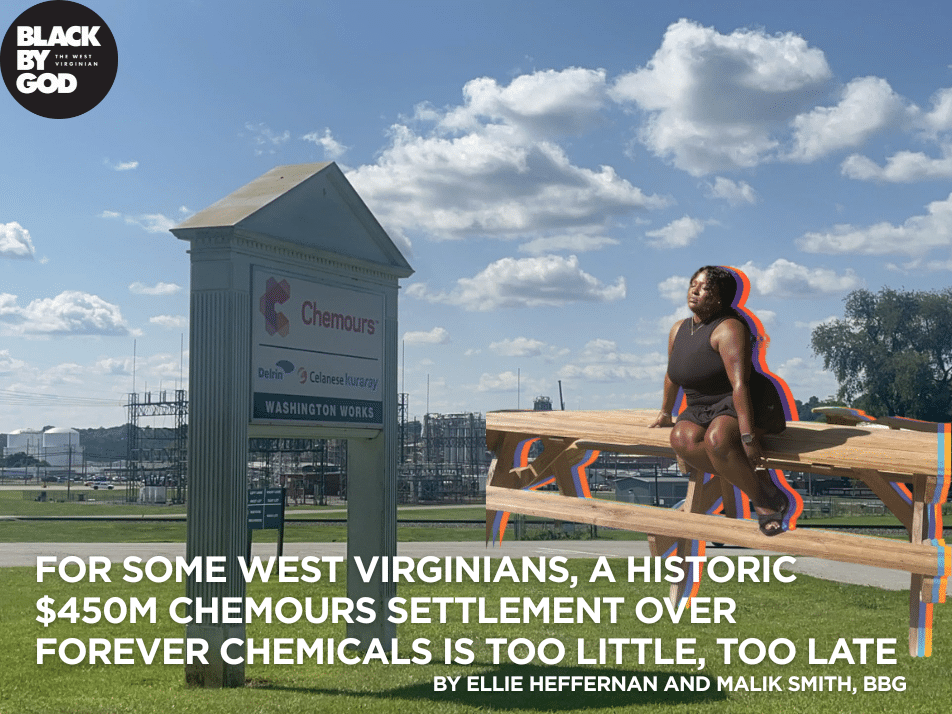
Many of the changes required by the settlement will take more than a decade to complete. The Trump administration also intends to roll back or delay enforcement of existing regulations on forever chemicals.
By Ellie Heffernan and Malik Smith, BBG
Charlise Robinson recalls first hearing some buzz around issues with Parkersburg’s local water system back in 2000. But she didn’t think about it much until two decades later, as she reflected on her third pregnancy.
Back then, she was sick all the time. Her blood pressure was so high that she had to be induced. And her daughter was delivered a month and a half early.
“At the time, I did not know, because they hadn’t told us that it was connected to the C8 yet,” said Robinson, who now works as the Ohio River Coordinator for West Virginia Rivers Coalition. “It was just, that experience, for me, was very traumatic. I ended up having my tubes tied while I was in the hospital.”
Like many Parkersburg residents, Robinson has been exposed to a group of “forever chemicals,” including C8, from the Chemours Company’s Washington Works facility. Robinson was also a key part of a more recent 2024 suit filed against Chemours by WV Rivers.
Forever chemicals, also known as PFAS, are incredibly difficult to break down in both the environment and human bodies. Exposure is linked to multiple serious health problems.
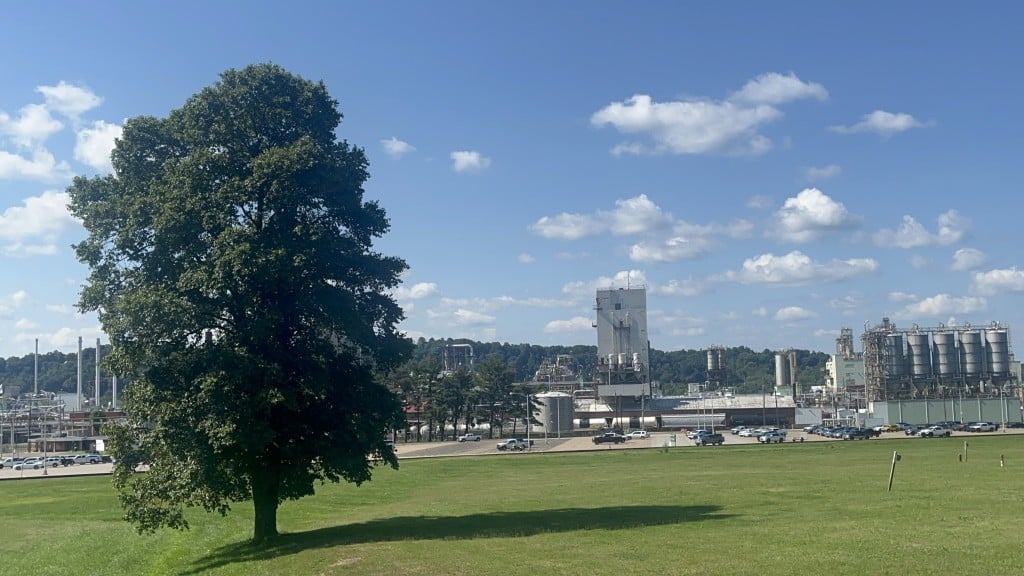
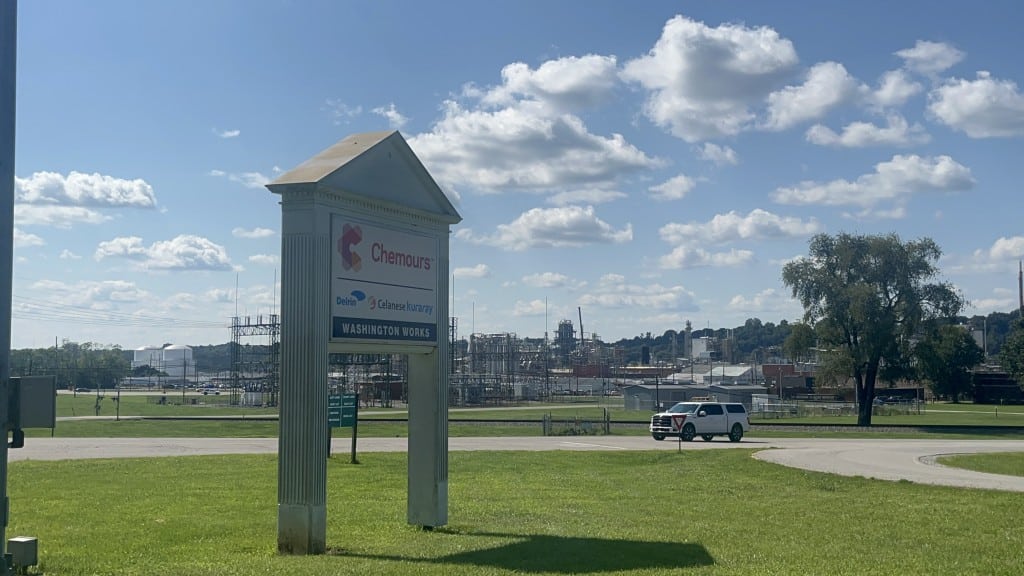
Earlier this summer, Chemours agreed to a historic $450 million multi-state settlement after years spent allegedly violating the Clean Water Act releasing these chemicals into the environment from several facilities, including the one in Wood County.
This was the first comprehensive settlement proposed by the federal government to resolve pollution enforcement claims against a manufacturer of forever chemicals.
Under the proposed settlement, Chemours agreed to pay a combined $22.5 million civil penalty to the U.S. Environmental Protection Agency and WV Department of Environmental Protection.
It also agreed to spend an estimated $90 million on projects to mitigate PFAS releases, $60 million on pollution controls at Washington Works and $280 million to supply clean drinking water to communities near facilities in West Virginia and New Jersey. For its North Carolina, Chemours agreed to implement controls to reduce the spread of PFAS and other toxic chemicals.
The settlement still needs to be approved by U.S. District Judge Thomas E. Johnston. If approved, it will immediately change lives. Many Parkersburg residents, including Robinson, don’t trust their taps and drink nothing but bottled water. So, having Chemours cover that expense would make a difference.
But many of the changes required by the settlement will take more than a decade to complete. The Trump administration also intends to roll back or delay enforcement of existing regulations on PFAS. And for many West Virginians, some of the damage from forever chemicals like C8 may be irreversible.
For Parkersburg resident Eric Engle, the settlement represents some measure of accountability, albeit a small one, for the various chemical companies that betrayed the Mid-Ohio Valley communities who helped sustain them. Like Robinson, Engle was a plaintiff’s member in WV Rivers’ 2024 suit against Chemours, and he previously served as a member of the nonprofit’s Board of Directors.
The chemical industry has been a huge part of Engle’s life for decades. In 1986, his father landed a good-paying, union job at the local chemical plant that allowed him to raise a family on $17 an hour. When Engle graduated from college and needed to find a job – any job – he sought to find work like his dad. But the industry had changed, and he started out making only $8.50 an hour with no benefits.
“These companies were knowingly poisoning their communities,” Engle said. “They were not being good corporate partners to the community. They were knowingly poisoning our groundwater supply and the river that we pull our drinking water from with these chemicals that we now understand are known as forever chemicals.”
“Looking back at this, it really feels like the Twilight Zone.”
C8, also known as perfluorooctanoic acid or PFOA, belongs to a larger group of over 14,000 synthetic chemicals, known collectively as PFAS. Companies like Chemours have used PFAS to manufacture household items like non-stick pans, cooking spray and water-proof clothes.
A defining feature of PFAS is their strong carbon-fluorine bonds, which help them repel water, oil, grease and stains. These bonds make it highly difficult for them to break down naturally once released into the environment, and it’s why they’re often called “forever chemicals.”
PFAS exposure is also linked to multiple serious health conditions, including cancers, thyroid disease, ulcerative colitis, high cholesterol and pregnancy-induced high blood pressure.
Robinson experienced that last condition, and her tubal ligation did not end her reproductive health problems. She developed high estrogen levels, fibroids and painful periods.
She even had minimally invasive surgery on her uterus to reduce heavy bleeding. But by age 30, her doctor still recommended undergoing a partial hysterectomy.
“Sometimes I just felt unstable with my moods, and he was the one that caught that my hormone levels were just super high,” she said. “But with the partial hysterectomy, the [hormonal] fluctuations were just so low, it kind of put me in a depression.”
Robinson had actually gotten her blood tested back in 2006, as part of the C8 Health Project. That project was created through a different settlement, following a 2001 class-action lawsuit filed against DuPont. Chemours has operated Washington Works since it was spun off from DuPont in 2015.
Back in 2001, residents alleged DuPont had contaminated six public water systems with C8, hiding the true risks to the community’s health and wellbeing.
That lawsuit was ultimately settled in 2005, with DuPont required to install water filtration systems and fund independent research into the impacts of C8 on the human body, a.k.a the C8 Health Project. That project received data from more than 68,000 participants, including Robinson.

Having more than 20 nanograms of PFAS per milliliter in your blood increases a person’s risk of adverse health effects and may warrant additional medical screening. Robinson had significantly more than that: Nearly 34 nanograms per milliliter, the majority of which was C8.
“Looking back at this, it really feels like the Twilight Zone,” she said. “I just did not understand the gravity of that in my twenties. It wasn’t until that documentary came out, ‘The Devil We Know,’ and I’m like, ‘Wait a minute, I lived through this’.”
The C8 Health Project gave researchers an unusually large pool of data. But Dr. Alan Ducatman, a professor emeritus at West Virginia University who helped design the project, said researchers have struggled to keep pace as companies replace older PFAS with a new generation of chemicals.
“There’s plenty we don’t know about PFAS,” Ducatman said. “There’s all of these replacement chemicals. They come up way quicker than we can study them”
Some of those replacements are especially difficult to study because they remain in the human body for a much shorter time, leaving researchers with lower concentrations in the blood samples they collect.
The 2001 lawsuit did not stop Chemours from repeatedly violating the Clean Water Act again two decades later.
“All the bad that comes with ignoring science.”
Robinson receives her tap water from the Lubeck Public Service District. As part of a federal monitoring program, Lubeck PSD is required to test its water for 29 PFAS compounds.
A March 2024 sample contained 179.5 nanograms per trillion of C8 – nearly 45 times the new federal drinking water limit, which was announced the following month.
At the time, Washington Works held several permits that allowed it to discharge different amounts of forever chemicals from different outlets. Monthly discharge monitoring reports showed the facility regularly exceeded limits for two PFAS: C8 and a newer chemical, commonly known as GenX.
GenX was designed to be a less harmful replacement for C8. But in 2021, the Environmental Protection Agency issued a report deeming it more toxic than its predecessor.
In December of 2024, Robinson, West Virginia Rivers, and Little Hocking Water Association sued Chemours for its excess discharge of both chemicals and other permit violations, alleging the company violated the Clean Water Act.
In August of 2025, a federal court ruled Chemours had to immediately stop discharging dangerous forever chemicals from its facility near Parkersburg into the Ohio River. That decision — and the more recent $450 million proposed settlement — were wins for West Virginians like Robinson.
But the Trump Administration wants to get rid of regulations on chemicals like GenX and PFAS.
Back in 2024, the Biden administration established the country’s first limits on forever chemicals, targeting six different kinds of PFAS. The Trump administration has proposed getting rid of limits for four of those, including GenX chemicals.
The Administration has also proposed allowing water utilities two extra years to comply with limits on the two categories of PFAS that would still be regulated. One of those categories includes C8.
“There’s science behind it, and people still want to argue,” Robinson said. “I feel like Parkersburg is an example of all the bad that comes with ignoring science and is part of a legacy that we once had. A legacy that certain people want to ignore.”
Chemours did not respond to requests for comment for this story.
This story was reported with support from The Ohio River Valley Participatory Fund.
If you appreciate BBG's work, please support us with a contribution of whatever you can afford.
Support our stories
Related Articles


BBG Documentary Premiering at Hot Springs Film Festival
Black By God, a documentary about West Virginia’s Black newspaper, premieres at the 35th Hot Springs Documentary Film Festival. Co-directed by Crystal Good and Ashley York for Firelight Media’s Homegrown series, with executive producer Stanley Nelson, the film follows the BBG newsroom as it tells the stories of Black West Virginia. It arrives as the Black Press marks 200 years.