
They Are Not Redrawing Maps. They Are Redrawing Who Counts.
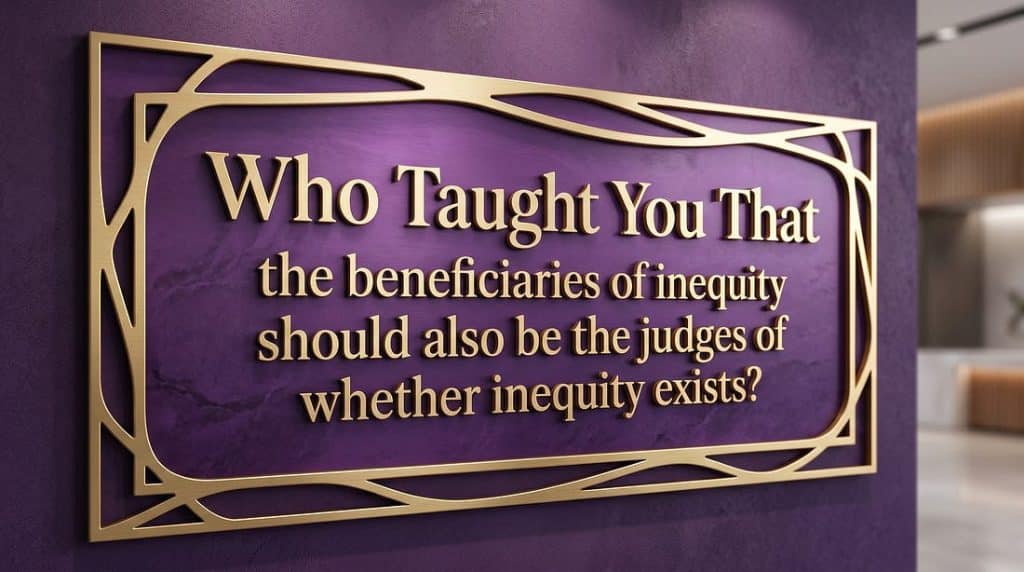
Who Taught You That
By Black Appalachian Coalition
America keeps asking Black people to believe in a democracy that repeatedly reorganizes itself around our exclusion.
Every few years, they hold up a new map as if it were a technical exercise. Lines. Counties. Precincts. Census blocks. Neutral language wrapped around violent intent. But gerrymandering has never just been about geography. It is about power. More specifically: who is allowed to hold it, who is allowed to shape it, and who must be politically contained so whiteness can remain comfortable governing a country it no longer numerically dominates.
And now, after generations of organizing, lawsuits, bloodshed, voter registration drives, church meetings, freedom rides, and funerals, they are trying to erase Black political power with a ruler and a courtroom opinion.
One of the biggest lies embedded in this entire conversation is the suggestion that Black political power is weak because Black communities are disengaged. The data tells a completely different story. Black voters — particularly Black women — remain among the most politically engaged constituencies in the country. In recent election cycles, upwards of 92% of Black women and roughly 85% of Black men supported Democratic candidates, not because Black voters move in lockstep mindlessly, as critics often imply, but because Black communities consistently recognize which political agendas are openly hostile to their rights, safety, healthcare access, labor protections, public education, and civil liberties. The problem for conservative lawmakers is not Black apathy. It is Black participation.
That is the part rarely said aloud. Gerrymandering is not happening because Black communities failed to vote. It is happening because Black communities did. These maps are a reaction to Black political effectiveness. They are an attempt to neutralize a voting bloc that has remained remarkably organized and resilient despite generations of voter suppression, economic inequality, targeted disinformation, mass incarceration, and systemic neglect.
When Black voters continue showing up anyway — when Black women continue mobilizing entire regions, when Black communities continue building coalitions capable of influencing statewide and national elections — the response is not deeper democratic inclusion. The response is to redraw the rules themselves. To fracture Black voting strength across districts. To dilute collective political leverage. To make sure that even if Black communities participate at extraordinarily high levels, their ability to materially shape policy outcomes remains contained.
So now the strategy is simpler: If you cannot stop Black people from voting, dilute the meaning of the vote itself. That is what this moment is.
Who Taught You That Gerrymandering Was Just About Politics?
They no longer stand at schoolhouse doors. The architects of modern gerrymandering do not need burning crosses or segregationist speeches. They have data analytics, Supreme Court opinions, and sanitized language about “equal protection” and “colorblindness.” But the outcome remains strikingly familiar: Black communities losing political representation while white conservative power hardens itself into permanence.
For years, America has trained people to think of gerrymandering as some abstract political sport — a chess match between Democrats and Republicans fought through maps, court cases, and cable news graphics. The conversation is almost always flattened into numbers: districts gained, seats lost, margins protected. It is discussed with the emotional distance of a strategy game, as though the consequences end at Election Day.
But Black communities understand something this country refuses to say plainly: when political power is stripped from Black people, the damage never stays political for long. It spreads into the water. Into the hospitals. Into the schools. Into the air. In the conditions, people are forced to survive inside.
That is why what is happening across the South cannot be reduced to “redistricting.” The maps being drawn right now are not simply about preserving Republican control of Congress. They are about preserving a governing structure where Black communities can be seen, extracted from, celebrated symbolically, and still denied the political power necessary to materially shape the conditions of their lives.
And nowhere is that tension clearer than in Appalachia.
For generations, Appalachia has been marketed to the country as overwhelmingly white, rural, and disconnected from Black life. That mythology has always been politically useful because erased people are easier to neglect. If America acknowledged the depth of Black Appalachian life — the labor, migration, organizing traditions, cultural memory, environmental sacrifice, and survival that Black communities have carried in the region for generations — then it would also have to confront the deliberate policies that have kept many of those communities politically marginalized and economically abandoned.
That is part of what the Black Appalachian Coalition is pushing against.
BLAC’s work is often described as narrative work, but that language can sometimes make people misunderstand what is actually happening. Narrative is not cosmetic. It is not branding. It is not simply storytelling for the sake of visibility. In Black communities, especially in places systematically erased from the national imagination, narrative becomes infrastructure. Because once a community is made invisible culturally, it becomes significantly easier to abandon politically.
And abandonment is exactly what gerrymandering helps produce.
The same lawmakers aggressively dismantling majority-Black districts are often the very same officials making decisions about environmental regulation, Medicaid expansion, hospital funding, public education, disaster preparedness, and economic investment. That connection is not incidental. It is the point.
The strategy itself is brutally simple. Take a concentrated Black population and split it apart across multiple districts so its voting strength weakens everywhere. Fold Black communities into larger white electorates where their concerns can be consistently outvoted, minimized, or ignored. That process is called “cracking,” which sounds almost harmless until you realize what is actually being fractured.
Not neighborhoods. Not maps. Political coherence. Collective leverage. The ability for Black communities to organize around shared conditions and demand material change.
And once that coherence is broken, the consequences ripple outward far beyond elections. Because political power determines whose roads get repaired, whose schools receive investment, whose hospitals remain open, whose environmental concerns are taken seriously, and whose communities are treated as expendable.
Black communities are not losing abstract representation. They are losing negotiating power over the conditions of their own survival. A cracked district can become a shuttered maternity ward. A cracked district can become poisoned water that no one urgently addresses. A cracked district can become another generation living beside industrial pollution while lawmakers insist economic growth requires sacrifice.
When Black voting power is diluted through cracking and packing, Black communities lose leverage over the systems making life-and-death decisions about whether their neighborhoods are protected or sacrificed.
When majority-Black districts disappear, so does pressure. Pressure to fund care. Pressure to expand access. Pressure to regulate polluters. Pressure to prioritize Black life.
That is why the current frenzy around redistricting is so dangerous. The attack is not just against Black elected officials. It is against the possibility of Black communities building enough durable political power to interrupt systems that profit from neglect.
That is the real story underneath these maps.
“Colorblind” Has Always Meant Black Communities Must Fight Blindfolded
One of the cruelest tricks in American political life is the demand that Black people prove racism to the very systems producing it. Black communities are expected to present impossible evidence standards while white political actors hide behind process and plausible deniability.
If racism is no longer explicit, America pretends it no longer exists.
So when courts weaken protections for majority-Black districts under the language of “race neutrality,” the burden quietly shifts back onto Black communities: Prove this harm was intentional. Prove the mapmakers knew. Prove discrimination without referencing race too directly. Prove the wound while the knife is still inside you.
And somehow, the people drawing the maps get to decide whether the damage is real.
Because that is the real scandal beneath all of this. Black people are still forced to seek recognition from systems designed to doubt our reality by default.
BLAC Exists Because Erasure Is Policy
The work of the Black Appalachian Coalition matters even more in this moment because BLAC fundamentally challenges the conditions that make gerrymandering possible in the first place.
Gerrymandering relies on a lie: That certain communities are politically insignificant. Culturally invisible. Numerically disposable. BLAC disrupts that lie every day.
And that is also why the work of BLAC becomes even more urgent in this moment. Because BLAC is documenting and preserving the very communities that many of these political systems rely on, people forgetting. Every story collected through I Am Appalachia, every memory preserved through Say Her Name in the Mountains, every conversation about environmental justice, petrochemicals, healthcare inequities, and Black survival pushes against the machinery that makes political abandonment possible in the first place.
Because before a community is stripped of political power, it is first stripped of public visibility. America cannot abandon people it is forced to fully see. That is why narrative work is not soft work. It is infrastructure.
Who Taught You Democracy Was Supposed to Protect Black People Automatically?
Black people have always had to drag this country toward its own stated ideals while the country fought us every inch of the way. Voting rights were not gifted. Representation was not gifted.
Recognition was not gifted.
Time and time again, Black people have fought to expand democracy, pushed for equal rights, and challenged systems that were never meant to protect us. Our courage, rooted in the strength of our ancestors, has held this country accountable.
Every gain was contested. Every protection temporary. Every victory is vulnerable to reversal the moment whiteness feels politically threatened again. That is the lesson buried underneath these maps. America does not naturally bend toward justice. It bends toward power.
And whenever Black communities begin building enough power to reshape the country materially — economically, politically, environmentally, educationally — the rules suddenly change. The districts move. The courts reinterpret. The language softens. And the exclusion begins again with new branding.
Not because democracy failed. Because for many people in power, this is exactly what democracy was designed to do.
And that reality exposes the dishonesty underneath the “colorblind” language surrounding these maps. Because if race truly were irrelevant, there would not be such a concentrated effort to strategically weaken the electoral influence of the very communities most consistently exercising their democratic participation. These districts are being engineered precisely because Black political engagement is powerful enough to threaten existing power structures. The maps are not punishing disengagement. They are punishing effectiveness.
Where do we go from here?
Demographics are changing. Organizing is growing. Young voters are mobilizing. Black, rural, immigrant, poor, and working-class communities are building new coalitions across the South. And the maps are responding accordingly.This is not defensive politics. It is anticipatory suppression—a strategy designed to stop emerging multiracial political power before it fully matures. Because the people engineering these districts understand something clearly: Once communities realize they deserve more than survival, the entire political arrangement becomes unstable.
That is why narrative work matters. That is why memory work matters. That is why organizations documenting erased communities matter. Because political erasure always begins culturally first. A community must be made invisible before it can be denied power.
As we look forward and ask, “Where do we go from here?” we must hold those individuals accountable. We must refuse to continue being the stepping stone for everyone else — used, lied to, and discarded when our labor is no longer convenient. Our community deserves better. Black communities deserve better. Those who seek our votes, who ask for our support, who depend on our commitment to justice and progress must also stand by us, fight for us, and honor us when it matters most.
It is no longer enough to ask Black communities to carry us through; we must demand accountability from those who seek our support but fail to deliver it in return.
If you appreciate BBG's work, please support us with a contribution of whatever you can afford.
Support our stories
Related Articles
David Fryson: Courageous leaders must resist anti-DEI policies (Opinion)
Former WVU VP for DEI David Fryson calls on university presidents and corporate executives to defend equity and inclusion against political attacks.
How Big Money Took Over American Elections
Anoa Changa-Peck examines the 15-year impact of Citizens United, billionaire spending in elections, and how state reforms like Hawaii’s Act 011 push back.
Morrisey’s administration now competing with Justice’s for title of least transparent
West Virginia Watch’s Leann Ray analyzes Gov. Patrick Morrisey’s press relations, FOIA response delays, and state government transparency challenges.