Media ‘status quo’ explored during ‘Reimaging Local Journalism’ symposium in Charleston
Originally posted on The Real WV
By Matthew Young
CHARLESTON, W.Va. – “I have this saying: ‘Sometimes something can be fact, even when it’s not true.’ There’s sometimes a way that information is constructed that leads to dishonesty.”
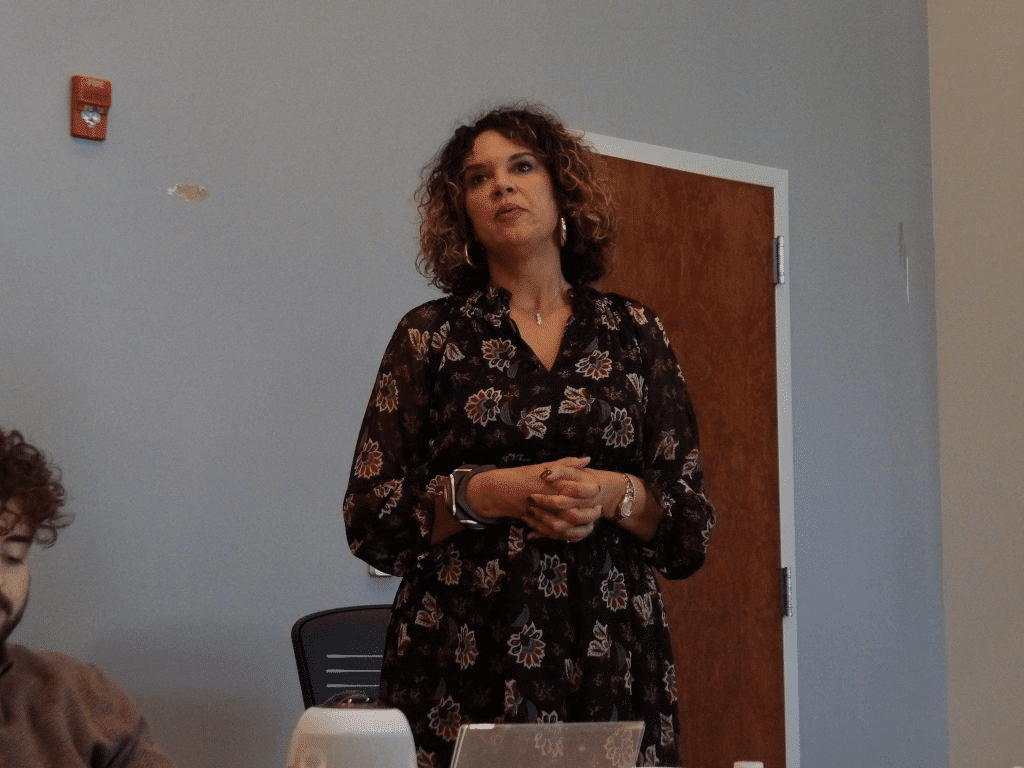
That’s what multidisciplinary-artist Alexandra Bell told media representatives from The Mountain State Spotlight, Black By God, The RealWV, The Times West Virginian, 100 Days in Appalachia, City Bureau, and several other West Virginia-based news outlets on Wednesday, during her keynote address at the “Reimaging Local Journalism” event, held at the Greater Kanawha Valley Foundation’s offices in Charleston.

We’ll bring the best from BBG right to your inbox. You can easily unsubscribe at any time.
Sign Up for our Newsletters!
Designed as an exploration of journalism’s critical role in safeguarding democracy, “Reimagining Local Journalism” was hosted by Crystal Good, publisher of Black By God, and presented in partnership with The Greater Kanawha Valley Foundation, ACLU WV, and News Futures. The event was also attended by representatives of numerous non-media organizations, as well as several Kentucky-based news outlets.
Bell, who earned national acclaim for her groundbreaking series, “Counternarratives,” discussed both her work, and the methodology behind it – to challenge the presentation and perception of digestible media, and to reinforce the understanding of the critical importance of presenting authentic narratives through journalism.
Using two magazine covers from the same period in 1994 – both depicting the same photograph of the now deceased O.J. Simpson, although edited somewhat differently – Bell described the practice of “photo manipulation.”

“I’m sure most people in this room remember this (photo),” Bell said. “It was on the cover of most magazines at the time.”
“Time Magazine said, ‘Hey, let’s just darken it up a little bit,’” Bell continued. “It makes it look more ominous. I encountered this in photojournalism as a thing not to do when you’re editing an image, because it can impact the meaning of the image. This would be an example of photo manipulation.”
Bell further cited a certain Brooklyn, New York-based newspaper’s editing of a now famous 2011 photograph from inside the White House Situation Room. In the original photograph, taken by White House Photographer Pete Souza, officials are seen awaiting information regarding the military operation which resulted in the killing of Osama Bin Laden. Among the officials clearly shown in the original photograph are then Secretary of State Hillary Clinton, and National Security Council Counterterrorism Director Audrey Tomason.
“An ultra-orthodox newspaper in Brooklyn – Hillary Clinton and Audrey Tomason, they (the newspaper) erased them,” Bell noted, explaining that the images of the two women had been removed from the original photograph before publication in the newspaper. “They explained it by saying that they had a longstanding policy of not showing women in their papers.”

Photo courtesy of The White House. Photo by Pete Souza.
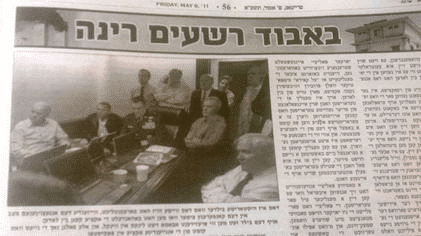
The newspaper in question, Di Tzeitung, is a weekly publication, printed in Yiddish and distributed on Wednesdays throughout New York. After the image was altered, editors photoshopped an arm onto Deputy National Security Advisor Denis McDonough, as Clinton’s removal from the photo left a void in the image. At least one other orthodox Haredi magazine, Dee Voch, is known to have also removed both women from the photograph before it’s publication. Both outlets noted that the practice of printing photographs of women is at odds with their religious beliefs.
“That’s also photo manipulation,” Bell noted. “We’re not just looking for language, sometimes we’re looking for the juxtaposition of messages.”

Throughout her career, Bell has been the recipient of both the International Center of Photography’s Infinity Award, and the Sarah Arison Artadia Award. Bell has also been granted the Catchlight Fellowship, the Soros Equality Fellowship, and the Radcliffe Fellowship at Harvard University. Bell’s work has also been exhibited at the Whitney Museum of American Art, the Spencer Museum of Art, and the Charlie James Gallery, among many other locations.
To learn more about Alexandra Bell’s work, visit alexandrabell.com.
If you appreciate BBG's work, please support us with a contribution of whatever you can afford.
Support our stories
Related Articles
Charleston City Council advances bill for West Side rezoning
Several councilmembers spoke shared concerns about the reasoning behind the rezoning and its potential effect on housing security.
What You Missed at Morgantown City Council
A resident asked council members to overturn the city’s camping ban, and the council passed several resolutions and ordinances related to zoning, city planning and transportation.
Debate over dog poop dominates Charleston City Council discussion
“We have transparency and term limit bills waiting to be heard. This is what this body is going to consider?”