
The Country Life Conference for Negroes aided WV’s Black farm families with the power to grow wealth and crops
Hosted in Johnsontown, the three-day event also helped them grow a network
By Fresh & Fried Hard Appalachia powered by Black By God: The West Virginian focuses on the foodways and lifestyle of Black West Virginians as well as neighboring Central Appalachia from a historical perspective.
The 1922 Country Life Conference for Negroes in Johnsontown (Jefferson County) was an innovative event that debuted in West Virginia in one of the first all-Black communities in the state. The conference was a cooperative between the state, Storer College and other partners including West Virginia University, 4-H Clubs of West Virginia, and the American Country Life Association. The conference took place post fall harvest for three days, November 24-26, and attracted Black farm families from neighboring states with a great number of attendees hailing from West Virginia.

October 2, 1867: Foundation of Storer College in Harpers Ferry , October 2, 1867: Foundation of Storer College in Harpers Ferry, West Virginia sourced from WVPubic.org
We’ll bring the best from BBG right to your inbox. You can easily unsubscribe at any time.
Sign Up for our Newsletters!
The purpose of the conference mirrored the purpose of the American Country Life Association (ACLA). ACLA functioned on the belief that rural people had the ability to solve many of their own problems if given the needed information and incentives for cooperative action. Cooperative group action, to them, meant teaming with nearby governments, organizations and educational institutions. It also meant that farmers working together, worked best for the community overall.
Essentially, it was a movement that empowered rural citizens with information on home making, education for children and adults, health and sanitation, recreation, local government, country planning, morals, and religion.
Johnsontown was considered a model country community, perhaps due its close relationship with Storer college, and a track record of sustainability. Founded in 1848 by George W. and Betsy Johnson, the community had its own one-room schoolhouse, church and store. Prof. H. H. Winters, a teacher of agriculture, at the college, often provided Johnsontown residents, many of whom were Storer graduates, with training and workshops on any number of topics related to their farming activity.
However exciting the conference was for its time, it was also an indirect fulfillment of a set of goals created by T. Edward Hill, director, Bureau of Negro Welfare and Statistics (WV) to increase Black farmership as a means of keeping Black labor in the state. In his 1921-1922 report to the governor, Hill wrote,
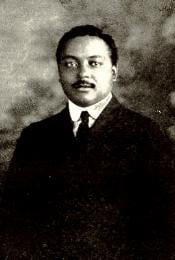
T. Edward Hill, photo from archives.wvculture.org
“Every Negro who undertakes the ownership and operation of a farm in this State adds to the wealth of the State, increases the taxable resources, helps to reduce the cost of living in proportion to the quantity of food stuff he produces, and in most cases changes a shifting shiftless consumer into a fixed part of the producing population.”
Throughout his report, Hill expressed a desire to make miners land owners. He believed farming was a track to Black land ownership, and a boon for the state’s economy. He also believed farming was an answer to preserving the state’s Black population, which could be depleted as some would leave West Virginia in pursuit of better work opportunities.
Henry T. McDonald, reporting for The Baptist magazine wrote, “There were thirty families in the immediate vicinity of the conference most of whom are freeholders or those who rent and successfully manage prosperous farms. In the community live a number of graduates of Storer College. One farmer reported a wheat crop of something over 1,700 bushels and a crop of about 500 barrels which in Virginia means 2,500 bushels of corn the cob. Several of the farmers holdings, which in value, number several thousand dollars.”
While the Country Life Conference for Negroes was a first time endeavor in the state of West Virginia, similar conferences and workshops had been held throughout the country. Most notably, the Tuskegee Negro Farmers’ Conference, which began in 1892, was the longest running event before its end in 1915, the year of Booker T. Washington’s death.
There is no evidence that the Country Life Conference for Negroes continued in West Virginia beyond the inaugural event. Johnsontown, like many all-Black towns and communities in the country, would suffer a population decline as its younger citizens moved to larger cities and states to seek opportunity. And Storer College closed in 1955, following a loss in funding.
Booker T. Washington stated in his essay (The Negro Farmer, 1909), “So much has been achieved forty years after emancipation by the negro farmer, of all men in this country, perhaps the most neglected.” The people and conference ceased to exist but both continue to offer a model or blueprint for Black rural cooperatives that exist in West Virginia and in other states as not to allow Black and Indigenous farmers to feel neglected in their progress.

Booker T. Washington, photo sourced from wpcdn.web.wsu.edu


If you appreciate BBG's work, please support us with a contribution of whatever you can afford.
Support our stories
Related Articles

‘I wasn’t homeless because I was using, I was using because I was homeless’ – former unhoused talk long path to rejoining society
Truth Pharm presents participant-informed research on homelessness, digital barriers, and care systems at CEG’s 3rd Annual Syndemic Summit in Huntington, WV.
Local experts talk history, discuss the impact of Trump’s campaign to end Birthright Citizenship
Panelists at a Charleston library forum unpack birthright citizenship, the 14th Amendment, legal precedent, and civil rights protections in West Virginia.
This week in Affrilachian history: Sept. 6 through Sept. 12
Explore key September moments in Affrilachian history: WV’s first Black legislator, Harlem Renaissance author John Matheus, and John Henry’s legend.