
Black History Didn’t Come From Where We Think It Did
Black History Month usually points us in the same direction.
Big cities. Big stages. Big institutions.
But standing in front of Garnet High School in West Virginia, that story breaks down.
Before Tony Brown became one of the most influential Black journalists in American history — before Tony Brown’s Journal shaped how Black America talked about politics, culture, and power — he was a student at a segregated Black high school in Appalachia.
That matters. Garnet High School was one of many Black schools built during Jim Crow segregation—created not by choice, but by law and exclusion
These schools were underfunded, overlooked, and later erased from public memory. Yet they produced generations of Black thinkers and leaders who helped shape the nation anyway.
Tony Brown was one of them.
For decades, Brown challenged power on national television, insisting that Black political thought deserved depth and seriousness. What is rarely mentioned is where that foundation was formed — not in a media capital or elite university, but in a Black high school in West Virginia.
And Garnet’s story didn’t end when the school closed.
Bill Epps knows that better than most.Epps is a member of Garnet High School’s Class of 1955 — the next-to-last graduating class before school integration led to Garnet’s closure. Today, he serves as the longtime president of the Garnet High School Alumni Association and president of the Garnet Foundation, working to ensure the building continues to serve the community.
His vision for Garnet isn’t nostalgic. It’s forward-looking.
“We want to attract tenants to the building with goals that are in line with Garnet’s goals of helping people and doing humanitarian things,” Epps has said to the Charleston Gazette, emphasizing that Garnet was always about more than education — it was about service.
That purpose connects Garnet directly to another West Virginian who changed American history: Carter G. Woodson.
Known as the father of Black history, Woodson was educated in West Virginia and understood early that Black history would not survive unless it was deliberately documented. Black History Month exists because Woodson refused erasure — because he knew memory is power, and silence is not accidental.
Together, Tony Brown, Carter G. Woodson, and Garnet High School tell a truth America still struggles to accept.
Black intellectual history was never confined to major cities or elite institutions. It was cultivated in segregated classrooms, rural towns, and places the nation learned to overlook. It was built by people who knew their brilliance didn’t need permission.
Black History Month is not just a celebration. It’s a correction.
Black history didn’t come from where we think it did.
It came from everywhere Black people were.
And sometimes, it came from a high school in West Virginia.
If you appreciate BBG's work, please support us with a contribution of whatever you can afford.
Support our stories
Related Articles

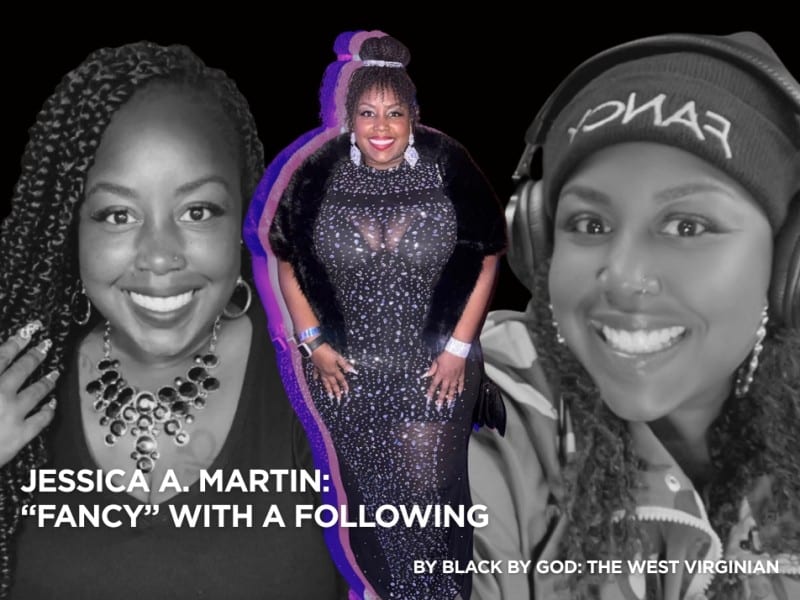
Jessica A. Martin: “Fancy” With a Following
How a Charleston content creator turns positivity into community influence
