
The Varied Voices of Black Storytelling from the BAS Fellows 2023
By Ilene Evans, National Association of Black Storytellers Liaison
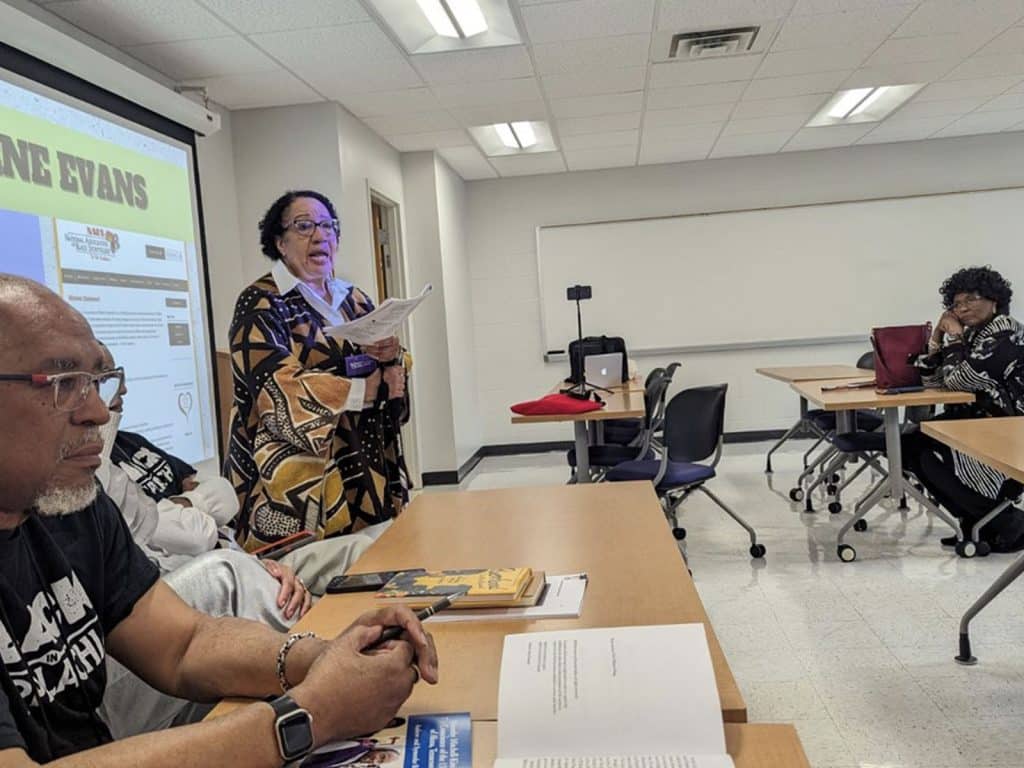
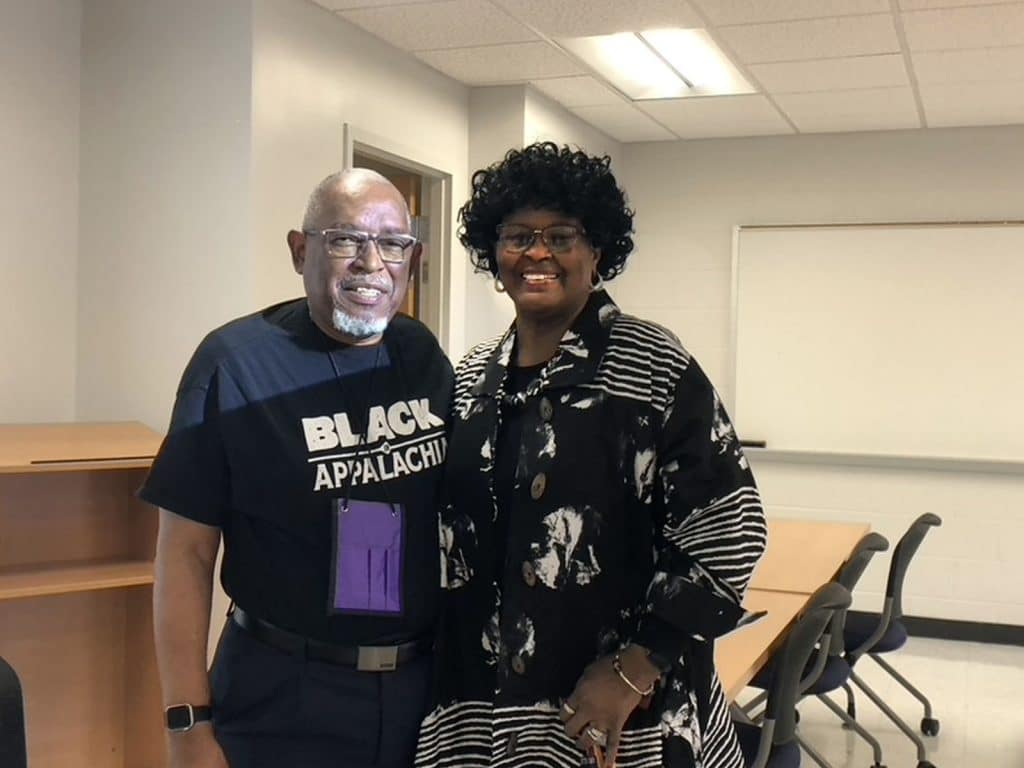
I had the delightful mission to be with our NABS Black Appalachian Storytelling Fellows at the Appalachian Studies Conference at Western Carolina University in Cullowhee, North Carolina, March 7-9, 2024. There was a roundtable which allowed four of our fellows to share the progress of their projects with the larger Black Appalachian family in attendance. Those able to attend were Kelle Jolly, L. Renée, Ronnie Pepper, Rev. and Symerdar Baskin. We were heartened by the numbers of Black folks representing their work in leadership roles at the conference. They came from so many diverse fields of study, entrepreneurship and — yes — all telling their story. Storytellers all! Our storytelling family keeps growing. We were able to network with farmers, seed keepers, educators, writers, parents, documentary storytellers, genealogists, historians, professors, sociologists, community organizers, poets, podcasters, and musicians.

Blackstorytelling is the repository of our families, our traditions, our heritage, our identity, and our culture. It holds the key to our future, not just survival, but also our victory over oppression. Blackstorytelling houses the tools for accessing our creativity — ensuring our grandparents’ dreams for our success, prosperity, and joy. We are their dreams come true. That was so evident in the sessions and networking. Kelle Jolly noticed that we were mentioned in following sessions. It was a solid affirmation of the work and its integrity. We were able to keep building relationships — the backbone of our survival. At the conference we heard ourselves in stories told through traditional folk tales, recipes, personal experiences, and histories.
We’ll bring the best from BBG right to your inbox. You can easily unsubscribe at any time.
Sign Up for our Newsletters!
Kelle Jolly introduced our new Black Appalachian Fellows for 2023 and welcomed our guests. With the help of her fellowship, Jolly was able to gather enough storytellers for two Black Appalachian Storytellers of Tennessee Concerts. The first concert occurred in Knoxville College in 2023 and the second in February of 2024 in the Historic Grove Theater in Oak Ridge, Tennessee. Jolly told us about how the NABS family helped her build her own community and reclaim her sense of style and place. “That experience at NABS (festival and conference) changed my life. I heard the sound of the drums, I saw the dress of the storytellers, the engagement, and their energy, and their spirit. It reminded me of the storytellers that I saw and heard growing up. And it brought back memories of things I had forgotten.”
She enlarged the storytelling audience in recognizing local and traditional voices. Because of Jolly’s work more people are claiming their identity through story and their Appalachian identity. When Jolly realized that there were 52 counties in Tennessee and in none of those counties was there the representation of Black storytellers, she had to act. That passion to build the storytelling community is driving her to create a storytelling affiliate and more concerts to represent the voices of Black Appalachians.
Professor Emeritus of African and African American studies at Berea College, Rev. Andrew Baskin and his wife, Symerdar, shared how much progress they have made in sharing the story of civil rights activist Dorothy Mitchell-Kincaid, through their oral history collection. The project to capture Dorothy’s story and share it became a family mission. The fellowship allowed them to take it even further into publication.at the conference, they had books to sell, now titled: Dorothy Mitchell-Kincaid: the Conscience of the 13 Streets of Alcoa, Tennessee. The proceeds will go to the Dorothy Kincaid-Mitchell Love Community Outreach which she created to help people with cancer make ends meet. The book launch will be March 24th and NABS will be there. Rev. Baskin asked, “How do we get these materials out in the world?”
And now, we have a dedicated repository to hold the stories of Black Appalachian life and make them available to our researchers, scholars, and storytellers at the Berea College Archive. They have helped to establish a home which will hold stories which otherwise could have been forgotten and erased. Rev. Baskin helped us get a fresh picture of our co-founder, Mama Linda Goss. She grew up in Alcoa in the same time as Rev. Baskin. Her mission is to build and maintain Blackstorytelling through the National Association of Black Storytellers (NABS). … And she was my first storytelling instructor. We continue her legacy.
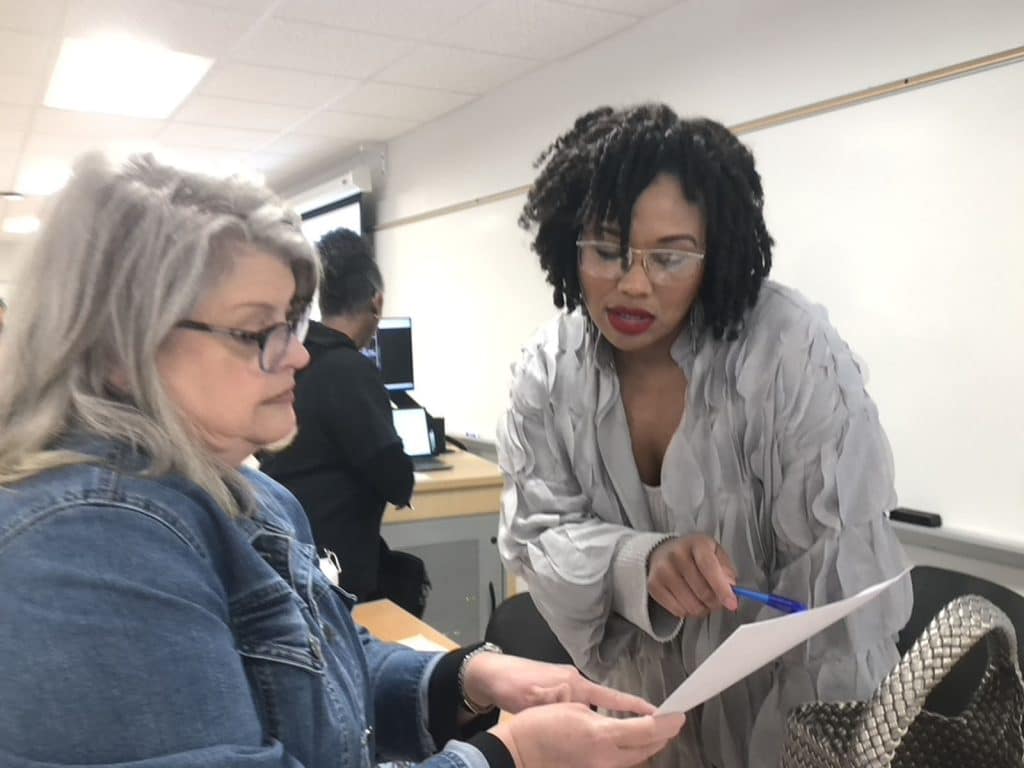

L. Renée shared her journey as a poet whose work is influenced by the Black archive, as well as her experience in collecting stories from her family elders and recording the stories of elders who reside in the coal towns where her family once lived. She is reconciling how the coal mining bust and her family’s migration out of coal towns impacted her identity.
“I am the granddaughter of a coal miner who spent forty-three years working in Bluefield, Virginia, Bluefield, West Virginia, and McDowell County, West Virginia,” L. Renée said. “A lot of my work is situated in the tension of being a person who was brought up in the tradition of Black Appalachian storytelling, of foodways, and cultural practices, but without family land to return to.”
She said that she is tracking her family’s migration from the tobacco farming areas of Virginia to the coal towns in Virginia and West Virginia. She is using her fellowship to write new work and collect new stories for her book, tentatively titled “And the Dust Still Sings: Black Appalachian Inheritances.” She is gathering more recordings of elders in Bluefield, Virginia, and their memories of education, Black Appalachian proverbs, foodways, recreation, and race relations. She has also found photos of her aunt in a 1940s-era company store in the National Archives. In April, which is National Poetry Month, she will host an adult writing workshop at the Bluefield Library for people interested in writing through their family history.
Ronnie Pepper, a retired veteran, shared how the impact of reclaiming the authorship of the story of Black towns in North Carolina has affected teachers, students and community members of Henderson County. Pepper has been a part of researching and telling the story called “The Kingdom of Happy Land,” one of the many towns which were created after the Civil War by newly freed people. They have corrected the story of their ancestors’ trials, tribulations, travel, settlement, entrepreneurship and faith. Reclaiming these stories have given the people there a deeper sense of their part in history and the impact of truth telling. His energy and drive inspired everyone at the conference to dig deeper — do the research —and TELL the story. He said, “We should continue to tell and document our stories through art, songs, stories, pictures and poems.” Through the Henderson County Research Group Pepper continues to document the lives and stories of the Black communities of his home place.
There is nothing more utterly human than telling stories and how we tell stories about ourselves, our journey, our troubles, and triumphs. Stories are not just entertaining; they are how we organize our life experiences and measure our growth; map our way through life’s perils. Some of the stories were difficult to hear, difficult to tell, and hard to bear. Forced relocation, the trials of segregation, prohibition, legalized terror. But there were also stories of ingenuity, resilience, entrepreneurial excellence, strategic analysis, and healing despite oppression and neglect. Our truth has often been denied by the outside world. The sideways glace reveals the understanding shared by our intimates and extended family. So many times, our truth is too bitter for others to believe. Our stories hold the deep emotions we feel until we can process and heal the wounds of disbelief. There was an effort to acknowledge that and make room for correcting the narrative about Black folks in Appalachia. It was a good start.
The story we tell ourselves about ourselves link us to past and future generations. Traits that are passed on from one generation to another are part of the long story of genealogy. This information is so important that there are designated people in many cultures, especially African cultures, where the one who remembers, and renders holds a place of honor and respect.
Our sense of being and well-being are measured by story, our sense of growth and evolution are measured in our stories. We evolve and change and so find all our stories are dynamic. Each of us is an ever-evolving work of art.
The stories of people in Appalachia, especially Black people, and people of color in Appalachia often take a back seat to stories of our urban brothers and sisters. Historians, genealogists, researchers, ethnographers, physicians, are speaking out more and more as to the importance of this voices from the mountains, who laid the foundation of Black entrepreneurship, finance, education, invention, literary prowess, and the law to be recognized around the world today.
Look for more news updates from our other 2023 recipients: Lyn Ford and Aristotle Jones, who were not able to attend this event. Last year’s winners were Alicestyne Turley, Sparky and Rhonda Rucker, David Butcher, Crystal Good, Ruby Daniels, and Ray Christian.
May our storytelling family keep growing — stay tuned for the NABS Festival and Conference October 23-27 in Buffalo, New York.
If you appreciate BBG's work, please support us with a contribution of whatever you can afford.
Support our stories
Related Articles

Jessica A. Martin: “Fancy” With a Following
How a Charleston content creator turns positivity into community influence
