Celebrating Melungeon Heritage Month: Who We Are, Where We Come From, and How We Keep the Story Alive
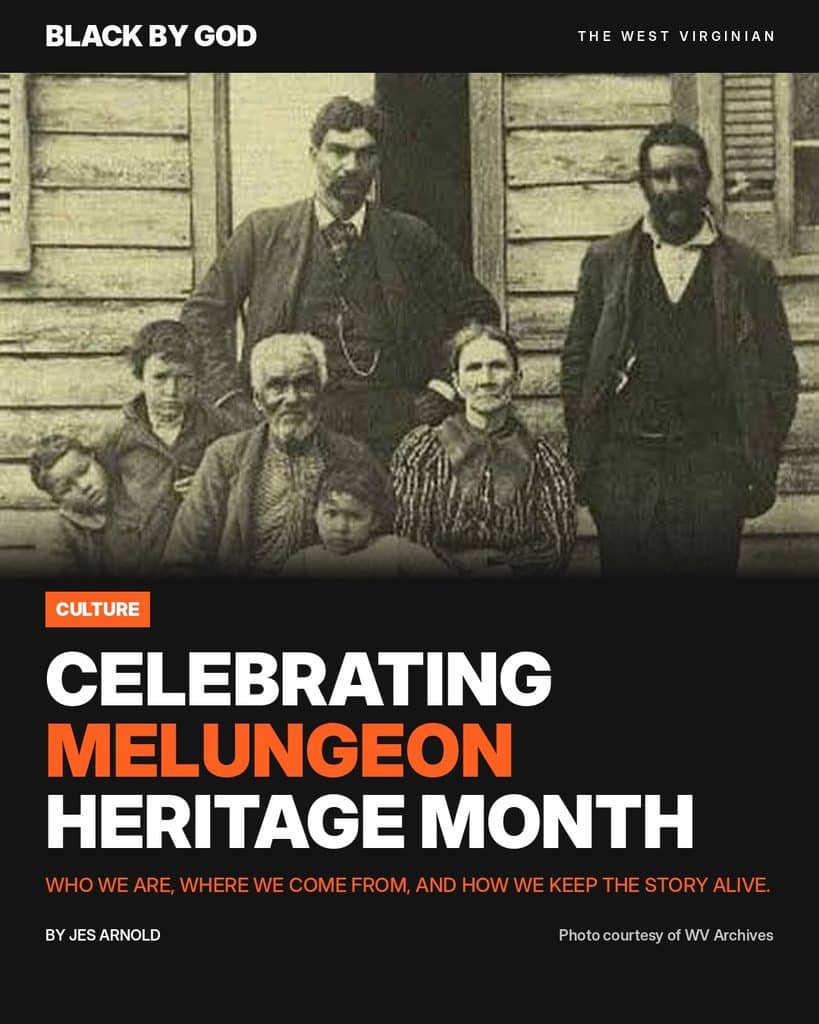
Every October, descendants across Appalachia and beyond pause to celebrate Melungeon Heritage Month, a community-led observance that has grown in recent years. For generations, “Melungeon” was whispered about, or hurled at, families who didn’t fit neatly into the racial boxes of their time. Today, many of us claim it with pride. If you’ve ever wondered whether it might be part of your story, our earlier article, Clues That You Could Have Melungeon Ancestry, is a good place to start. Here, we step back and tell the larger story: where this heritage comes from, how it was nearly erased, and the people working to preserve it.
Who are the Melungeons?
The word first appears in writing in 1813, in the minutes of the Stony Creek Baptist Church in what is now Scott County, Virginia, though people almost certainly used it long before anyone wrote it down. Its origin is still debated. Many scholars trace it to the French mélange, meaning “mixed.” Another strong possibility is malungu, a Kimbundu word from Angola meaning “shipmate” or “companion.” Africans carried it across the Atlantic, and Portuguese adopted it as melungo. Some of the first Africans brought to Virginia in 1619 came from that Kimbundu-speaking region, and several Melungeon researchers consider this a promising theory worth further study. Both fit the story in their own way: one describes a mixed people, the other a people bound together by a shared crossing.
Melungeon families descend from European, African, and Indigenous ancestors, with other threads woven in as well. Many descendants find small amounts of other ancestry in their DNA results, such as Iberian, North African, Middle Eastern, or South Asian. Small percentages like these can be hard to interpret, but they fit a colonial Atlantic world where people from many places crossed paths, and they often echo family stories passed down for generations. By the 1890s, Hancock County Melungeons described their ancestry as Indian and Portuguese, and many historians believe those claims also helped protect families from being classified as Black under the law. Early census records listed many as Free People of Color, and their race was often recorded inconsistently from one decade to the next.
“For generations, ‘Melungeon’ was whispered about, or hurled at, families who didn’t fit neatly into the racial boxes of their time.
Scientific studies have added to the picture. A 2012 study of Melungeon family lines, published in the Journal of Genetic Genealogy, found that participants’ direct paternal and maternal lines were mostly European and sub-Saharan African, with one Native American paternal line. The authors suggested the families may have taken shape in colonial Virginia through unions between Black and white people, free and indentured. But those tests follow only two threads: the straight father-to-father line and the straight mother-to-mother line. They can’t see the hundreds of other ancestors in a family tree. Autosomal DNA tests, which look across all of a person’s lines, often show Melungeon descendants a much broader mix, including Indigenous ancestry and other heritage that the direct-line results don’t capture.
The heartland of Melungeon country is the Cumberland Gap region, where Tennessee, Virginia, and Kentucky meet. Many families came from North Carolina and Virginia, and later generations settled in southern Ohio and West Virginia. Names like Collins, Gibson, Mullins, and Goins are among the best known. It’s important to say plainly what Melungeon identity is and isn’t. It isn’t a tribal nation, and it isn’t a new label borrowed for the moment. It is a way for mixed-ancestry people of Appalachia to honor where we come from, with respect for the communities still living our ancestors’ cultures today.
A history of being classified and erased
For much of its history, “Melungeon” was an insult. Being Melungeon could cost you your rights. Tennessee’s 1834 constitution took the vote away from Free People of Color, and Melungeon families in the area that became Hancock County were treated as such, turned away from the polls and the public schools. In 1846, a group of Melungeon men were even put on trial for voting illegally. They were acquitted, but the message was clear: their right to vote could be questioned at any time. Families who could pass as white often did, and in doing so left their children and grandchildren with a story full of gaps.
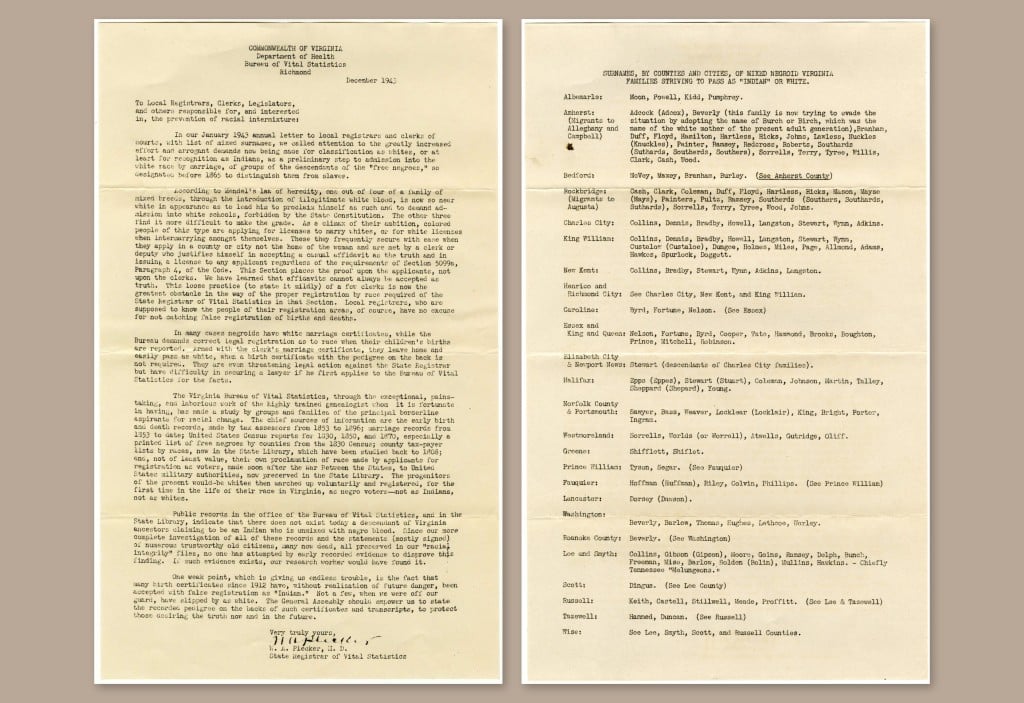
In 1943, Virginia’s state registrar of vital statistics, Dr. Walter Plecker, sent a letter to local registrars and others listing, county by county, surnames he claimed belonged to mixed-ancestry families “passing” as white or Indian. Collins, Gibson, Moore, Goins, Mullins, and others appeared under Lee and Smyth counties, labeled “chiefly Tennessee ‘Melungeons.’” Those names became targets of Virginia’s racial integrity laws, including the Racial Integrity Act of 1924, and of the wider eugenics movement. Birth and death records were reclassified, marriages were refused, and lives were disrupted. For many descendants, this is why the paper trail goes cold, and why an ancestor seems to vanish.
This part of the story will be familiar to many readers of Black by God. The racial classification systems that shaped Melungeon lives also shaped the lives of Black and Indigenous families across Appalachia, and many Melungeon descendants today are Black, white-passing, or both. West Virginia has its own mixed-ancestry communities, such as the Chestnut Ridge people of Barbour County, whose heritage echoes ours. Our histories are tangled together, and they deserve to be told together.
The turn toward pride
The shift didn’t happen overnight. In the late 1960s, the outdoor drama Walk Toward the Sunset began running in Sneedville, Tennessee, and continued through 1976. Historian and author Wayne Winkler has credited it with helping people of Melungeon ancestry acknowledge their heritage openly, perhaps for the first time. Then, in the 1990s, Dr. Brent Kennedy’s research into his own family and the book he wrote with his wife, Robyn, The Melungeons: The Resurrection of a Proud People (1994), sparked wide interest. In 1997, he and others gathered for the first Melungeon Union. The word that had been an epithet became, for many, a badge of honor.
Key Dates
• 1619: First Africans brought to Virginia, many from Kimbundu-speaking Angola
• 1813: “Melungins” first recorded in Stony Creek Baptist Church minutes, in what is now Scott County, Virginia
• 1834: Tennessee’s new constitution strips Free People of Color of the right to vote
• 1846: Melungeon men tried for illegal voting in Tennessee and acquitted
• 1892: Holston Presbytery establishes a Presbyterian mission school at Vardy, Hancock County, Tennessee; the church is completed in 1899
• 1924: Virginia passes the Racial Integrity Act
• 1943: Walter Plecker’s letter listing “suspect” surnames
• 1955: Vardy school sold to Hancock County after Brown v. Board of Education
• 1967: Loving v. Virginia strikes down Virginia’s ban on interracial marriage
• 1969–1976: Walk Toward the Sunset performed in Sneedville
• 1994: Brent and Robyn Vaughan Kennedy publish The Melungeons: The Resurrection of a Proud People
• 1997: First Melungeon Union; Vardy Community Historical Society organized
• 1998: Melungeon Heritage Association formed
• 2012: DNA study of Melungeon direct paternal and maternal lines published
• 2020: MHA launches the Melungeon Voices podcast
Organizations Carrying the Work Forward
Melungeon Heritage Association (MHA)
The Melungeon Heritage Association was formed in 1998, the year after that first Union, with Dr. Brent Kennedy as its founder. Today it is a federally recognized nonprofit whose mission is to document and preserve the history and cultural legacy of mixed-ancestry peoples in the southern and eastern United States. While its focus is on Melungeon heritage, MHA is firm in its belief in the dignity of all mixed-ancestry groups and committed to preserving a heritage of ethnic harmony and diversity.
The annual Melungeon Union, which brings researchers and descendants together, is the heart of MHA’s work, but not the only part. MHA also shares history through its blog and its Melungeon Voices podcast, now streaming live each month on YouTube. Its sixth season explores Melungeon, Indigenous, and Free People of Color contributions to the American Revolution. Everyone who supports the work is welcome to join, whether or not they identify as Melungeon. And MHA does not endorse any single theory of origin or the work of any individual researcher. The aim is to follow the evidence and keep the conversation open.
MHA’s 31st annual Union will be held October 15–16, 2027, in Charleston, South Carolina, right in the middle of Melungeon Heritage Month. MHA now offers individual, student, senior, family, and lifetime memberships, and a single family membership covers up to five people. Members receive a quarterly digital newsletter, discounts on conference fees and accommodations, and member-only features on the Melungeon Roots website, with more on the way. You can join at melungeon.org/join.
Vardy Community Historical Society (VCHS)
In Hancock County, Tennessee, the Vardy Community Historical Society keeps the local story alive in the very place where it happened. The Vardy community, in the Blackwater Creek valley near Sneedville, was home to a Presbyterian mission church and school that served Melungeon children who were barred from the county’s white schools. After a school reunion in 1996, former students and neighbors came together to save the church, and VCHS was organized in November 1997.
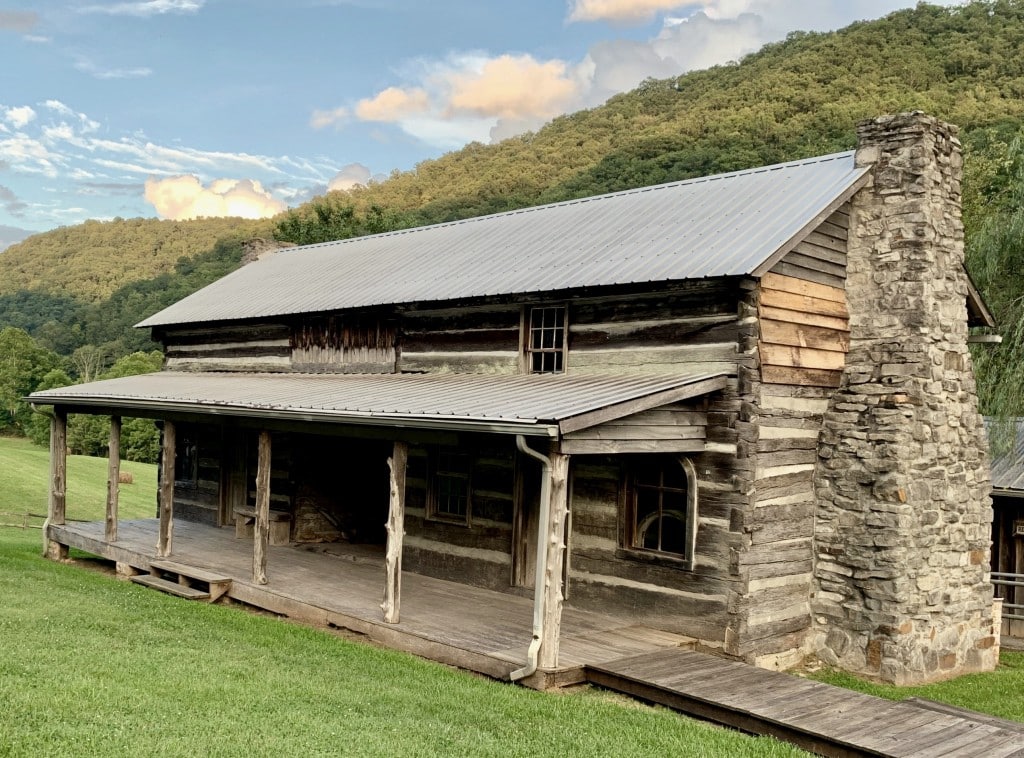
Today, the old church is the Vardy Museum. Built in 1899, it held services until 1980 and now anchors the Vardy Community School Historic District, listed on the National Register of Historic Places in 1984, where the ruins of the old school still stand. In 2000, VCHS moved and restored the cabin of Mahala Mullins, the legendary Melungeon moonshiner of Newman’s Ridge. The society also completed an oral history project that gathered community memories, and founding member DruAnna Williams Overbay drew on it for her book, Windows on the Past: The Cultural Heritage of Vardy, Hancock County, Tennessee. The museum is open by appointment, and a visit is well worth the drive.
VCHS also shares Vardy’s story year-round through The Vardy Voice, its quarterly newsletter, full of history, culture, and stories from Vardy Valley, East Tennessee, and Appalachia. Subscriptions are digital and arrive by email, and bundles pair a year’s subscription with VCHS merchandise. Not sure yet? Join the email list at vardymuseum.org/newsletter for a free copy of the latest issue. And if you have a story to share, the editors welcome ideas at voice@vardymuseum.org.
Keeping the story alive
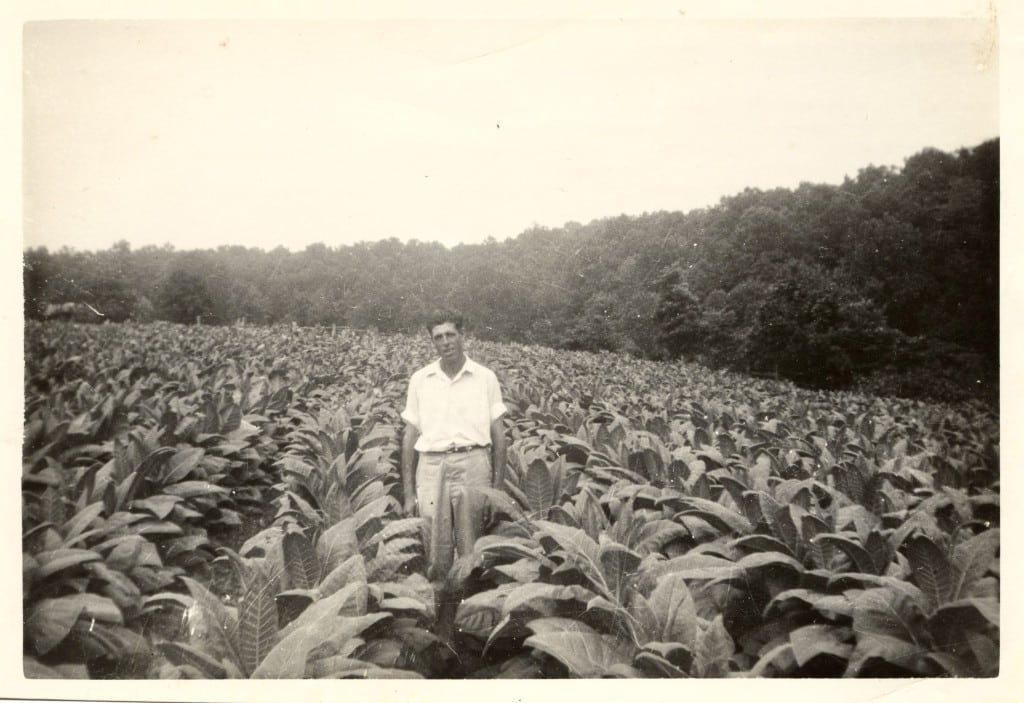
The Melungeon people were, and are, a multi-ethnic and multi-cultural people. Our story is part of the larger American story of Europeans, Africans, Indigenous Peoples, and others meeting and mixing in the colonial world. For a long time, that story was hidden from the very people who carried it. I’m a Melungeon descendant, and I grew up with many others, though none of us knew it at the time. Many of those families still don’t.
“If you take one thing from Melungeon Heritage Month, let it be this: our story was never lost, only hidden.
If you take one thing from Melungeon Heritage Month, let it be this: our story was never lost, only hidden. Every record you find, and every family tale you stop dismissing as mere legend, brings a little more of it back. Visit melungeon.org to learn about the Melungeon Heritage Association and its annual gathering, and explore melungeonroots.com for resources and community. And if you’ve found clues in your own family history, we’d love to hear about them! You can reach us at info@melungeon.org or hey@melungeonroots.com.
–
Jes Arnold Padgett is a Melungeon descendant and has deep roots in Eastern Kentucky. A passionate researcher and genealogist, she created Melungeon Roots (melungeonroots.com), an online community and resource center developed in collaboration with the Melungeon Heritage Association and the Vardy Community Historical Society, to help descendants trace their ancestry and recover their ancestors’ stories.
If you appreciate BBG's work, please support us with a contribution of whatever you can afford.
Support our stories
Related Articles
He stood up for our country on the USS West Virginia. On his birthday, a West Virginian draws him home
As the Navy weighs taking Pearl Harbor hero Dorie Miller’s name off an aircraft carrier and members of Congress fight to keep it, a Concord University student from Lewisburg answers with a graphic story, launching on what would have been Miller’s 107th birthday.
Messman Hero: The story of Dorie Miller
Born in Waco, Texas in 1919, Dorie Miller served as a Navy cook aboard the USS West Virginia during the Japanese attack on Pearl Harbor.
The Care Behind West Virginia Abortion Billboards
A campaign by Shout Your Abortion & Women’s Health Center of West Virginia highlights available healthcare services for Black women and underserved groups.