
The Enigmatic Relationship of Mary Barnes and Sam Cabell
Discover how formerly enslaved Mary Barnes Cabell secured land in Kanawha County, establishing the town of Institute and paving the way for West Virginia State University.
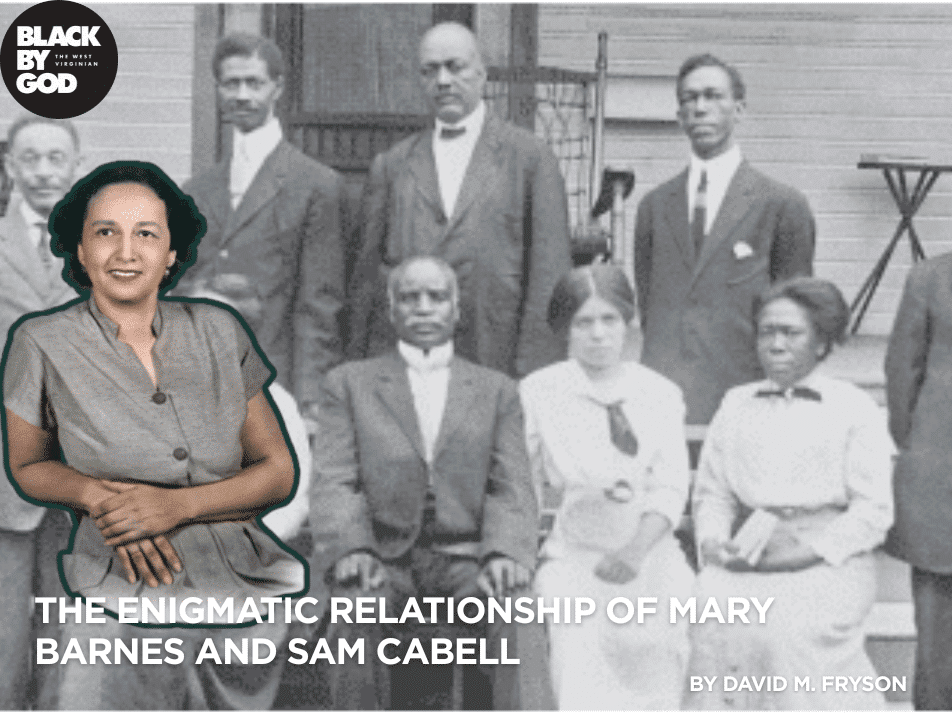
By David M. Fryson
This article was originally published by Golden Seal Magazine.
One of the most atrocious of the many atrocities of American slavery involved white slaveholders using African American slaves for non-consensual relations. Anti-miscegenation laws, which forbade marriage between slaves and slaveholders, added to the problem by making it impossible to establish a sanctioned relationship even when the slaveholder and slave wanted one. It’s important to acknowledge and lament the systematic and vicious attacks on the humanity of slaves. Most of these types of abuses occurred to females, but, at times, even male slaves were subject to this exploitation. This article addresses an intriguing situation involving slaveholder Samuel I. Cabell and Mary Barnes, his slave. The story first came to public attention some years ago because of James Haught’s research piece Institute: It Springs from an Epic Love Story. Haught is the editor emeritus of the West Virginia Gazette Mail. In a well-researched 1971 article, he uncovered the then-hidden story of how West Virginia State College (now University) arose on the former land of Sam Cabell and how Institute (Kanawha County) became a majority African-American enclave. Importantly, he alluded to Sam and Mary’s relationship as a “love story.”
A century before the U.S. Supreme Court invalidated our nation’s anti-miscegenation laws in the 1967 Loving v. Virginia decision, Sam and Mary were involved in an atypical relationship. While it wasn’t unusual for slaveholders to be involved with their slaves, this relationship was somewhat unique in its conjugal considerations.
Granted, Mary was a slave, so the relationship can’t be considered equitable even though Sam and Mary were open about their relationship. While there’s evidence—anecdotal and documentary—that Mary maintained a strong presence, any relationship between a slave and slaveholder must be strictly scrutinized. Due to the enormous imbalance of gender and racial power, the notion of a truly consensual romantic relationship should be viewed as a potential exercise in white patriarchal authority.
Mary Barnes was born in Tidewater Virginia in 1815. Sam Cabell, born about 1802, was a wealthy landowner and member of a well known Virginia political family. Sam purchased Mary and additional slaves around 1840. He worked some of his slaves in the Kanawha Valley salt industry—known for its harsh labor conditions—and worked others on his farm and orchards in what’s now the Institute/West Dunbar area. At some point, Sam and Mary began a long-term intimate relationship that would produce 13 children.
Sam was a known Confederate sympathizer and, from reports of the time, was bitter about the South’s impending loss in the Civil War. This makes any study of Sam and Mary’s relationship even harder because the head of this mixed-race family not only owned slaves but also was a vocal supporter of the Confederacy. This leads to a key question: Was Mary a victim of this unequal situation, or was there something more to it? It’s reasonable to consider whether she was in an abusive relationship since, as a slave, she had no say in initiating it. On the other hand, she had, at the least, some unusual relational privileges.
Arguably, the best-known slaveholder/slave relationship in U.S. history is that of Thomas Jefferson and Sally Hemmings, which was publicly rumored but never admitted to at the time. By contrast, that of Sam and Mary was, to some extent, open and acknowledged. For instance, for all 13 children born to this illegal-by-law union, Sam risked exposure by recording their births at the Kanawha County Courthouse—stating that he was their father. The mere fact of claiming and officially recording the paternity of these biracial children was unusual but not without precedence in the antebellum era. Significantly, when their biracial children came of age, each was sent north and enrolled in private schools. These actions go against the established antebellum doctrine of Partus sequitur ventrem (“that which is brought forth follows the womb”), by which the children of a slaveholder and a female slave retained the status of the slave mother.
Most important to this discussion are Sam’s multiple wills directing that his slaves, except for Mary and their children, were to be hired-out then set free upon his death. The fact Sam required his slaves to be leased-out for six years before being set free indicates a chilling comfortableness with the institution of slavery. Reading further in the wills, however, they indicate that proceeds from the work and sale of these slaves would financially support Mary and the children. Although Sam Cabell had an unconscionable embrace of slavery, he ordered that income from it be used to support his mixed-race family upon his death.
The first of Sam’s three wills, written on November 24, 1852, ensured that Mary and their children would be set free and receive all his property. He then ordered that proceeds from the sale of his other slaves benefit Mary and her children. In the will, he referred to Mary as “my woman”—a term of legal art indicating that Sam considered her his wife. Additionally, while the first will expressly emancipated Mary upon his death, it also freed “her children” rather than “our children.” This might seem to imply that Sam was not claiming “her children” as his own. A subsequent will, though, clears up this ambiguity: “In the event of sudden demise, this instrument of writing is intended to show or make known that Mary Barnes and all her children—namely, Elizabeth, Sam, Lucy, Mary Jane, Sidney Ann, Soula, Eunice, Alice, Marina (or Bobby), Braxton, and an infant not named—are and always have been free, as I have every right to believe they are my children.”
Upon Sam’s death on July 18, 1865, the implied marriage between the two became truly evident. The stipulations of his final will freed Mary and the children.
Giving this unusual story an even stranger twist, Sam Cabell lost his life on July 18, 1865—just months after the Civil War ended—under dubious circumstances, when passions remained tense. The night Sam died, seven pro-Union men had come to his estate, allegedly to confront him because of his persistent Confederate sympathies. Eight days later, the West Virginia Journal, Summer 2020 reported, “The community here was thrown into considerable excitement on last Thursday evening, by the report of the death of Samuel I. Cabell, a bitter and open rebel who lived some nine miles below Charleston.”
The seven men were tried for murder. Their friends insisted that Sam had repeatedly insulted the men because of their Union loyalties and that they had gone to tell him they would no longer put up with it. The men alleged that Cabell then jumped over his fence brandishing a knife and that they shot him in self-defense.
Read more about the legacy of Mary Barnes, and how Black farmers are working to reclaim farmland HERE.
Family lore suggests Sam Cabell’s murder was because the men resented his interracial family, not a general objection to his Confederate sympathies—a widespread sentiment in the Kanawha Valley. Interestingly, during this altercation, the perpetrators didn’t attack Mary or the children. The seven men were all acquitted.
After Sam’s murder, Mary, in a very bold and almost unprecedented move, personally probated his wills. In December 1865, Kanawha County ruled that the wills were valid. The plot thickens, though, because the court appointed Napoleon Bonaparte Cabell, an influential Charleston banker and entrepreneur as guardian for the youngest six of these biracial children. While it’s not completely clear if Napoleon was Sam’s brother or cousin, it’s significant that a white member of this influential family stepped in as guardian.
After some impressive legal maneuvering, Mary had Sam’s substantial estate property and assets bequeathed to her and their children. In 1869, Mary Barnes also petitioned county commissioners to change her and the children’s surnames to Cabell. The county allowed the change and divided the Cabell land among Mary and her children, giving each a strip from the river to the hill. In 1871, executors valued the estate at $42,128.00, the equivalent of nearly $1 million today.
So, the question remains, was Mary Barnes Cabell a strong woman, a slave victim, or both? Although her relationship with Sam Cabell had many hallmarks of the abusive, unequal standing of master/slave relationships, a closer review indicates more to this story than first meets the eye.
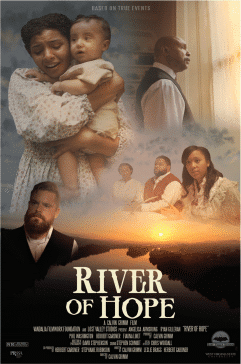
The name change is an important part of Mary’s saga. Interracial marriage was illegal in Virginia and in newly formed West Virginia—remaining so until the 1967 Loving decision. This makes Mary Barnes’ appeal for the name change even more compelling. After Sam’s death, she achieved what she was unable to do under the law during his lifetime: assume his surname. While it wasn’t unusual for slaves to assume their former slaveholders’ Charleston director Calvin Grimm recently brought the story of Mary Barnes and Sam Cabell to the big screen, with a debut in February 2020 at the Charleston Coliseum and Convention Center Little Theater. River of Hope was filmed entirely in West Virginia, with more than half the cast and crew being West Virginians. Grimm, a graduate of West Virginia State University and an Iraq War veteran, previously directed 37 Fallen and West Virginia Standing Together, both focusing on West Virginia military veterans. River of Hope is available through Amazon and its streaming services surnames, this case is distinctive because it afforded Mary Barnes the legal status of Sam Cabell’s widow. Importantly, the name change wasn’t necessary for probating his final will because the Kanawha County Commission had already ruled in 1865 that the will was valid.
There’s also other evidence that Mary and Sam had a devoted relationship. For instance, Mary was only 50 years old when Sam died. From all reports, she was physically attractive and a person of great substance, intellect, and now wealth. Nevertheless, she never remarried and lived 35 years after Sam’s death as a widow. She died at age 85, the matriarch of a noble family, surrounded by family and friends.
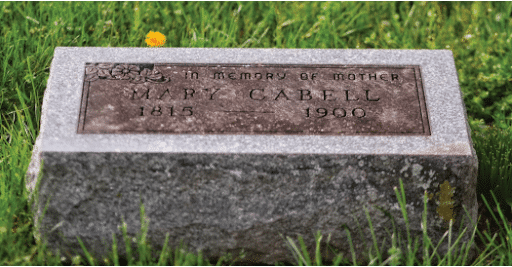
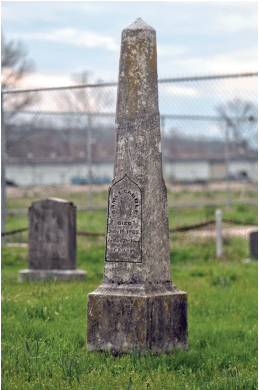
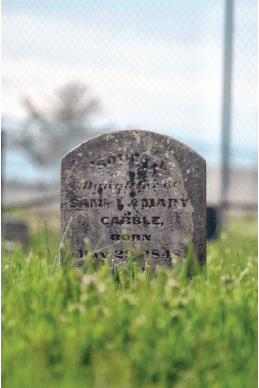
One final evidence of marital devotion became apparent after Mary’s death. On the borders of the West Virginia State University campus is the small Cabell Family cemetery, which also contains the graves of early college administrators. One of the most prominent gravestones is a weathered obelisk that belongs to Sam Cabell (actually “Cabble,” an alternate spelling). Beside it is a more modern headstone that marks the final resting place of Mary Barnes Cabell. In addition, two of their daughters and some of their grandchildren are buried here—a family together in death even as they were in life.
In closing, human relationships are complicated in the best of instances. In this most unequal circumstance, it’s impossible to measure whether this was truly a relationship of love. Sam Cabell was a complicated and ather unappealing figure in history. Some have understandably portrayed Mary Barnes Cabell as a victim.
Through her courageous efforts, Mary Barnes Cabell obtained the land that eventually became a significant African-American community. Mary’s progeny later sold much of the inherited land to the state to build the West Virginia Colored Institute, forerunner of West Virginia State College, which became one of the most-respected Black colleges in the nation during the 20th century. I have an inside family perspective because Sam and Mary are my wife Joy Morris Fryson’s great-great-great-grandparents. I was reared in the West Dunbar/Institute area but first heard of this story only when Joy and I started dating in the early 1970s. Family matriarch Lottie Prillerman Morris (“Grandmother Lottie”) was Joy’s paternal grandmother and the great-granddaughter of Mary Barnes and Sam Cabell. Grandmother Lottie, born nine years after Mary’s death, often spoke with pride about her great-grandmother and other family members and was thrilled when James Haught published his article about Sam and Mary.
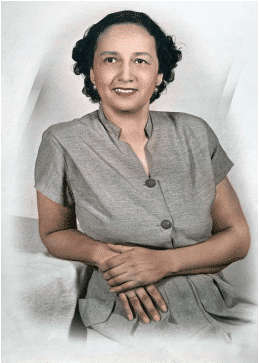
While it may not be appropriate to label Sam Cabell and Mary Barnes’ relationship a true “love story” because of the racial power dynamics, it doesn’t do justice to Mary’s life and legacy to label her merely a victim. While she may have been victimized because of the circumstances of her life and her relationship with Sam Cabell, she was ultimately a survivor and proved herself to be a strong, proud, and courageous African-American woman and is a Shero in the memory of her family and the community she fostered.
The Prillermans
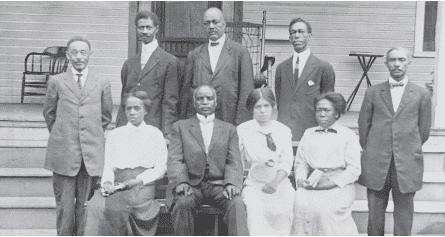
Mary and Sam’s children, grandchildren, and beyond became educated, successful African-American leaders in West Virginia and nationally. For instance, Mary’s granddaughter Mary Brown married Harvey Prillerman, an influential African-American blacksmith and dentist. Harvey settled in Sissonville (Kanawha County) after he and his brothers had walked to the area from Virginia after slavery. Harvey and Mary Prillerman are Joy’s great-grandparents and Grandmother Lottie’s parents. Another granddaughter, Mattie E. Brown, graduated from Wayland Seminary and married Harvey’s younger brother Byrd Prillerman in 1893. Dr. Byrd Prillerman was a religious leader and an influential educator; together, Byrd and Mattie were an educated power couple throughout West Virginia. Dr. Prillerman was one of the founders of West Virginia State University and a close friend of Booker T. Washington. These are just two of many examples of the family’s success.
DAVID M. FRYSON is an attorney, ordained minister, diversity professional, and civil-rights advocate. He’s served on the economic development staffs for two governors, as city attorney for two municipalities, and as national vice-president for Charleston native Dr. Leon Sullivan’s OIC of America. He also was the founding vice president for the Division of Diversity, Equity and Inclusion at West Virginia University. He is a graduate of West Virginia State University and received a Juris Doctorate from West Virginia University College of Law. He and Joy Morris Fryson, Mary Barnes’ third great-granddaughter, have been married for almost 44 years and live in Institute. This is his first contribution to GOLDENSEAL.
If you appreciate BBG's work, please support us with a contribution of whatever you can afford.
Support our stories
Related Articles
A Viral Songwriting Challenge Shines a Spotlight on the Tradition of Hip Hop in West Virginia
This spring, the community media organization Black By God challenged West Virginia artists to write a lyrical love letter to the state, breathing new life into the state’s hip hop scene
This week in Affrilachian history: Sept. 6 through Sept. 12
Explore key September moments in Affrilachian history: WV’s first Black legislator, Harlem Renaissance author John Matheus, and John Henry’s legend.