
‘Keep Coming Back’ – Coach Bryan Poore on the People Who Make WVSU Homecoming
The longtime West Virginia State University basketball coach reflects on early-arriving motor homes, the step show, former players, Earl Lloyd and the relationships that keep Yellow Jackets coming home.
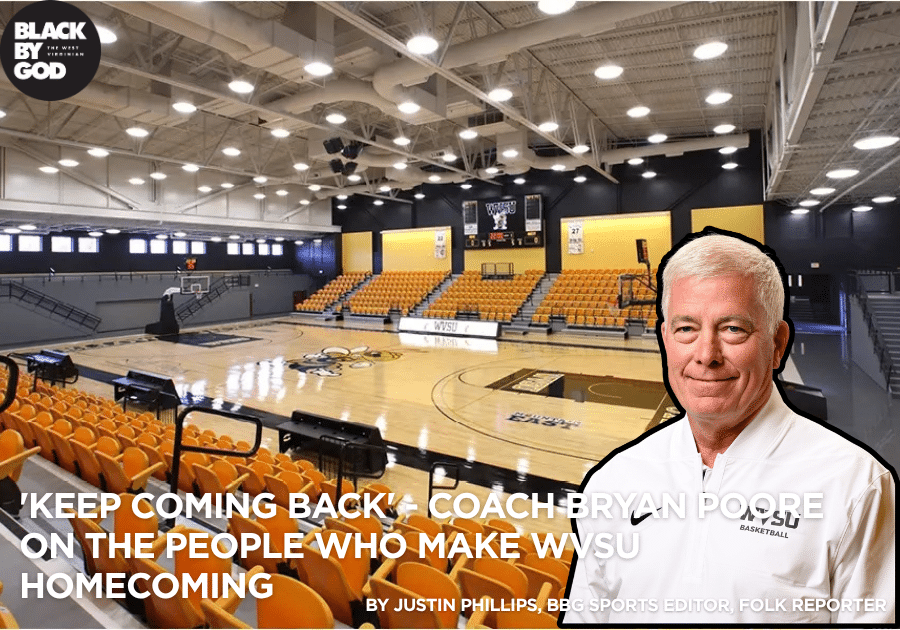
By Justin Phillips, BBG Sports Editor, Folk Reporter
Long before Saturday’s football game, Coach Bryan Poore knew West Virginia State University’s Homecoming was about more than sports.
It was his first year as the university’s head men’s basketball coach. Poore walked out of the building on a Tuesday afternoon and saw three motor homes already parked near the tennis courts.
“That told me right then and there that this Homecoming thing is the real deal,” Poore told BBG Sports Editor Justin Phillips.
The longtime coach is also a WVSU graduate, although his own college experience looked different from that of many students. Poore commuted to campus and worked midnight shifts at the GoMart down the road to help pay for school.
“You’ve got to grind it out and find a way,” he said.
Because he was not heavily involved in campus life as a student, Poore came to understand the full power of WVSU Homecoming after returning as a coach. In those days, some alumni arrived as early as Tuesday or Wednesday and stayed for the entire week.
The motor homes may not come as early or in the same numbers today, but the memories remain.
For Poore, Homecoming smells like grills, fish fries and wings cooking in the parking lots. It looks like people gathering near the tennis courts after the parade. And it sounds like generations of students and alumni inside the historic Fleming Hall for one of WVSU’s most enduring traditions.
“It’s got to be the step show,” Poore said. “Everybody wants to see the step show, wants to be a part of that and wants to go up to the pit in old Fleming Hall.”
The building’s age adds something that cannot be recreated in a newer space.
“All the noises and the stomping just echo in that place,” he said. “It makes it even more of an attractive atmosphere and a fun time.”
The stories get bigger every year
Now entering his 28th year at WVSU, Poore has coached enough Yellow Jackets to see several generations return for Homecoming.
When his former players get together, the old practice stories come back with them: what happened in the gym, what Coach Poore said and who scored on whom.
“The stories get bigger and bigger every year,” he said.
Some players do not immediately understand what they will miss about college. Five or 10 years after leaving, Poore said, many begin returning more often and reconnecting with the people who shared that part of their lives.
One former player who helped set the tone for Poore’s program was Ron Donaldson, a point guard from Cleveland who arrived in 1999. During one season shortened by injuries, Donaldson played every minute of every game in the second semester—including overtime periods.
“He was a dog,” Poore said. “He really kind of set the tone for our program.”
Donaldson graduated one year before the team won its first championship under Poore, but his relationship with WVSU did not end when he left campus. He remains involved with the program and continues to give back.
That lasting investment is part of what Homecoming preserves.
The photograph in the window
Of all the objects in Poore’s office, one photograph carries a particularly important piece of WVSU history.
It shows his father hugging him on the court at the Charleston Civic Center in 2006, after the Yellow Jackets won the WVIAC Tournament championship and cut down the nets.
The victory was WVSU’s first tournament championship since the 1986–87 season.
“The excitement of a tournament championship is just unrivaled,” Poore said. “The picture of Dad hugging me on the court is what really sticks out in my mind.”
Another relationship Poore treasures is the friendship he developed with WVSU legend Earl Lloyd, who became the first Black player to appear in an NBA game.
WVSU retired Lloyd’s jersey in 2004, and the two became close friends. When Poore was inducted into the WVSU Hall of Fame in 2010, he did not invite Lloyd—or even tell him about the honor.
Lloyd showed up anyway.
“When I turned the corner, he was standing there waiting,” Poore recalled. “I’m like, ‘Dude, what are you doing here?’ And he says, ‘I’m not going to miss this.’”
Poore now shares Lloyd’s history with every player and recruit who comes through the basketball program. But just as important to him is teaching them about Lloyd’s character.
During a visit to Lloyd’s home, Poore noticed there were no basketball photographs, trophies or other memorabilia on display. Years later, while helping with a documentary, he learned that Lloyd’s Naismith Memorial Basketball Hall of Fame trophy had been stored on the floor of a closet.
“That’s how humble this guy was,” Poore said.
‘It is the people’
Asked what would remain if the Homecoming football game disappeared, Poore did not hesitate.
“The people,” he said. “Whatever kind of game you want to play—soccer, football, baseball, basketball or volleyball—it’s the people who come back that are going to make Homecoming what it is.”
Technology and social media make it possible to see what is happening on campus without being there. Poore hopes younger alumni will not allow that convenience to replace the experience of returning in person, gathering around the tailgates and carrying WVSU’s traditions forward.
His closing message to them was simple:
“All you younger Yellow Jackets out there, just keep coming back. Keep coming back and making Homecoming special.”
If you appreciate BBG's work, please support us with a contribution of whatever you can afford.
Support our stories
Related Articles
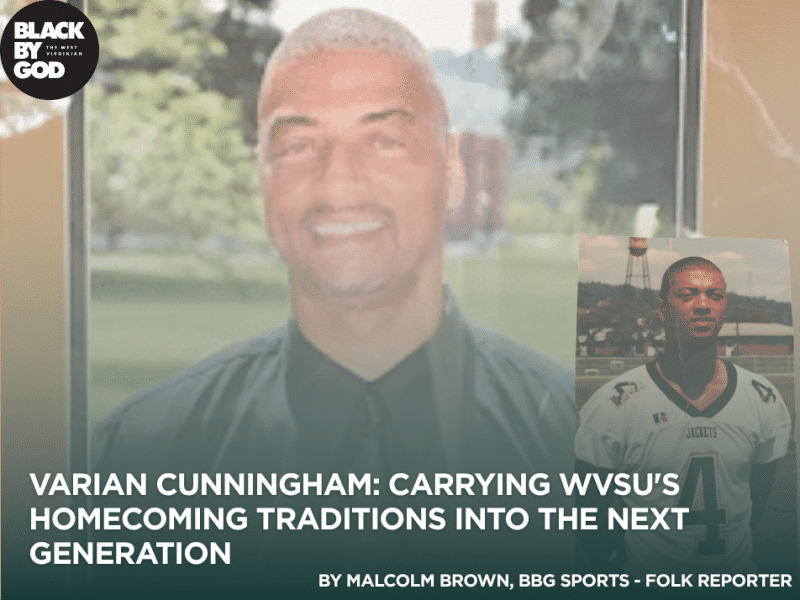
Varian Cunningham: Carrying WVSU’s Homecoming Traditions Into the Next Generation
More than just a single football game, Homecoming is the sound of the step show, the energy of the tailgate, and the familiar faces returning to Institute year-after-year.
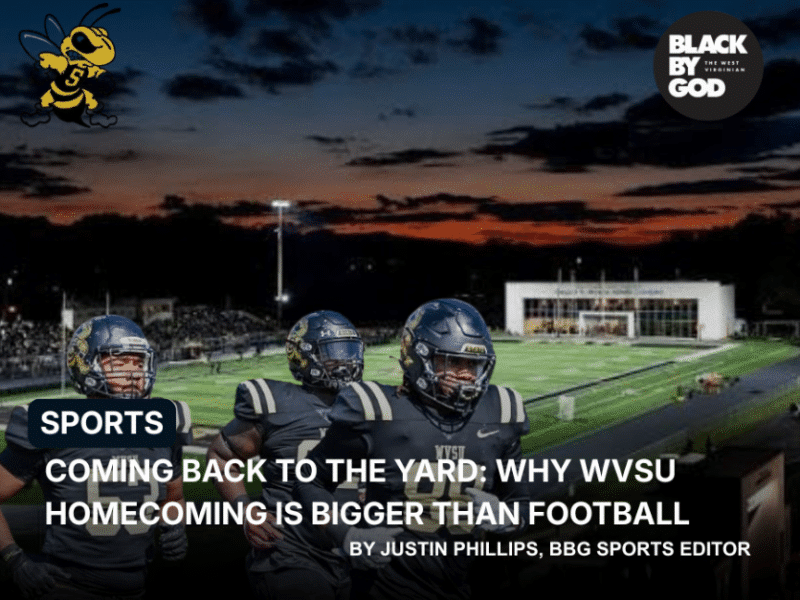
Coming Back to the Yard: Why WVSU Homecoming is Bigger Than Football
Trey Jones says Homecoming lives in the memories, rituals and people who keep Yellow Jackets returning to State.
Charleston City Council proclaims September ‘Hunger Action Month,’ approves $166k for City Fire Department
Charleston City Council proclaims September Hunger Action Month, appoints Jessica Hudson to Ward 18, and approves $166k for Fire Department equipment.