Cultural Intersectionality: The juxtaposition of Black & (White) Appalachian culture in West Virginia
By Danayshia Coping
It’s truly an organic and natural experience to be in a country where multiple cultures exist side by side. You have Hispanics, White Americans, Polynesians, Asians, Europeans, Black Americans, and so many others. We see it in the way we eat, play sports, raise our families, and even engage in politics. As time goes on, we see blended families becoming the standard. Not just because of exposure and proximity, but because we are learning that it does fuel a great generational story.
The question is, what if the cultures seem to have too many complexities to match?
In the Appalachian region, many stories whisper through the mountain, ranging from Dutch Amish communities to the richness of the Mississippi Delta. How can so many different experiences all share one common thing?
Growing up, I always thought that to be Appalachian, you had to be hunting-loving, four-wheel riding, mountain dew drinking, “hillbilly.” I took a good look at my own family and questioned my identity. We don’t fit any of those traits. So, what are we?
It wasn’t until I was around 24 that I started digging into my family history and the foundations that created the present successors. I asked my great grandmother about her parents, Virginia and James. My great-great grandma was a true southern woman from Alabama. A woman who had a similar story to most women in America in the early 1900s, young and thrown into a life full of responsibilities. Between the 1920s and the 1940s, America was experiencing another era of industrialization. Mining, lumber, and factory corporations were seeking thousands of hands to build. In the 1940s, coal and salt mines needed labor—little to no cost, at that. The second great migration was also taking place where many Americans were moving to find work and a new life.
My great-great grandpa, James, lived in West Virginia. In short, he found my great-great grandma who escaped here after a traumatic loss in Alabama. The beginnings of a cultural blend were born. By the 1970s, my great-great grandma had ten children, five girls and five boys. Those days were filled with struggle and uneasiness as a young southern woman who had her hands full and a house vibrating with noise. My great-great grandpa was a coal miner in his youth until he had a serious injury that disabled him for life. He then had to find honest, and under-the-table, work that would supplement his needs.
Unfortunately, the home was quite broken. It was hard to stay leveled in an environment that didn’t respect the working man or woman, especially if they were Black. Eight kids turned into more than 15 as each sibling had their own stories to fill. Grandchildren were added to the mix, and family became the sole purpose of survival. I was born in 1998 to a teen single mother with great dreams that seemed to collapse after she gave birth to me. I am the first great grandchild of my great-grandma, Berneice. An eldest grandchild, niece, and daughter that were born with the same weight as those before me.
I grew up like any other child, full of imagination and a big ball of empathy that felt like a blazing fire in my chest. Safe between the mountains, guided by the rivers, and inspired by the strong trunks of the trees. Some of my favorite events of the year were the end of school and family gatherings. The scent of George Dickel, Budweiser, and collard greens became a memory that felt like home. My uncle’s booming voice on the microphone as he spun tracks by Lenny Williams and Betty Wright. Still, my surroundings didn’t feel like the “Appalachian” experience I was told made sense.
Fast forward to 2012, I was entering high school as a freshman with bright new hopes and fears. A school known for its mascot and nothing much else. I thought I had been prepared for the new change until I started to immerse myself in new friend groups. There was a significant separation between White and Black kids; not just because of race, but cultural expression. Neither group could relate to the other much about anything except our favorite fast food restaurants and the fact that we had some of the same teachers.
I felt the heaviness of the contrast when I’d go home to my family who were consoled by praying in a Black church and listening to old blues music. The kids at school were hunters and children of coal miners that could buy whatever they wanted. They spent their time going “muddin'” and hanging out by the river. Even our music taste was different. Sounds of Carrie Underwood, Luke Bryan, and Hunter Hayes became the soundtrack of my freshman year—every dance, every school event, and every free period. Meanwhile, I was being serenaded by Beyonce, One Direction, and Bruno Mars.
Once I graduated and went to college, I thought to myself, “I have no real connection to the valley in which I was raised.” My family was like any other southern family, but the world outside of my home was very much Appalachian country living. That thought eventually changed when my grandma started to remind me of the juxtaposition through her own stories. We were different, but not that different from those who were living more “mountainous.”
My grandma and her siblings grew up running up the mountains, playing in the creeks, hunting for berries, eating whatever they could afford to get, and living from little to no state support. They chased frogs, explored abandoned homes, and tasted the sweetness of honeysuckles in the summer. My family even had their own mini farm, once—pigs and chickens that ran around crazy. My great-great grandpa even had a general store he ran that helped support in some way.
The women were the peacemakers and the chaos bringers simultaneously. They nurtured in their own ways while also welding an iron fist for anyone who stepped to them wrong. They didn’t care for pretty dresses and diamonds. They cared about pistols and a great record to help them dance the woes away. Even though things were unleveled, they found a way to provide something that could create movement forward. Their mistakes were lessons, not just flaws.
I remember hearing my grandma tell me about how my great grandma and great aunts were banned from walking together in Montgomery. Sisters of Eagle who were raised with the weight of the Bible and the hand of a mama who didn’t play. I asked my grandma why and she said because they knew the power of sisterhood. If one sister got into trouble, the others would come to support her. This story was powerful because it was like many other stories I’d heard from my peers who were White. At that moment, it clicked for me. Even though many of us have different roots that bleed into one tree, these mountains have raised us all the same.
My grandparents taught me about how if I ever got lost, to follow the river. When I’d get scared of driving on the merciless curves of the road, the voice of my grandma saying to “hug the line” closer to the hillsides of the mountain rang in my mind. I was taught how to fish by one of my mom’s boyfriends. My aunt taught me how to mingle in bars and use my charm to ease anxiety. My grandma’s friends taught me how to run wild in the deep hollers while listening to the trickling sounds of the creek nearby. My friends taught me how to appreciate good deer jerky and the drunken glee of singing “Strawberry Wine” by Deana Carter.
Through all these life lessons, I was enlightened to realize I am more Appalachian than I thought. My family raised me to be strong, resilient, creative, analytical, observant, and a natural environmentalist. Through the hardships we created a form of stability that kept us alive through the generations. I didn’t need to relate to the media fantasies and Hollywood stereotypes to feel Appalachian; I already am. My blood isn’t just born from these mountains, but it’s supported by the rivers that travel up the way from Alabama. These cultures may be different, but they share similar roots.
To those on the outside who are confused if we are here, we are. Being Black in West Virginia is not only a privilege, but a gift to the continuum that is the story of generations raised here. Our community isn’t just defined by the color of our skin or the roots in our family tree; it is defined by the elements we brought here that make us unique. The hum of our ancestors that had to make a mansion out of sticks.
I am Black…but I am Appalachian, and my veins bleed with the song of mountains much older than me.
If you appreciate BBG's work, please support us with a contribution of whatever you can afford.
Support our stories
Related Articles
David Fryson: Courageous leaders must resist anti-DEI policies (Opinion)
Former WVU VP for DEI David Fryson calls on university presidents and corporate executives to defend equity and inclusion against political attacks.
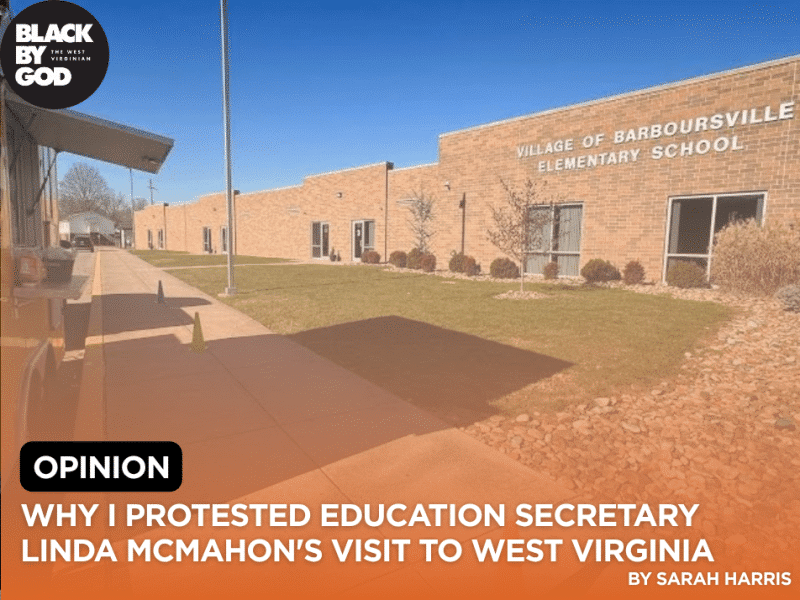
Why I protested Education Secretary Linda McMahon’s visit to West Virginia
Parent Sarah Harris responds to Education Secretary Linda McMahon’s Barboursville visit, calling for federal support for West Virginia public schools.
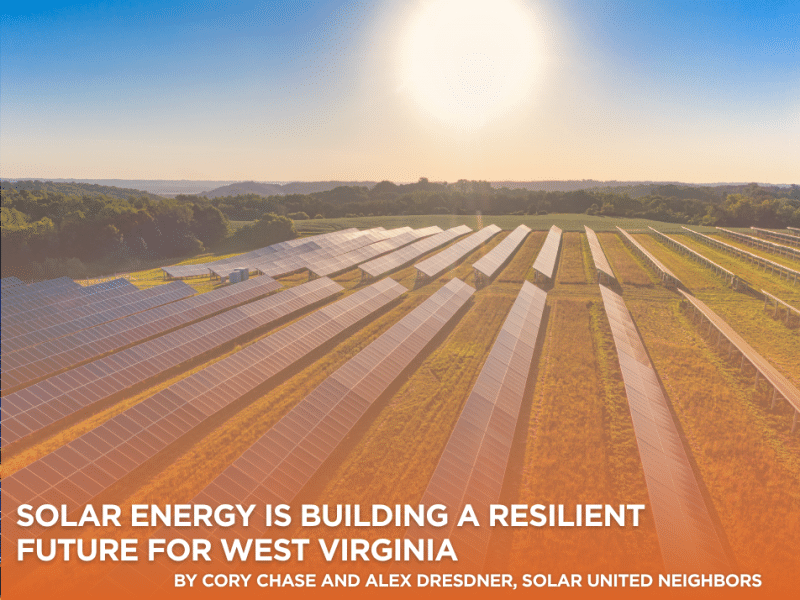
Solar energy is building a resilient future for West Virginia
For nearly two centuries, working-class people have built West Virginia’s economy as a coal-producing powerhouse. So why do we pay for some of the most unaffordable electricity in the country?