Forward Together: Reconnecting West Virginia’s Black Communities
Crystal Good reflects on Dr. Terri A. Berkley’s NAACP keynote, addressing organizational sustainability, media accessibility, and digital engagement.
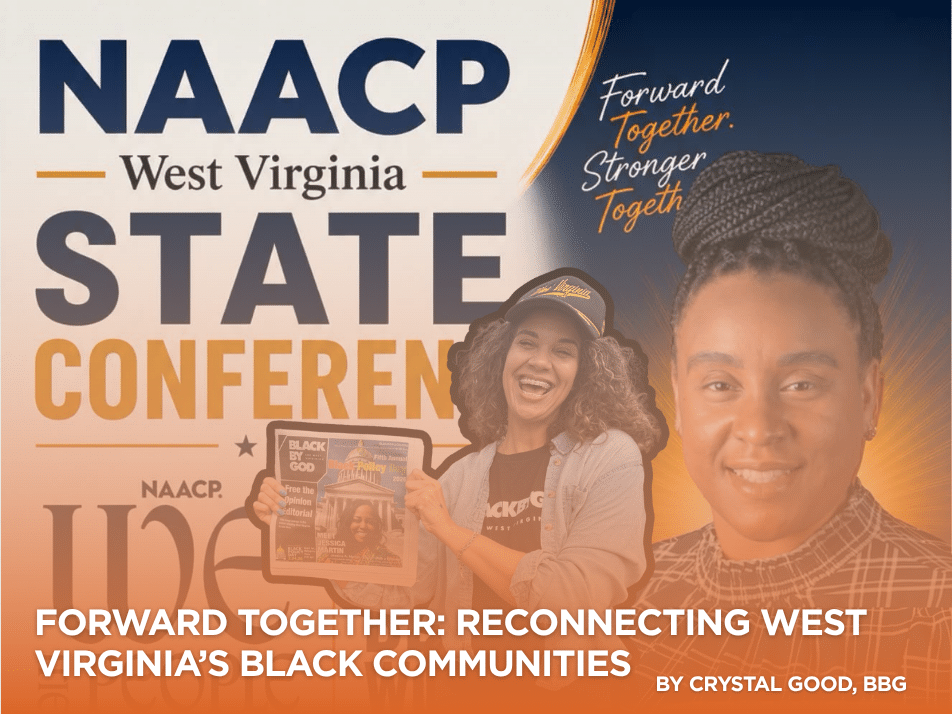
A response to Dr. Terri A. Berkley’s NAACP Freedom Fund Banquet keynote
By Crystal Good, BBG
Honestly, Dr. Terri A. Berkley was the only reason I went to the West Virginia NAACP Freedom Fund Banquet in Huntington on August 14.
Berkley is a longtime Charleston community leader with more than two decades in federal government, higher education, and nonprofit leadership. She served as State Deputy Director and Director of Constituent Services for a U.S. Senate office; she holds a Ph.D. in Educational Policy Studies and Evaluation from the University of Kentucky, and now serves as COO for a consulting firm advising corporations, nonprofits, and public leaders.
I’ve always been in awe of her oratory skills, and I was hoping she might push me past just being an NAACP member, toward finding a way to engage with an NAACP that has, quietly, been hard to engage with.
I wanted to be inspired. She did — but not before I was reminded of exactly why I didn’t want to come in the first place.
At the banquet, James Griffith, NAACP State Convention Chair told the room: “If you are not a member of the NAACP, you are the problem.” Black By God was live on Facebook that night. [NOTE: work in Woody Woods’ comment once you have the wording.]
Hearing that line is what reminded me how hard the NAACP itself makes it to do the thing it’s demanding. I dare you — try to join. You’ll need to call someone, fill out a form by hand, and mail a check: naacp.org/take-action/become-member.
The people in that room were not the problem. They were there, supporting an institution that has carried this movement for over a century.
The problem is disconnection — a disconnect that information and technology can help bridge.
“Forward Together“
“Forward Together” was the title of Dr. Berkley’s keynote. Progress, she said, is about building something strong enough that people don’t have to start over, something the next generation can stand on.
And I fear that if the NAACP keeps living analog in a digital world like the Black churches across West Virginia that are dying, its chapters will die out within a decade if that transition doesn’t happen now.
Berkley talked about carrying each other forward, about building bridges between generations, through the memory of her grandfather, who was teaching that room his wisdom, passed down through his granddaughter. That’s legacy in action. And she said something that has stayed with me since: it’s not enough to have success. You have to build toward sustainability. Success is a moment. Sustainability is discipline, and sacrifice, and showing up again after the moment has passed.
Almost no one outside that banquet hall heard her say any of it. That’s the problem.
The Charge Is Already Written Down
This isn’t just a feeling — it’s written into the NAACP’s own bylaws. Every branch is required to have a Communications, Press and Publicity Committee, and its charge is the same, word for word, from Los Angeles to Santa Fe to right here in West Virginia: including ensuring Black and minority ownership and control of media, ensuring meaningful and affordable public access to information, and securing publicity for the NAACP’s own work in the local press.
That’s not a suggestion. It’s the practical version of what Berkley was calling for.
The NAACP once shaped how Black America was covered, from The Crisis to the local press. Today, that charge has to compete with Facebook, which is where West Virginians actually are.
So here are two ideas of how we can go forward together: support local Black-owned media and local content creators.
Crazy idea: the NAACP should call on the Charleston Gazette-Mail and other outlets to remove paywalls on coverage of Black communities as a concrete, achievable step toward real access. Free the Black op-ed! And please write your own for BBG, no paywall, rolling submissions.
A small publication like Black By God can’t close this gap alone. But we can close a piece of it, covering speeches like Berkley’s, making the NAACP’s work findable, and creating a record for the future.
Build it, and protect it, Berkeley said. That’s the difference between a moment and a legacy. It won’t be easy, but it can be done — if we agree on where we want to go. And I believe that’s simply getting clear on what Berkley said: progress doesn’t happen because people care. It happens because people organize and take responsibility.
If you appreciate BBG's work, please support us with a contribution of whatever you can afford.
Support our stories
Author
Related Articles
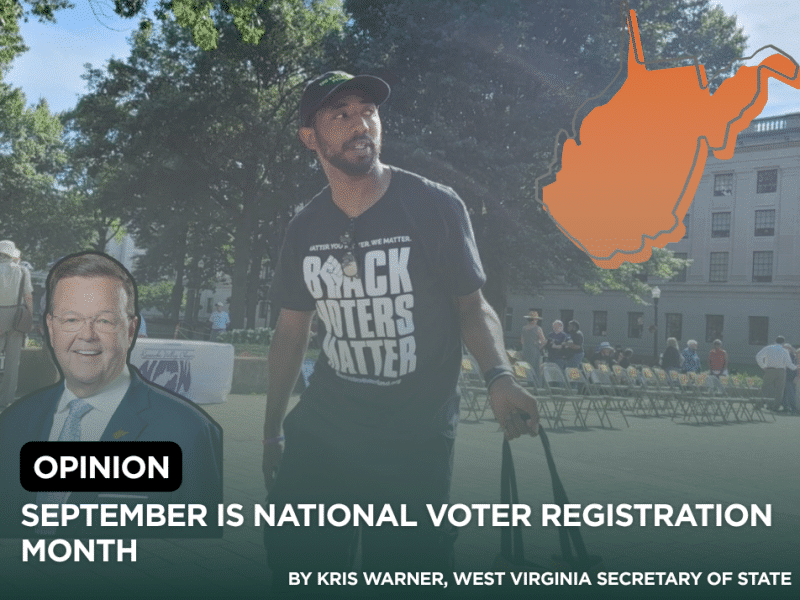
Op-Ed: September is National Voter Registration Month
WV Secretary of State Kris Warner encourages Mountain State citizens to verify voter registration and prepare for upcoming elections during Voter Registration Month.
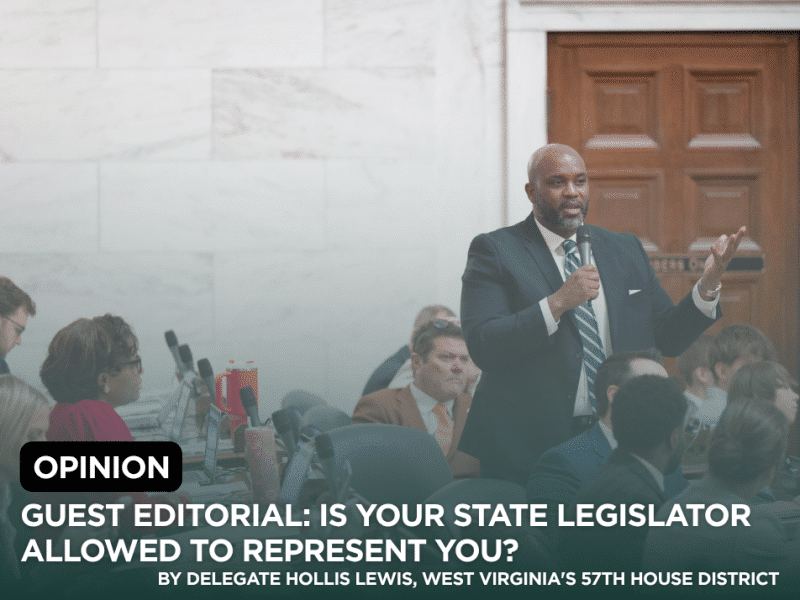
Guest Editorial: Is your State Legislator allowed to represent you?
Delegate Hollis Lewis proposes amending West Virginia legislative rules to guarantee every lawmaker a set number of committee bill hearings.
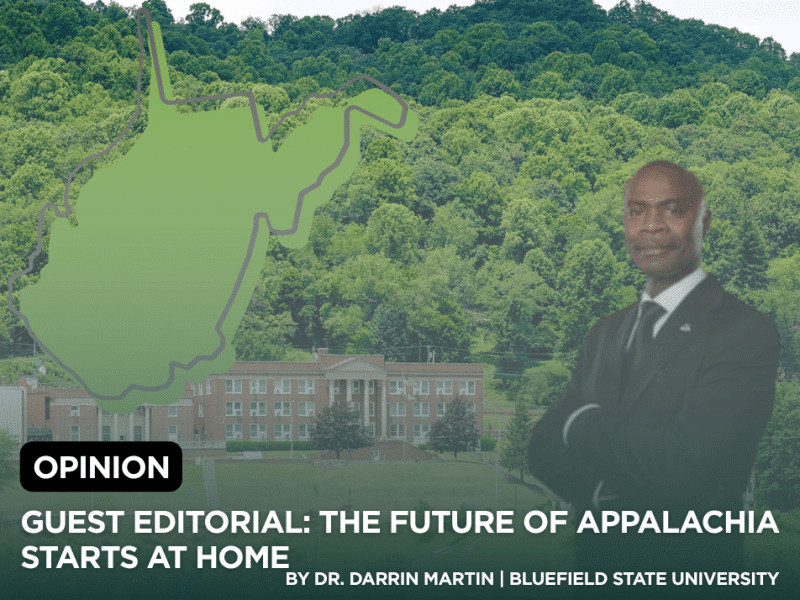
Guest Editorial: The future of Appalachia starts at home
BSU President Dr. Darrin Martin outlines how higher education, industry, and government must collaborate to keep technical talent in Southern West Virginia.