
Guest Editorial: Is your State Legislator allowed to represent you?
Delegate Hollis Lewis proposes amending West Virginia legislative rules to guarantee every lawmaker a set number of committee bill hearings.
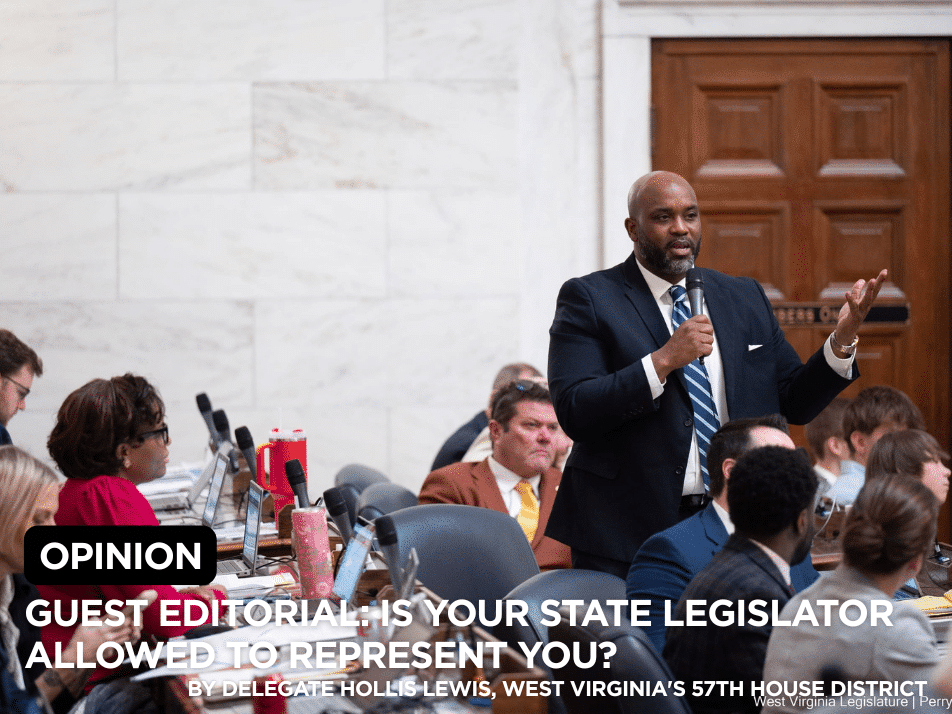
By Delegate Hollis Lewis, West Virginia’s 57th House District
Voters send 100 members of the House of Delegates and 34 Senators (134 total), to Charleston every year to represent the interests of not only West Virginia as a whole, but also their respective communities.
However, our current process does not always allow for fair and equitable representation. In fact, certain aspects of the legislative process places significant power over the future of our state in the hands of a few. The question is: How can we amend the process to ensure that all communities and their representatives have a meaningful voice in state government?
First, it is important to understand how bills become laws in West Virginia. State legislators compose bills, once introduced, they are assigned to committees based on the subject matter of said bill. Once a bill is taken up by a committee, witnesses provide testimony, legislators have the opportunity to ask questions, debate the proposal, provide commentary, and offer amendments.
If approved by the committee, the bill may eventually reach the “floor,” meaning it is presented to the entire House of Delegates or Senate for consideration. If approved by one chamber, it proceeds to the other chamber for review. After “ping-ponging,” between the chambers, if an agreement is reached, the legislation receives final passage, and the bill is presented to the Governor for approval or veto.
While this process provides an opportunity for bills to receive thorough review, there is another important question: With thousands of bills introduced during a legislative session, how do we decide which bills actually receive consideration in committee?
Herein lies the issue.
Whether a bill is placed on a committee agenda is largely within the discretion of committee leadership. As a result, most bills never receive meaningful consideration, often with little or no explanation. This aspect of the process raises legitimate questions about fairness and equitable representation. The challenge, then, is determining how we create a system that provides every legislator with a meaningful opportunity to advocate for the people they represent without overburdening the legislative process.
While this is not purely a partisan issue, Republicans currently hold a supermajority in the West Virginia Legislature and have on many occasions have displayed an unwillingness to work with Democrats. Democrats often have difficulty advancing proposals, not necessarily because the underlying idea lacks merit, but because of the political dynamics surrounding who introduced it. To be fair, even some Republican members can find it difficult to have their bills placed on committee agendas. However, lack of guaranteed consideration disproportionately affects members of the minority party
When good ideas are dismissed or never considered because of party affiliation, the ultimate losers are the people of West Virginia. One example of an idea crossing party lines and benefiting the state was the allocation of $5 million to the Flood Resiliency Trust Fund, an initiative advocated for by House Minority Leader Delegate Sean Hornbuckle. The proposal was particularly timely given the devastating flooding West Virginia has recently experienced. Another issue in which Democrats offered sensible concessions, was House Bill 2014. While there maybe a need for Data Centers, House Democrats advocated to restore local control, only for that amendment to fall on deaf ears. Good ideas are not defined by the party in power but, what will best serve the people of West Virginia.
Therefore, I plan to introduce a proposal to amend the rules governing the committee process so that every legislator is guaranteed the opportunity to have a limited number of bills presented for consideration in committee. This is not an entirely new concept. Ohio, for example, has legislative rules providing mechanisms through which qualifying bills introduced by established deadlines receive at least one committee hearing.
So why would a similar change matter to West Virginia? The primary reason is simple: Every community deserves a voice in the legislative process. Our current system lacks formality and prevents the interests of communities throughout West Virginia, from ever being fully expressed. Guaranteeing every legislator, a limited number of committee hearings would not guarantee that those bills pass. Nor should it. What the change would guarantee is something much more fundamental: an opportunity to be heard. Even if the entire bill ultimately fails, portions of the proposal could be improved, amended, or incorporated into other legislation. That is how the legislative process should work: ideas should be decided on their merits.
Some may argue that guaranteeing hearings for legislators would slow down an already busy legislative season. I believe the opposite could occur. A structured process could create greater efficiency and accountability. Legislators would be incentivized to carefully determine which proposals are most important to their constituents and similar to the Ohio process, a defined timeline would establish clear expectations for legislators and committee leadership. Committees would have advance notice of agendas and most importantly, the process would become more objective and less dependent upon leadership discretion or party affiliation.
No legislator should be guaranteed that his or her bill becomes law. That is not democracy. But every legislator should have a meaningful opportunity to advocate for the people who elected them. The people of that district deserve to know that their concerns can at least reach the legislative table. If we want the best for West Virginia, we must create a legislative process in which the best ideas can be heard from all of its representatives.
We can disagree about legislation. We can debate it. We can amend it. And ultimately, we can vote it up or down. But first, we should be willing to hear it.
If you appreciate BBG's work, please support us with a contribution of whatever you can afford.
Support our stories
Related Articles
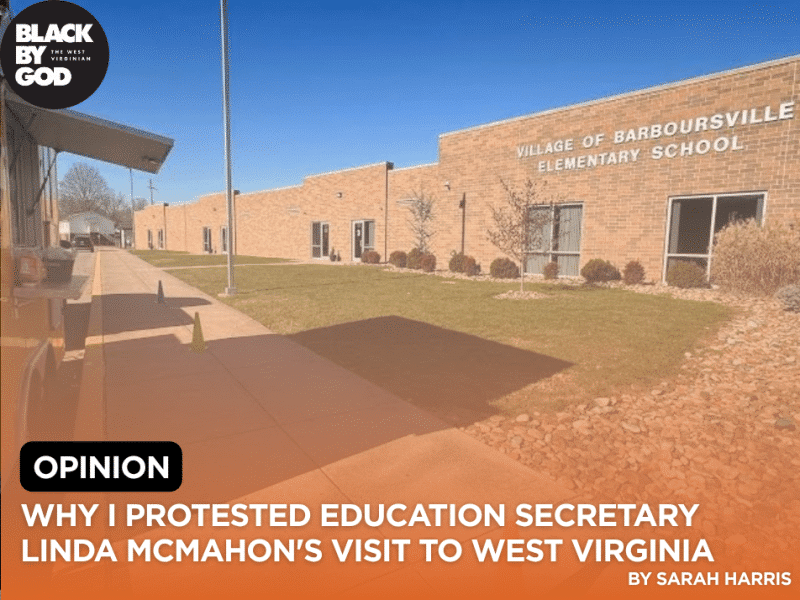
Why I protested Education Secretary Linda McMahon’s visit to West Virginia
Parent Sarah Harris responds to Education Secretary Linda McMahon’s Barboursville visit, calling for federal support for West Virginia public schools.
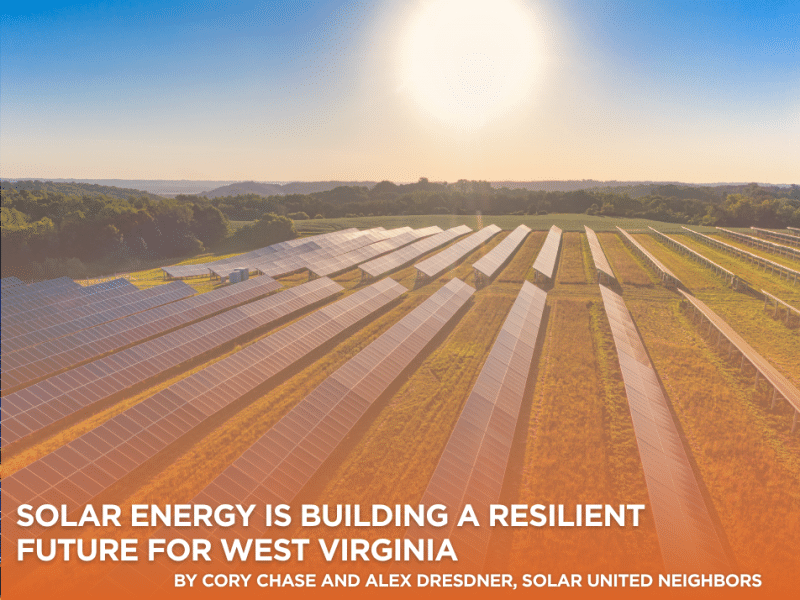
Solar energy is building a resilient future for West Virginia
For nearly two centuries, working-class people have built West Virginia’s economy as a coal-producing powerhouse. So why do we pay for some of the most unaffordable electricity in the country?