Youth Voices Rising: Black By God Helping Amplify Youth Voices in West Virginia
This October, during National Arts and Humanities Month, Black By God: The West Virginian is launching Youth Voices Rising, a series of student articles, interviews and videos that gives audiences a view of West Virginia through young people’s eyes.
“Many people think there’s not much to do in West Virginia, but I think otherwise.”
The sentence wasn’t written by a veteran journalist or public official. It came from one of more than 30 middle and high school students who gathered this summer at West Virginia State University to learn how to tell stories about the place they call home. By the end of two afternoons, those students had interviewed community leaders, recorded videos, written stories and begun to see themselves in a new way—not just as students, but as storytellers.
That’s exactly what Black By God: The West Virginian hoped would happen. Youth Voices Rising is part of Black By God’s narrative-change work, supported by The Greater Kanawha Valley Foundation. The project helps young people tell authentic stories about their communities and challenge the one-dimensional narratives that too often define West Virginia. This summer, Black By God partnered with the Norman Jordan African American Arts & Heritage Academy to introduce students middle and high school student to interviewing, reporting, photography, video storytelling and community journalism at West Virginia State University.
“Many people think there’s not much to do in West Virginia, but I think otherwise.”
A community guest panel gave students an opportunity to interview people working across several fields. The panel included Chamear Davis, BBG Agriculture Fellow; Heaven Smith, Miss Black West Virginia and agriculture advocate; WVSU basketball coaches Marcus Reed and Whitney Bays; Ryan Kirkpatrick, Charleston NAACP vice president and WV Citizen Action Group representative; Aaliyah Jones, BBG community mentor and entrepreneur; Alicia Allen, licensed clinical therapist; and Brian Mitchell, therapist and social worker.
We’ll bring the best from BBG right to your inbox. You can easily unsubscribe at any time.
Sign Up for our Newsletters!
We didn’t want students to simply hear about journalism. We wanted them to do it. From the moment they walked into Wallace Hall, they were reporters. Students interviewed classmates, practiced recording videos on their phones and learned to ask questions that went beyond yes-or-no answers. They discovered that good journalism isn’t about having all the answers—it’s about being curious enough to ask better questions.
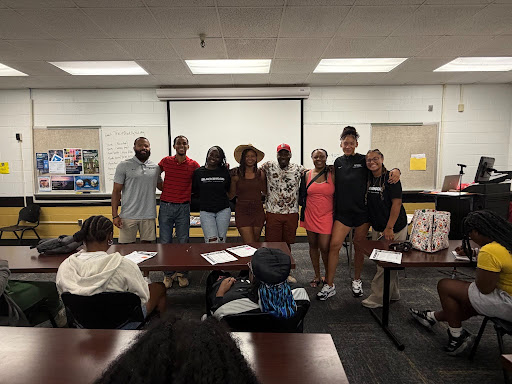
Then came a lesson that surprised many of them. Instead of choosing the stories they wanted to cover, students pulled color-coded cards assigning them to agriculture, health, sports or community. There were a few groans. Some wanted sports. Others hoped to switch topics. They couldn’t. “In a newsroom, reporters don’t always choose their assignments,” I explained. “Editors assign stories.” For two days, Black By God became that newsroom.
Students stayed with their assigned beats and interviewed community leaders working in those areas. What started as disappointment became curiosity. Students assigned to agriculture asked thoughtful questions about farming and food access. Others discovered health and community stories they might never have pursued. Students who barely spoke during introductions volunteered to interview first, helped classmates frame videos and remembered to ask follow-up questions. “One thing I learned today was how to be a better interviewer,” Amarie McKinney wrote.
Youth Voices Rising wasn’t only about writing stories or recording videos. It was about confidence, listening and recognizing that young people’s experiences deserve to be heard. WCHS-TV highlighted the workshop and partnership, showing students learning journalism and interviewing community leaders.
Over the coming weeks, BBG will publish the camp’s student articles, interviews and videos exploring agriculture, sports, health, community, the environment, mental health and belonging. Following the camp stories, the series will feature work by BBG youth correspondents Malia Courts, Jayli Phillips and True Phillips, extending Youth Voices Rising beyond the summer workshop.
The rollout celebrates young people’s creative expression and gives their reporting a place to reach readers and viewers. For many, it will be the first time they see their work published. Every journalist remembers that moment.
Youth Voices Rising proved that the next generation of storytellers is already here. Sometimes, all they need is a notebook, a camera and the confidence to begin.
If you appreciate BBG's work, please support us with a contribution of whatever you can afford.
Support our stories
