Beneath the Surface: What Garlic Teaches Us About Modern Resistance
By: Chamear Davis, BBG Agri-CULTURE Fellow

Right now at Mear Mae’s Meadow, my urban farm in Charleston,WV, the soil is sending up these wild, beautiful, curly green shoots called garlic scapes. They are the seasonal stems that grow out of the top of garlic plants, tasting like a mild, sweet cross between garlic and a green onion. Most people in our community have never seen one, let alone cooked with it. But before we can harvest a single one of these unique green curls in the spring, we had to stand in the mud of late autumn, freezing, with dirt under our fingernails, placing a bet on a harvest we wouldn’t see for months.
That is the reality of urban land stewardship. It requires a kind of patience that runs counter to everything in our modern, fast-paced world. This harvest is beautiful, but the story of how these curly scapes got here is the real medicine. It is a story of resilience, late nights, and a beautiful web of community connection that spans across different neighborhoods and backgrounds.
Our journey began last October. The air was turning crisp, and the window to get crops into the earth before the hard West Virginia freeze was rapidly closing. It took a village of co-conspirators to get those cloves into the ground. It started with Stacy Kay, a passionate local grower who handed me five pounds of seed garlic because she wants to see garlic growing all over the city. But seed needs soil. The rich, aged compost manure that filled our two new raised beds came thanks to a connection from my WVU Extension Master Gardener Mentor, Carolyn Sue Young, whose friend has been consistently dropping off loads of black gold all over the West Side to support local growers. My husband, Mavery, and I spent hours hauling and collecting that compost from another community farm space tended by Gloria Lopez.
We’ll bring the best from BBG right to your inbox. You can easily unsubscribe at any time.
Sign Up for our Newsletters!
These women became true co-conspirators in this work. They understood that this vision is bigger than any single one of us, and they used their skills, their soil, and their access to help anchor this movement right here in the neighborhood.
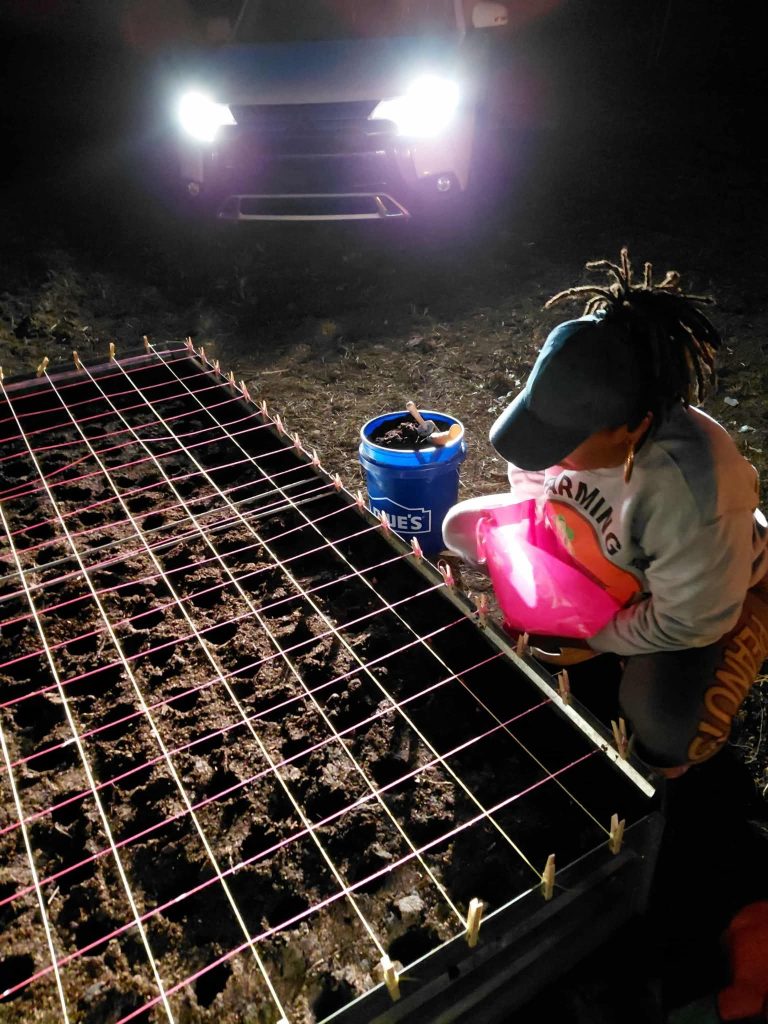
Mavery and I found ourselves racing against the clock and dropping temperatures. As the sun went down, we weren’t ready to quit. Back then, the lot was wide open with just our two new raised beds, so I pulled my car right onto the meadow, flipping the high beams on so we could see what we were doing. Working by the glow of those headlights in the autumn chill, we used the light to guide our hands as we carefully tucked more than 260 individual cloves into the dark earth.
When the spring sun finally warmed the meadow, those tiny cloves didn’t just wake up; they burst through the soil, resilient and strong. Now, they are throwing off those beautiful, curly scapes. Snapping them off for culinary use is actually a win-win. It tells the plant to stop wasting energy on the top greenery and pour all its strength into growing a massive, robust garlic bulb underground.
Bringing something like fresh garlic scapes to the Charleston community is about so much more than just selling a unique ingredient. It is about food education, expanding our palates together, and reclaiming our food sovereignty. We get to show our neighbors how to chop and sauté them, toss them into hot pasta, or blend them into a vibrant green pesto. It introduces something fresh, healthy, and exciting to local plates.
Looking out at the meadow now, I realize that every single curly green stem we harvest is a living testament to what happens when local folks show up for each other. Stacy, Carolyn, Gloria, Mavery, and I were all working toward the same goal: feeding the soil so we can feed the community.
And honestly, that is the deepest lesson the garlic teaches us. Once those 260 cloves were buried last winter, there was nothing left to do but wait. We trusted that underneath the snow, life was quietly doing its thing. The most important growth happens in the dark, out of sight, when everything looks dead on the surface.
That is the exact space Black and brown farmers find ourselves navigating today. Right now across the country, we are watching vital funding, institutional programs, and resources meant to support minority farmers get systematically stripped away and dismantled. The political climate wants to freeze us out.
But as history has always shown, when the topsoil gets hostile, our work goes underground. It becomes an under-the-cover movement. Just beneath the surface, away from the gaze of government systems and corporate red tape, those who know, know. We do the invisible, essential work of building our own infrastructure, preserving our own seeds, and relying on our own networks to survive. We build alliances with folks who are ready to conspire with us to bypass the gatekeepers entirely.
Every dollar from this harvest goes right back into growing fresh, local produce for our neighborhood. We don’t need a government grant to validate our right to grow. We are proving that with a little patience, a lot of sweat, and a solid network of community co-conspirators, we will always find a way to sustain ourselves, one square foot at a time.
Meet Me At The Meadow For Volunteer Days!!!
Solutions aren’t just found on paper; they are built in the soil. If you are in the Charleston area and want to be a co-conspirator in reclaiming our local food system, join us at the meadow this summer. We have a spot for every hand:
- June 27th: Youth Power Days (Teens & Young Adults)
- Learn basic garden maintenance and upkeep
- July 8th: Generations Day
- Connecting our seasoned roots with our youngest shoots
- Gentle planting and sensory garden walks
- August 15th & September 26th: Community Days
- Harvesting, weeding, and collective Meadow care
Make sure you’re signed up on our volunteer list to attend! Email mmmeadow24@gmail.com with any questions.

If you appreciate BBG's work, please support us with a contribution of whatever you can afford.
Support our stories