
‘I Hope Homecoming Never Goes Away’
Former WVSU quarterback Hollis Lewis remembers a rainy victory, a packed yard and the traditions that make homecoming part of the Black West Virginia experience
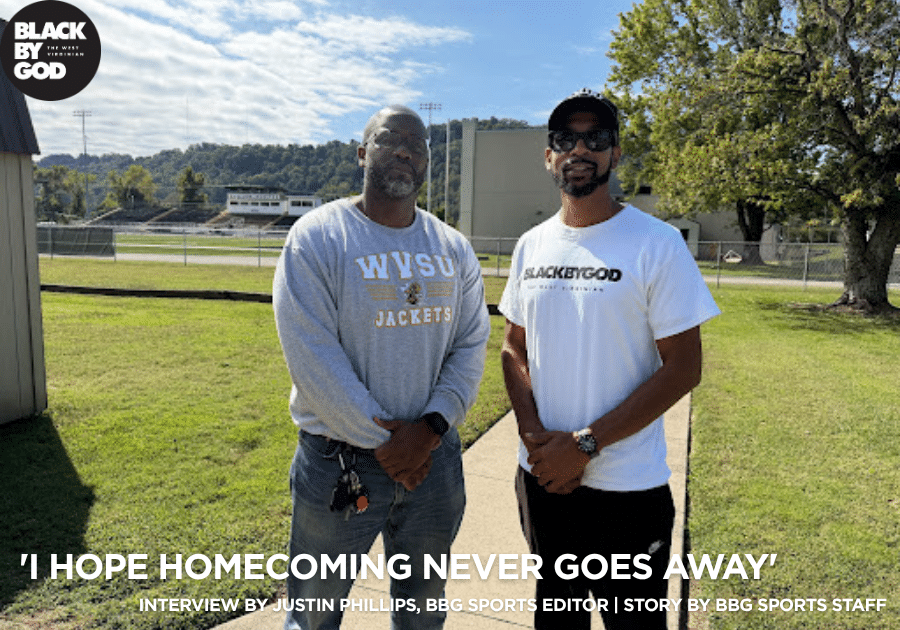
Interview by Justin Phillips, BBG Sports Editor | Story by BBG Sports Staff
Years later, Hollis Lewis remembers the rain.
He remembers the stands packed with people, the yard full and the energy surrounding West Virginia State University. Lewis was starting at quarterback that Homecoming day when a Yellow Jackets running back everyone called “Bam Bam” took control of the game against Wesleyn College.
“He just went crazy,” Lewis recalled. “I think he rushed for like 200 or 300 yards.”
The exact number has faded, but the parts that make a story worth retelling remain: the rain, the nickname, the crowd and the victory.
“It was my first time with the crowd, the stands packed and the yard packed,” Lewis said. “It was just a good day.”
That is how a game becomes folklore. The final statistics may disappear from memory, but the story is carried forward by the people who were there.
For Lewis, a WVSU alumnus and former Yellow Jackets quarterback, Homecoming has always been bigger than football. It is the parade, the step show, the gatherings on the yard and the familiar faces returning to Institute. It is a time to honor Hall of Fame inductees, recognize alumni and reconnect with people who helped make State feel like home.
“Homecoming is always a good event,” Lewis told BBG Sports Editor Justin Phillips. “It’s an opportunity for alumni to come back to the university.”
Lewis grew up near Charleston, with WVSU just down the road. Although the campus was close to home, attending the university introduced him to people and experiences beyond the world he already knew.
“When I came to the campus, it really opened up the world to me,” he said.
At the same time, WVSU provided the support and sense of belonging that Lewis associates with historically Black colleges and universities.
“It gave you that nurturing that you needed, as far as what HBCUs can truly provide to you,” he said.
That feeling is renewed during Homecoming. Alumni know where to gather, which events they do not want to miss and which people they hope to find when they return. Fraternity and sorority members reunite. Old teammates revisit games and practices. Traditions are repeated, and stories are passed to another generation.
“Just being Black in West Virginia, being a Black American, it’s really part of our cultural heritage to have these Homecomings, particularly at HBCUs,” Lewis said.
He wants current WVSU athletes to understand that when they put on a Yellow Jackets uniform, they inherit more than an athletic tradition. They become part of a university legacy rooted in Black education, leadership and activism.
Lewis pointed to the history of the Tuskegee Airmen, NASA mathematician Katherine Johnson, civil rights leader Leon Sullivan and the many others connected to West Virginia State.
“We are a legacy that’s built on education, that’s built on activism,” he said. “That’s really built on the foundation of Black education—not only here in West Virginia, but throughout the country.”
Lewis remains close to the football program by helping call WVSU games on 107.3 The Beat. From the broadcast booth, he watches a new generation create the plays that may someday become their own Homecoming stories.
But when I asked which tradition Lewis hopes will always remain, he did not choose the football game, the parade or the step show.
He chose Homecoming itself.
“I hope Homecoming never goes away,” Lewis said. “I think it’s intrinsic and ingrained in the African American—the Black American—experience.”
The game will end, the crowd will leave and the campus will grow quiet again. But the stories will travel home with the people who lived them—until the Yellow Jackets return and tell them again.
If you appreciate BBG's work, please support us with a contribution of whatever you can afford.
Support our stories
Related Articles
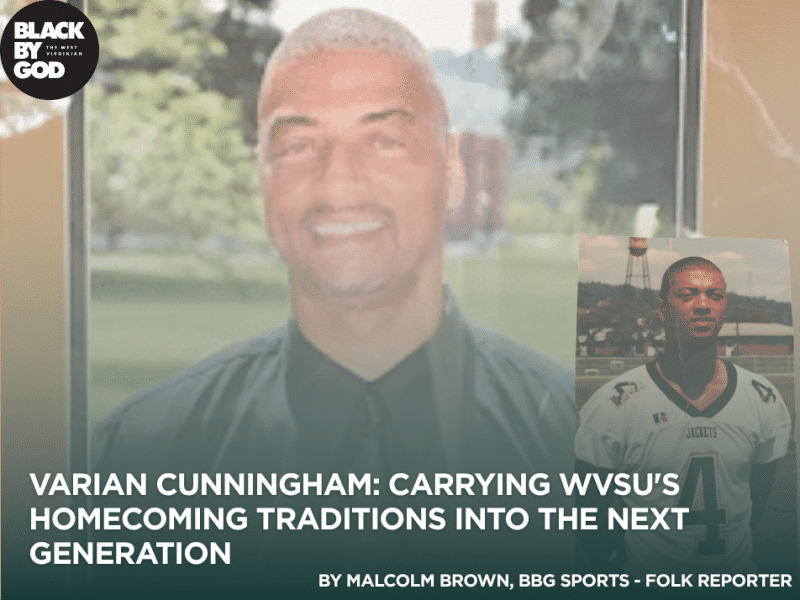
Varian Cunningham: Carrying WVSU’s Homecoming Traditions Into the Next Generation
More than just a single football game, Homecoming is the sound of the step show, the energy of the tailgate, and the familiar faces returning to Institute year-after-year.
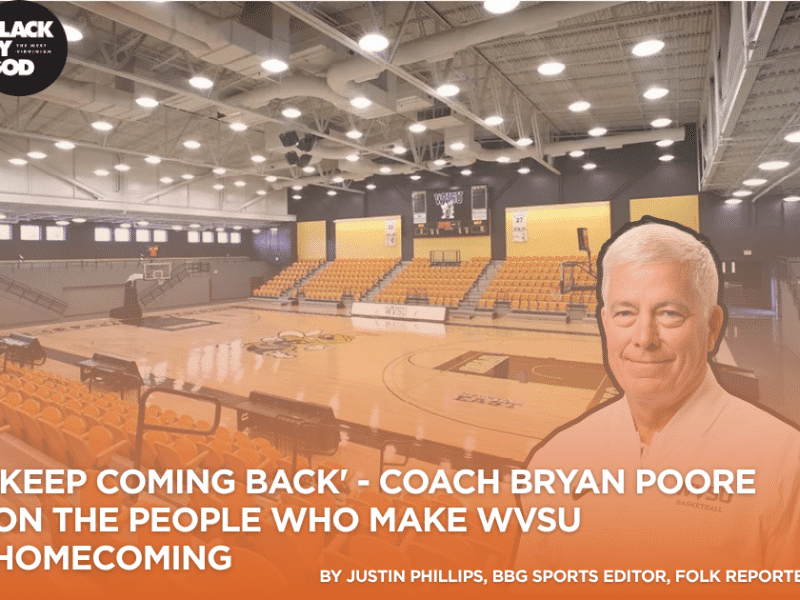
‘Keep Coming Back’ – Coach Bryan Poore on the People Who Make WVSU Homecoming
The longtime West Virginia State University basketball coach reflects on early-arriving motor homes, the step show, former players, Earl Lloyd and the relationships that keep Yellow Jackets coming home.
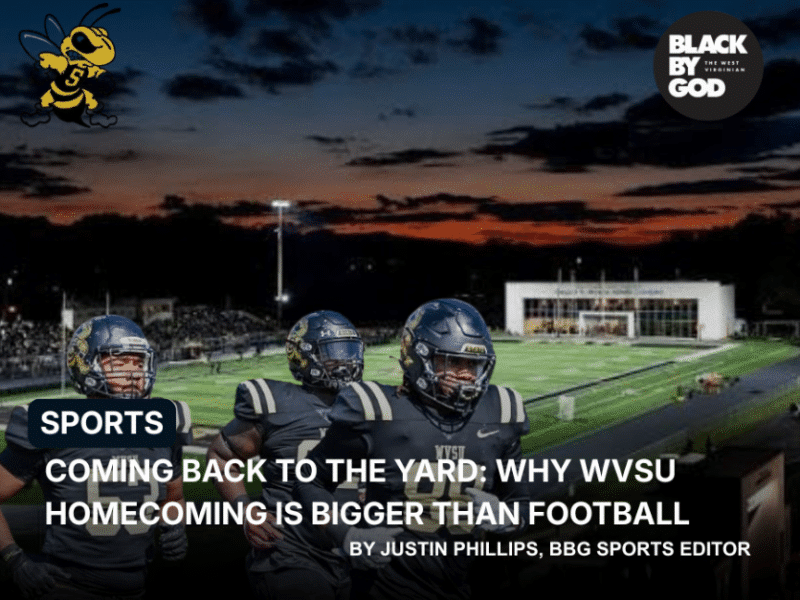
Coming Back to the Yard: Why WVSU Homecoming is Bigger Than Football
Trey Jones says Homecoming lives in the memories, rituals and people who keep Yellow Jackets returning to State.