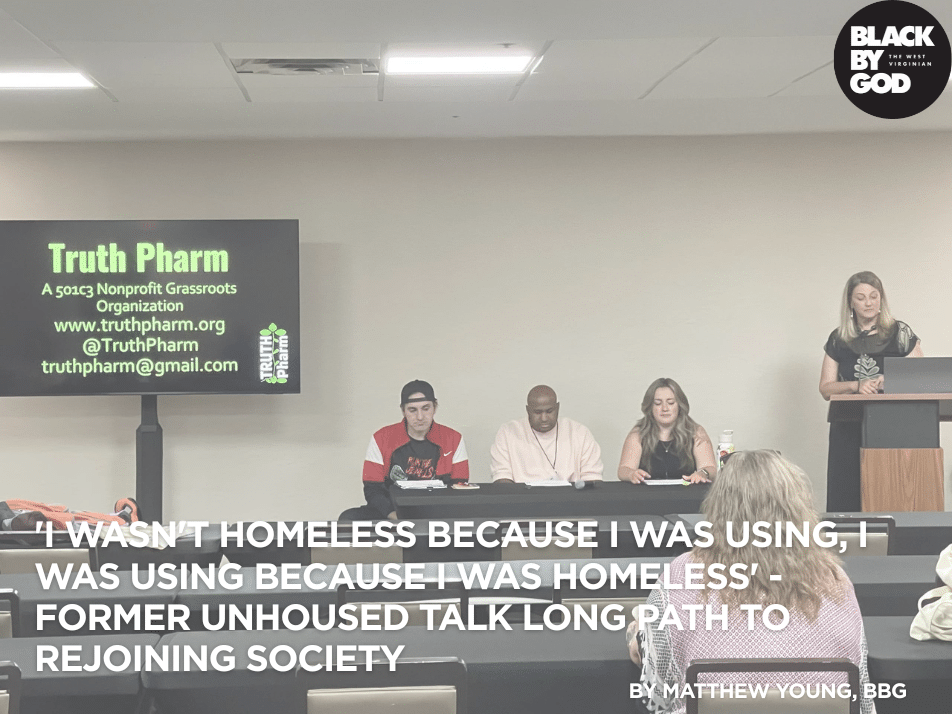
‘I wasn’t homeless because I was using, I was using because I was homeless’ – former unhoused talk long path to rejoining society
Truth Pharm presents participant-informed research on homelessness, digital barriers, and care systems at CEG’s 3rd Annual Syndemic Summit in Huntington, WV.
By Matthew Young, BBG
HUNTINGTON,W.Va. – “I was 22 when I became unhoused. I was in active addiction and I met some women that were engaging in sex work and living in hotels [ … ] and I left home to be with them.”
That’s what New York-based Truth Pharm’s Mary Nolan told attendees of the Community Education Group’s (CEG) third annual Syndemic Summit Wednesday, as part of Truth Pharm’s “See Me, Hear Me, Treat Me – Unhoused” panel. The See Me, Hear Me, Treat Me project was developed in response to rising homelessness, increasing barriers to housing access, and reportedly harmful and ineffective interactions with systems designed to provide support.
As stated in information provided by Truth Pharm, “The project utilized a participatory approach that positioned unhoused individuals not as subjects of research, but as co-creators of knowledge and solutions. Through storytelling, dialogue, and collective analysis, participants identified both systemic barriers, and examples of effective, compassionate care.”
Among the challenges identified were fragmented services and the lack of coordination between systems, transportation and communication barriers, and previous experiences of stigmatization.
“A lot of people who are unhoused do have cell phones, but they don’t have cell phone plans,” said Truth Pharm’s Alexis Pleus, who served as the panel’s moderator. “They rely on wifi in order to be able to communicate. We have businesses and even county agencies who will shut off the wifi at night because they don’t want unhoused people congregating around the buildings.”
“The people are cut off from emergency contacts, [and] they can’t communicate with anyone,” Pleus continued. This has been an ongoing problem for people. Agencies saying you need to call them back on Tuesday, well, that person may not be able to call you back on Tuesday. They may not have been able to charge their phone, or reach a wifi station.”
Expanding on Pleus’point was panelist and recovering-addict Jemel Rosa, who said, “I wasn‘t homeless because I was using, I was using because I was homeless.”
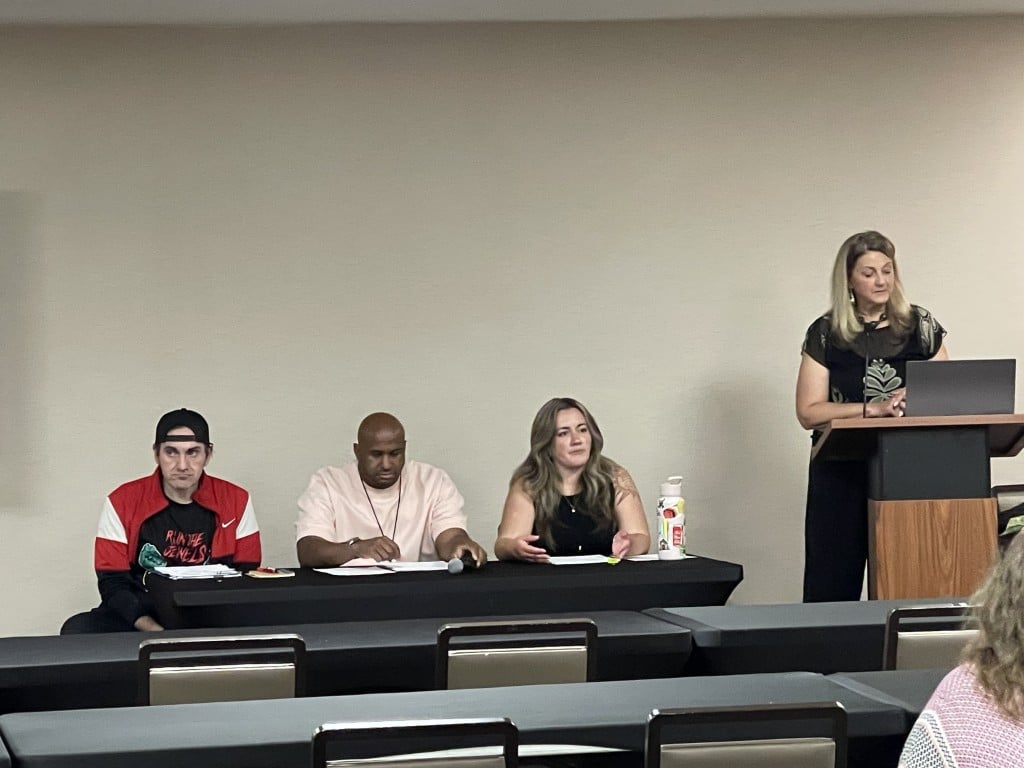
“When you’re living in this type of reality on a day-to-day basis, it is extremely painful physically and emotionally,” Rosa noted. “And the emotional damage is probably even more critical because it lowers your self-esteem, and it alienates you and pushes you out of society.”
The panel’s third and final member, recovering-addict and Truth Pharm Representative, Joshua Sementelli, added his perspective to the conversation, saying, “When I was homeless on the street, I knew, just like many people, that I didn’t wanna deal with all the barriers at DSS (Department of Social Services).”
“I wouldn’t even go there and try because I knew what I was gonna deal with because I didn’t have an address and I didn’t have a phone,” added Sementelli. “I never even dealt with that.”
In closing, Pleus noted, “The reality is they’ve been so disenfranchised, and offered so little help so many times that they’re disengaging because of the barriers that they face.”
As further stated by Truth Pharm, “By elevating the voices of people experiencing homelessness, See Me, Hear Me, Treat Me – Unhoused demonstrates how communities can move beyond identifying service gaps to creating practical, participant-informed solutions.”
Truth Pharm’s See Me, Hear Me, Treat Me – Unhoused project offers a replicable model to organizations seeking to improve outcomes related to care. For more information, visit truthpharm.org.
If you appreciate BBG's work, please support us with a contribution of whatever you can afford.
Support our stories
Related Articles
David Fryson: Courageous leaders must resist anti-DEI policies (Opinion)
Former WVU VP for DEI David Fryson calls on university presidents and corporate executives to defend equity and inclusion against political attacks.
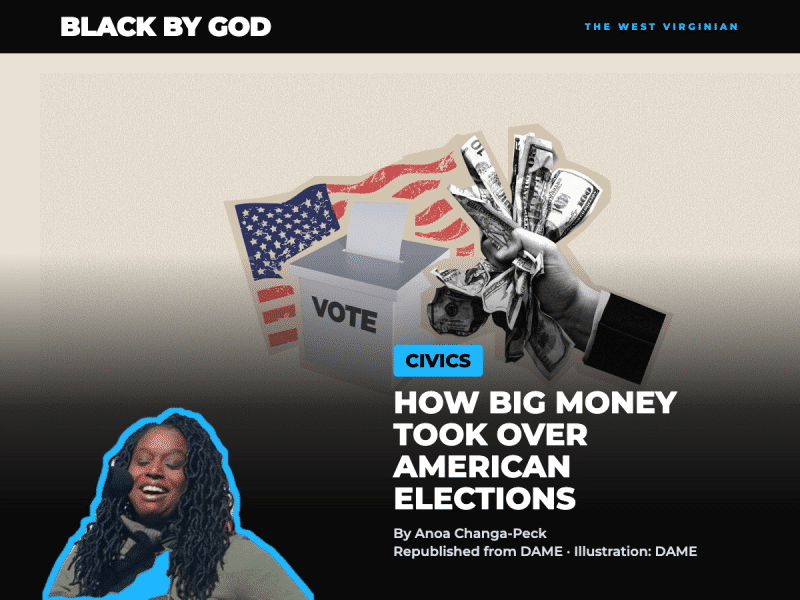
How Big Money Took Over American Elections
Anoa Changa-Peck examines the 15-year impact of Citizens United, billionaire spending in elections, and how state reforms like Hawaii’s Act 011 push back.
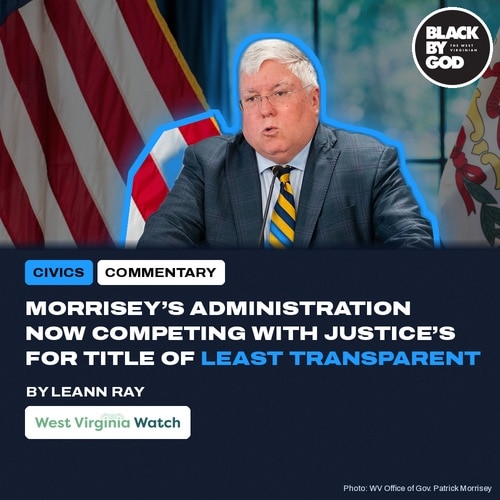
Morrisey’s administration now competing with Justice’s for title of least transparent
West Virginia Watch’s Leann Ray analyzes Gov. Patrick Morrisey’s press relations, FOIA response delays, and state government transparency challenges.